Elevated stands look convenient, but a 2000 study in the Journal of the American Veterinary Medical Association linked raised feeding bowls to a meaningfully higher bloat risk in large and giant breeds — 52% of bloat cases in those dogs involved a raised bowl. The study looked at feeding bowls specifically, and water-bowl data is thinner, but the caution is worth carrying over: for most dogs, a bowl on the ground is the safer default.
A rough hydration target: about one ounce of water per pound of body weight per day. A 40-pound dog needs roughly five cups. That number helps size the bowl to the dog instead of guessing.
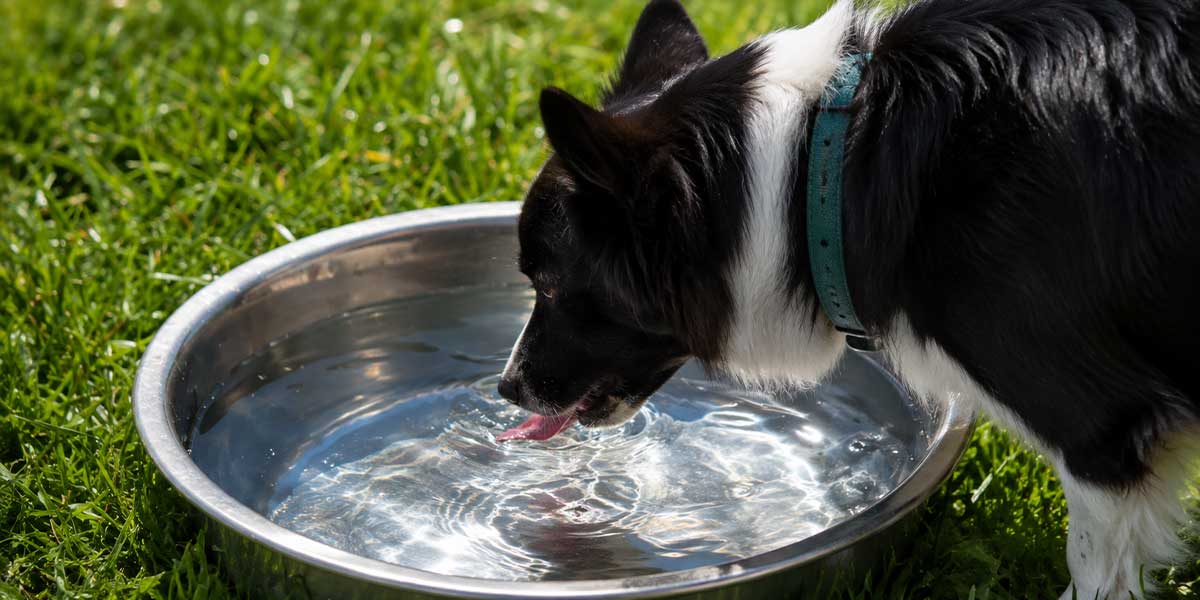
Outdoor placement adds two problems indoor bowls don’t have — algae, which grows faster in sun and in plastic than in shaded metal, and standing water attracting mosquitoes. Both are solved the same way: change the water daily, or use a bowl that refills and drains on its own.
On material: BPA is a well-documented endocrine disruptor. Whether it’s linked to cancer is still being researched, and there’s no dog-specific research on that question at all — treat both as open questions, not settled ones.
Editor’s Pick
Last update on 2026-10-07 / Affiliate links / Images from Amazon Product Advertising API
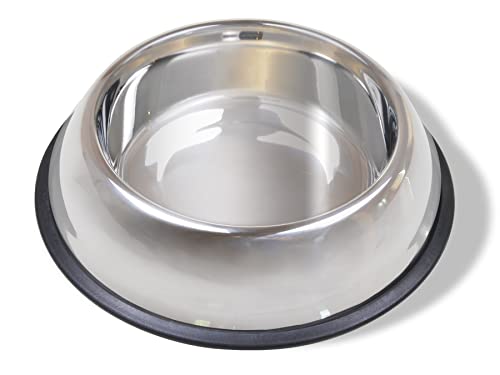
A wide, weighted base that resists tipping, stainless steel that resists both algae and rust, and no moving parts to maintain.
What’s Inside!
Material
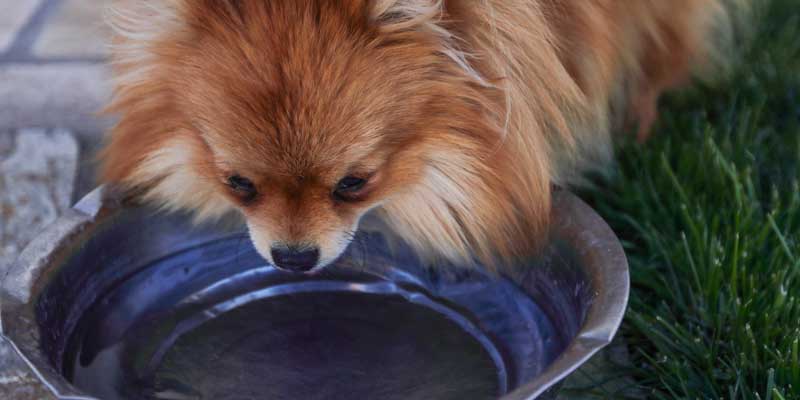
Stainless steel is the safest default for outdoor use. It resists corrosion, doesn’t leach chemicals, and cleans easily in a dishwasher. Vets commonly recommend it for these reasons.
Plastic works if it’s BPA-free — check the label instead of assuming. A cracked or scratched plastic bowl is also more likely to harbor bacteria than a smooth stainless surface, and outdoor sun and heat speed up that kind of wear.
Ceramic looks good and survives daily use with a calm eater, but it chips and cracks, and a hairline crack invisible to the eye can become a place for bacteria to grow. If you go this route, check that the glaze is lead-free and inspect it regularly.
Size and Shape
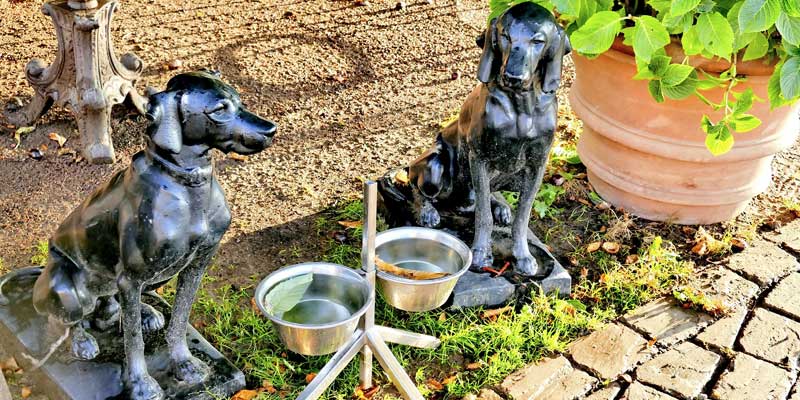
Match the bowl to the dog, not the other way around. A long-snouted breed needs a deep bowl so they can reach the water without straining. Multiple dogs or a dog that drinks a lot in hot weather both call for more capacity than the standard size.
Skip the elevated stand for large and giant breeds specifically. A 2000 JAVMA study found raised feeding bowls linked to increased bloat risk in these dogs — the water-bowl connection is less studied, but there’s no strong reason to introduce the same risk factor for a benefit that’s mostly convenience. Dogs with arthritis or mobility issues are the exception, where the easier reach can outweigh that risk.
Comparison Table



Last update on 2026-10-07 / Affiliate links / Images from Amazon Product Advertising API
Reviews
1. Van Ness Large Non-Tip Stainless Steel (Best Everyday/Non-Heated)
Best Everyday/Non-Heated
Last update on 2026-10-07 / Affiliate links / Images from Amazon Product Advertising API
- Capacity64 oz
- MaterialStainless steel
- Best ForStandard outdoor use, no special conditions
The base combines weight with a non-skid rubber ring on the bottom, so it stays put through normal drinking without needing to be extra heavy.
Stainless steel means algae has a harder time getting a foothold than it would in plastic, and cleaning is a rinse or a dishwasher cycle, not a scrub. Van Ness has made this style for years, and the 64 oz size covers most single-dog households comfortably.
It has no insulation and no auto-refill — if you’re dealing with winter freeze or want to skip daily refilling, one of the other picks here fits better.
Pros
- Wide, stable base resists tipping
- Stainless steel resists algae and rust
- Dishwasher safe
Cons
- No insulation or auto-refill features
2. K&H Thermal-Bowl (Best for Winter/Freeze Prevention)
Best for Winter/Freeze Prevention

Last update on 2026-10-07 / Affiliate links / Images from Amazon Product Advertising API
- Wattage25W, thermostatically controlled
- SafetyListed by an independent testing lab, anti-chew cord
- Best ForCold climates where water freezes
This bowl exists to solve one problem: winter freeze. The heating element cycles on and off with a thermostat, keeping the water above freezing without running constantly or wasting electricity.
K&H has made pet heating products since 1998. The Thermal-Bowl line is MET listed, which certifies it to the UL 499 safety standard — an independent lab’s sign-off, not just the company’s own claim. Wattage runs from about 12W on the smallest bowl up to 25W on the size sold here, and the cord carries an abrasion-resistant wrap on top of the anti-chew design.
For anyone outside a genuine freeze climate, the heating element is unnecessary weight and cost — this is a seasonal or regional pick, not a universal default.
Pros
- Independently safety-listed, not just self-certified
- Thermostatically controlled, runs only when needed
- Anti-chew cord design
Cons
- Unnecessary expense outside freezing climates
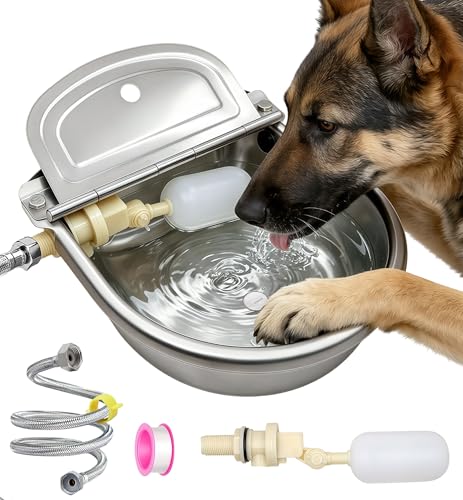
3. Auto-Fill Float Valve Dispenser (Best for Reducing Algae/Stagnant Water)
Best for Reducing Algae/Stagnant Water
Last update on 2026-10-07 / Affiliate links / Images from Amazon Product Advertising API
- ConnectionStandard garden hose
- Material304 stainless steel
- MaintenanceDrain plug for flushing without removal
The float valve works the same way a toilet tank’s fill valve does: it shuts off once the water reaches a set level and reopens as your dog drinks it down. Because the bowl is refilling in small amounts continuously rather than sitting untouched between manual fills, algae and mosquito larvae have less time to establish themselves than they would in a static bowl.
A drain plug lets you flush and rinse the unit in place without disconnecting the hose each time.
It requires an outdoor spigot within hose range, which rules it out for a yard without that setup, and the float mechanism needs occasional checking to make sure it’s moving freely. It also needs to be disconnected and drained before the first hard freeze, since water left inside the valve can crack it as it expands.
Pros
- Constant water turnover discourages algae and mosquito breeding
- Drain plug simplifies cleaning
- 304 stainless steel construction
Cons
- Needs a hose spigot within reach
- Must be drained before freezing weather
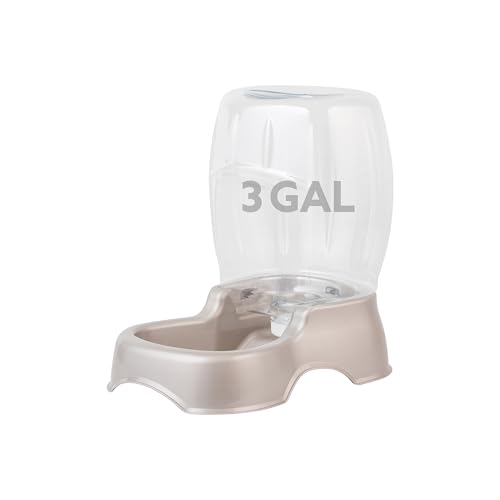
4. Petmate Pet Cafe (Best for Multi-Day Supply/No Hose Access)
Best for Multi-Day Supply/No Hose Access
Last update on 2026-10-07 / Affiliate links / Images from Amazon Product Advertising API
- Capacity3 gallons
- Made inUSA
- Best ForNo hose access, multiple dogs, or extended time away
A gravity-fed reservoir instead of a hose connection — fill it once and it gradually releases water into the bowl as the level drops, no plumbing required.
This design has been on the market for years and carries tens of thousands of reviews, with sales volume that has stayed steady rather than a recent spike-and-fade pattern typical of a new listing. Independent reviews of this design also report occasional cap or seal failures after extended use, and some buyers found the unit physically smaller than the 3-gallon rating led them to expect.
The reservoir needs manual refilling once it runs dry, and a full 3-gallon load is heavy enough that the spot you set it in should be close to final — moving it once it’s full is awkward.
Pros
- No hose or power needed
- Large multi-day capacity
- Long, consistent sales track record
Cons
- Heavy when full, requires manual refilling once empty
- Some owners report cap/seal wear over time and a smaller-than-expected footprint
Recap
| Situation | Pick |
|---|---|
| Standard outdoor use | Van Ness |
| Water freezes in winter | K&H Thermal-Bowl |
| Want to cut down on algae and refilling | Auto-Fill Float Valve Dispenser |
| No hose access, or away from home for a stretch | Petmate Pet Cafe |
FAQ
How much water does my dog actually need each day?
A rough guide is one ounce per pound of body weight. A 20-pound dog needs about 2.5 cups; a 60-pound dog needs about 7.5 cups. Hot weather, activity level, and diet all shift this higher.
Is an elevated bowl better for my dog?
Not for most dogs. A 2000 study linked raised feeding bowls to higher bloat risk specifically in large and giant breeds. The exception is a dog with arthritis or mobility limitations, where the easier reach can help outweigh that risk.
How do I keep algae from growing in an outdoor bowl?
Change the water daily and clean the bowl regularly — algae grows faster in direct sun and in plastic than in shaded stainless steel. A bowl that refills and drains automatically removes most of the problem by keeping water from sitting still.
Is BPA in plastic bowls actually dangerous?
BPA is a confirmed endocrine disruptor with real effects on hormone function. Whether it raises cancer risk specifically is still being researched, and there’s no dog-specific research on that question. If you’re using plastic, choose a BPA-free option regardless.
Do outdoor water dispensers need to be winterized?
Only the hose-connected kind. The float-valve dispenser here should be disconnected before the first hard freeze. The heated bowl is built to run through winter instead, and the standard steel bowl and the gravity reservoir don’t connect to plumbing, so they just need the usual daily check for ice like any outdoor dish.
Final Thoughts
Stainless steel is the safe default material, and which bowl fits beyond that depends on your actual conditions — a freeze-prone winter, a yard without hose access, or just wanting to skip daily refilling all point to different picks here. Keep bowls off elevated stands for large and giant breeds unless mobility makes the tradeoff worth it.