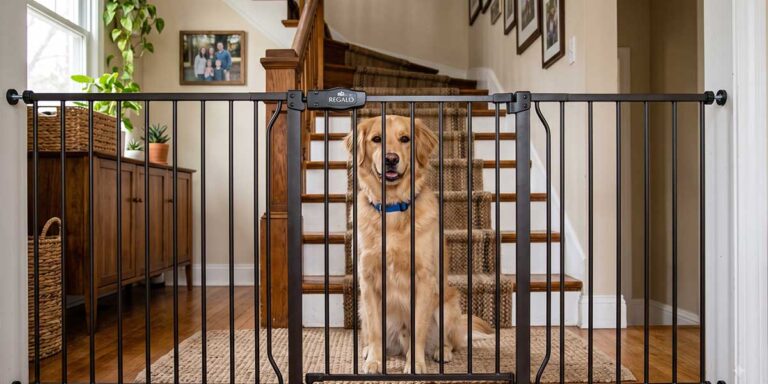
“Indoor electric fence” covers two different product types, and picking the wrong one means real hassle. A wireless barrier creates a small, room-scale boundary — a few feet of radius, meant for keeping a dog out of a doorway or specific area. A training mat works differently: it corrects contact directly, placed on furniture, counters, or a specific spot rather than defining a boundary line. Neither is an outdoor yard-containment system scaled down — they’re built for indoor distances from the start.
Correction-free re-entry on wireless barriers means a dog returning into the safe zone isn’t corrected — only leaving it triggers a response, so a dog doesn’t come to associate walking back inside with a second correction.
Figure out which one you’re solving for first — a doorway or a couch — and the right pick follows from that.
Editor’s Pick
Last update on 2026-10-07 / Affiliate links / Images from Amazon Product Advertising API
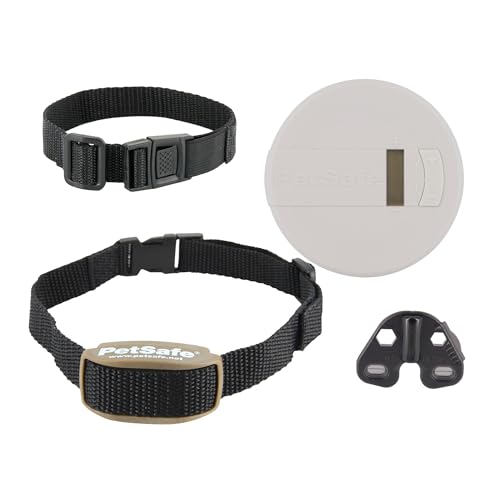
PetSafe’s brand dates to 1998, and this Mini barrier is scaled for indoor room-blocking rather than a shrunk-down yard system, with correction-free re-entry built in.
What’s Inside!
Barrier or Mat
Wireless barrier. Best for keeping a dog out of a doorway, staircase, or entire room. The transmitter creates a small radius boundary, and the dog wears a receiver collar. Useful when you want to restrict access to an area without a physical gate.
Training mat. Best for specific surfaces — a couch, countertop, or spot near the trash. No collar needed; the mat itself delivers a correction on contact. A practical choice when the goal is protecting one object rather than an entire area.
Before you buy either type: professional trainers and outlets that have tested these systems consistently frame them as a tool to use after exhausting positive-reinforcement training, not a first resort. Even a tone-only or vibration correction can cause real stress for a sensitive dog. Start at the lowest effective setting, introduce the system gradually with treats and praise, and never leave a newly-introduced dog unsupervised with it.
Features That Matter
Correction-free re-entry (barriers). Not every wireless barrier includes it, so check the specific model before buying — without it, a dog gets corrected again just for coming back inside.
Tone-only mode. Useful for a sensitive dog or as a starting point before introducing static correction at all.
Rechargeable vs. battery-only. A rechargeable collar or transmitter beats constant battery replacement, especially for daily use.
Range appropriate to the space. Check the radius or mat size against your specific room or furniture — an outdoor-scaled system will be oversized and imprecise indoors.
Indoor Fence Comparison Table



Last update on 2026-10-08 / Affiliate links / Images from Amazon Product Advertising API
Indoor Fence Reviews
1. PetSafe Pawz Away Mini (Best Established Brand)
Best Brand Track Record
Last update on 2026-10-07 / Affiliate links / Images from Amazon Product Advertising API
- RangeIndoor-scaled radius
- Brand historySince 1998
- Best ForNot sure where to start
PetSafe’s brand dates to 1998, decades longer than many newer entrants to pet containment, and correction-free re-entry is built directly into the system.
The Mini size is scoped for indoor room-blocking rather than a downsized outdoor product, and it supports additional receiver collars for multi-pet households. PetSafe’s own spec lists a boundary of up to five feet, with the transmitter running on AAA batteries rather than being rechargeable — plan on keeping spares on hand.
Static correction is included, so plan on the gradual, positive-reinforcement introduction covered above rather than activating full-strength on day one.
Owner reviews on Chewy raise a recurring complaint worth factoring in: the collar or transmitter sometimes stops delivering corrections after a few weeks or months of otherwise normal use, in some cases traced back to a chipped battery-compartment cap. It’s worth testing the unit periodically rather than assuming it’s still active once it’s set up.
Pros
- Brand history dating to 1998
- Correction-free re-entry
- Supports additional receiver collars for multiple pets
Cons
- Requires the same gradual introduction as any static-correction system
- Some owners report the unit losing reliability after a few months
2. FLYSPEAR (Best Multi-Room Coverage)
Best Multi-Room Coverage
Last update on 2026-10-08 / Affiliate links / Images from Amazon Product Advertising API
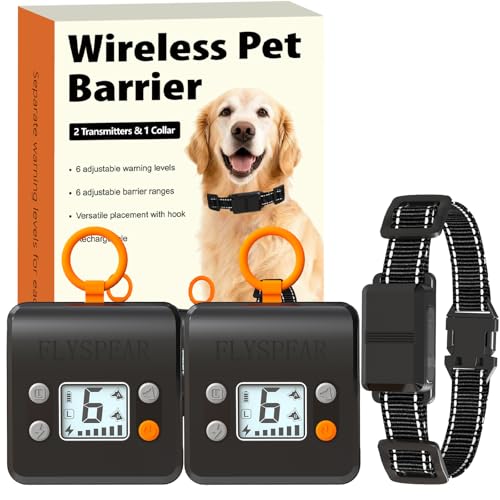
- Transmitters2 included
- RangeAdjustable 0.7 to 7 feet
- Best ForRestricting more than one area at once
Two transmitters included from the start — multi-room coverage without buying a second full system, useful for a kitchen and a bedroom doorway simultaneously.
A hook allows hanging or laying flat, giving flexibility for different room layouts, and the rechargeable design avoids constant battery swaps. Correction-free re-entry is included here too.
The system offers six intensity levels, including a beep-only setting with no static correction at all, and one independent review clocked roughly nine days per charge on the transmitter and about 30 days on the collar, both charging over USB.
Adjustable range tops out at 7 feet — a limit if you’re trying to cover a large open area rather than a doorway or specific zone. The same review noted a learning curve for sensitive or anxious dogs adjusting to the static correction, and the collar isn’t sized for very small puppies.
Pros
- 2-transmitter multi-room coverage
- Rechargeable, no constant battery swaps
- Flexible hook or flat placement
- Beep-only setting available with no static correction
Cons
- 7-foot maximum range, not suited for large open areas
- Collar isn’t sized for very small puppies
3. PetSafe ScatMat (Best Furniture/Counter Deterrent)
Best Furniture/Counter Deterrent
Last update on 2026-10-07 / Affiliate links / Images from Amazon Product Advertising API
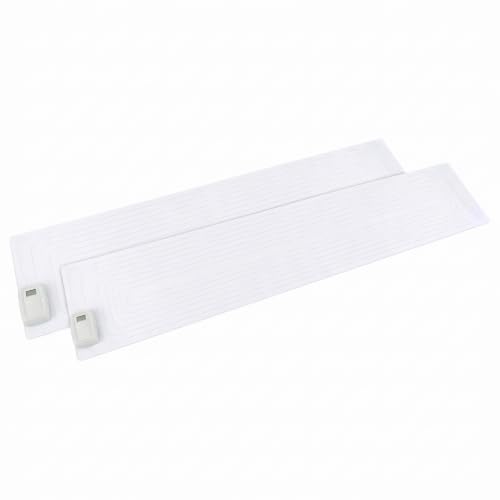
- FormatNo collar required, contact-activated mat
- ModesTone-only or 3 static levels
- Best ForProtecting a specific piece of furniture or counter
This mat comes from PetSafe, whose ScatMat line has been in this category more than 25 years. Tone-only mode plus a built-in safety timeout give a sensitive pet a gentler way in before static correction kicks in.
No collar needed — the mat itself corrects on contact, useful for a dog that’s already comfortable without added gear. Transparent design blends into most furniture and counter settings. An LCD display on the control unit tracks battery level, the active intensity setting, and how many times the mat has been triggered, so you can check whether a pet is still testing the boundary while you’re away.
It only protects the specific surface it covers, not a full area or doorway — the right tool for a couch or countertop, not a room boundary. The same review notes that agile pets can learn to jump over a narrow mat instead of stepping on it, and it isn’t a good match for an extremely anxious pet that may find even the tone-only setting more startling than intended.
Pros
- Tone-only mode and a built-in safety timeout feature
- No collar required
- PetSafe brand, 25+ years in this category
Cons
- Covers only the specific surface, not a full area
- Agile pets can learn to jump over a narrow mat
4. DOGNESS Rechargeable Scat Mat (Best Rechargeable Mat Alternative)
Best Rechargeable Mat Alternative

Last update on 2026-10-08 / Affiliate links / Images from Amazon Product Advertising API
- PowerRechargeable, no batteries needed
- Safety featureAuto-deactivation after 5 continuous corrections
- Best ForA rechargeable mat with a clear safety cutoff
One independent review found three adjustable intensity modes suited to different pet sizes and sensitivities, along with a washable mat surface for cleanup and a battery-level indicator on the unit.
The mat shuts off automatically after five consecutive corrections in a row, a safety cutoff not every competitor states clearly, and a separate included test pen lets you confirm the unit is working without touching the mat yourself.
Being rechargeable means tracking a charge level instead of swapping a 9-volt battery. The battery compartment itself isn’t washable, so the mat surface needs wiping down carefully rather than being submerged, and DOGNESS doesn’t offer an app or remote control for adjusting settings from another room.
Pros
- Auto-deactivation safety cutoff
- Test pen included for checking function without touching the mat
- Rechargeable, no battery purchases needed
Cons
- Requires tracking charge level rather than a simple battery swap
- Battery compartment isn’t washable, and there’s no app or remote control
Which Indoor Fence Should You Buy?
| Situation | Pick |
|---|---|
| Not sure where to start | PetSafe Pawz Away Mini |
| Need to cover more than one room or doorway | FLYSPEAR |
| Protecting a specific couch or countertop | PetSafe ScatMat |
| Want a rechargeable mat with a clear safety cutoff | DOGNESS Rechargeable Scat Mat |
Indoor Electric Fence FAQ
Should I get a wireless barrier or a training mat?
Depends on what you’re protecting. A wireless barrier restricts an entire doorway, room, or area; a training mat protects one specific surface, like a couch or countertop. Match the tool to the space, not just whichever seems more familiar.
What is correction-free re-entry, and why does it matter?
It means a dog returning into the safe zone from outside the boundary isn’t corrected again, only leaving triggers a response. This matters because a dog shouldn’t associate coming home with a second correction, which could make them hesitant to return.
Are these systems safe to use right away at full strength?
No. Start at the lowest effective setting and introduce the system gradually with treats and positive reinforcement, similar to training with any correction-based tool. Professional trainers generally treat these as a tool for after other training methods, not a first resort.
Can I use an outdoor electric fence system indoors?
Not effectively. Outdoor systems are scaled for yard-sized distances and will be imprecise or oversized for indoor use. Choose a system specifically built and marketed for indoor range instead.
What should I do if a barrier or mat stops working reliably?
Test it on a regular schedule rather than assuming it’s still active once it’s set up — owner reports show a battery-powered barrier can quietly stop delivering corrections after months of otherwise normal use. Some mats include a separate test pen so you can confirm the unit is working without touching the corrective surface yourself.
Final Thoughts
Match the product type to the space — a wireless barrier for a doorway or room, a training mat for a specific surface. Look for correction-free re-entry on any barrier system, start at the lowest setting with gradual, positive-reinforcement introduction, and skip anything scaled for outdoor yard distances.