Rubber, coir, and chenille solve different problems, and choosing the right one matters more than most buying guides suggest. Several mats in this category also use PVC backing. Peer-reviewed research has found that phthalates can migrate out of PVC pet products during active chewing — a doormat isn’t something most dogs chew, but a known chewer or a mouthy puppy is a real reason to lean toward a natural-fiber or rubber-backed mat instead.
Editor’s Pick
Last update on 2026-10-13 / Affiliate links / Images from Amazon Product Advertising API
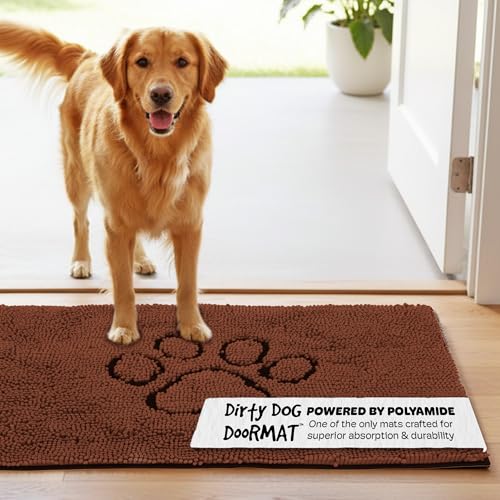
This mat is rated Most Absorbent by Rover.com, which cites a 3000 GSM absorption rating for the microfiber. It’s made by a brand founded by a canine behaviorist in 2006, and the surface soaks up mud and water on contact.
- MaterialMicrofiber
- BackingNon-slip gripper
- Best ForOverall performance
- CareMachine washable
What’s Inside!
What Matters When Choosing a Doormat
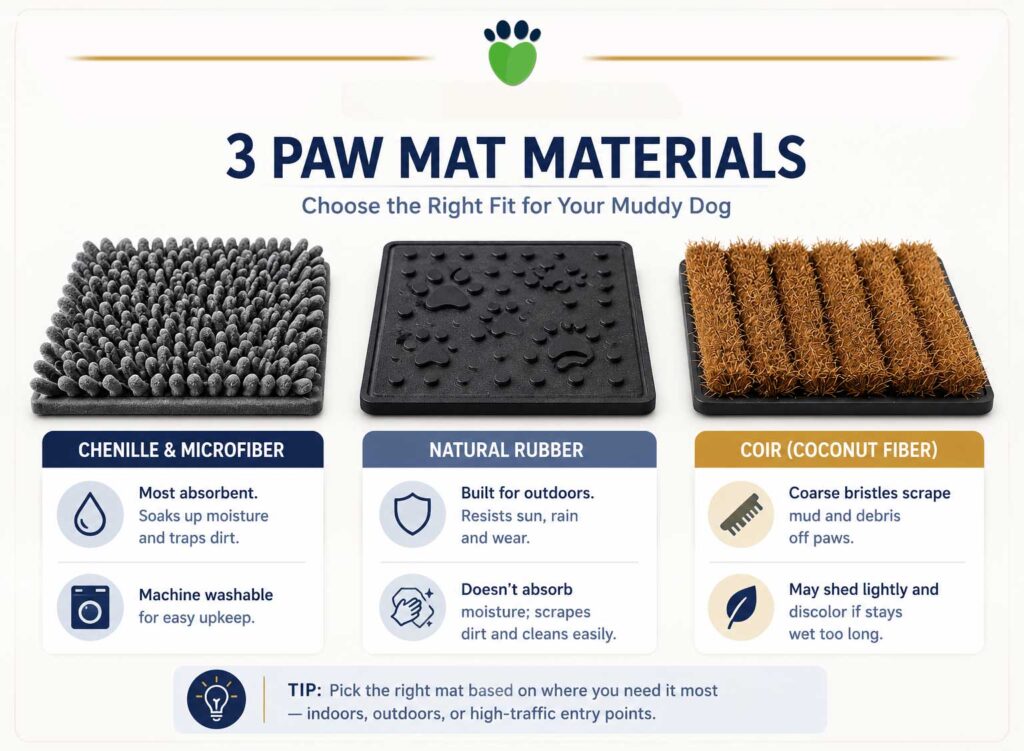
The right doormat depends more on material than any other factor:
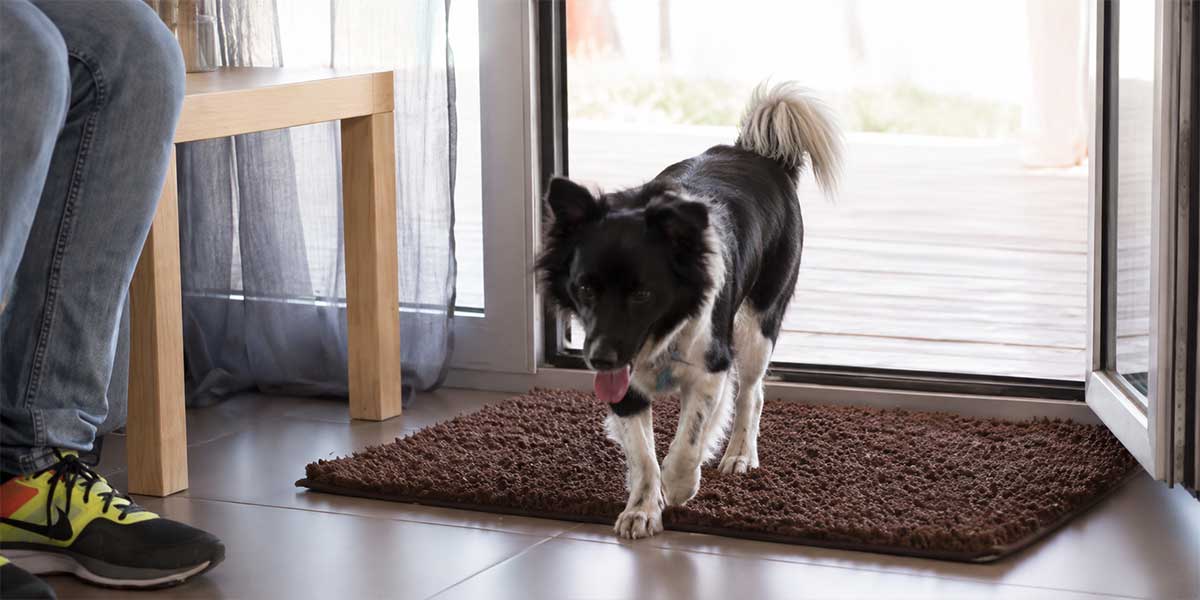
Chenille and microfiber are the most absorbent materials — dense fibers soak up moisture and trap dirt, and most mats made from these materials are machine washable. Pick one of these if your dog tracks in a lot of mud and you want maximum absorption.
Natural rubber withstands sun, rain, and repeated outdoor wear without breaking down the way fabric can over time. It won’t absorb moisture the way chenille does, but it scrapes dirt off and hoses clean.
Coir (coconut fiber) has coarse, scratchy bristles that mechanically scrape mud and debris off paws rather than absorbing it. It works well as an entry point where dogs often walk through mud, though it sheds lightly when new and can discolor a surface if it stays wet for too long.
Many mats in this category — several reviewed below included — use PVC backing for grip. Peer-reviewed research (published via ScienceDirect) found that phthalates can migrate from PVC pet products into saliva during active chewing. A doormat isn’t something most dogs chew the way they chew a toy, so this is a low-relevance concern for most households. If you have a dog that chews on everything, or a puppy still exploring the world with its mouth, a natural rubber or coir mat avoids the question.
Durability and Sizing
A doormat should realistically last at least a year of regular use. Material and stitching quality both matter: a mat that’s too thick can catch on the bottom of a door, while one that’s too thin won’t grip well underfoot. Size it to your entryway, not your dog — it should be large enough for a full paw-wipe motion without overwhelming the space.
Outdoor Doormat Comparison Table


Last update on 2026-10-13 / Affiliate links / Images from Amazon Product Advertising API
Doormat Reviews, by Material
1. Dog Gone Smart (Best Overall)
Best Overall
Last update on 2026-10-13 / Affiliate links / Images from Amazon Product Advertising API
- MaterialMicrofiber
- BackingNon-slip gripper
- Best ForOverall performance
- CareMachine washable
Rover.com named this doormat Most Absorbent in its own comparison of dog doormats, citing a 3000 GSM rating for the microfiber. Founder Chris Onthank is a dog trainer and canine behaviorist who launched the brand in 2006 after more than 25 years working with dogs.
The microfiber surface soaks up water, mud, and dirt on contact, and the gripper backing keeps the mat from sliding during use. It’s machine washable.
Some owners report a noticeable chemical smell straight out of the packaging, and Chewy reviewers note the fluffy microfiber pile is hard to vacuum and can come apart in strands after a couple of months, even before a first wash. Airing the mat out before first use and washing it on a gentle cycle may help it last longer.
Pros
- Rated Most Absorbent by Rover.com, with a 3000 GSM microfiber rating
- Canine-expert brand origin
- Strong absorption, machine washable
Cons
- Chemical smell out of the box; pile can be hard to vacuum and may unravel over time
2. Muddy Mat (Best Absorption)
Best Absorption
Last update on 2026-10-13 / Affiliate links / Images from Amazon Product Advertising API
- MaterialChenille
- BackingAnti-slip
- Best ForMaximum absorption
- CareMachine washable
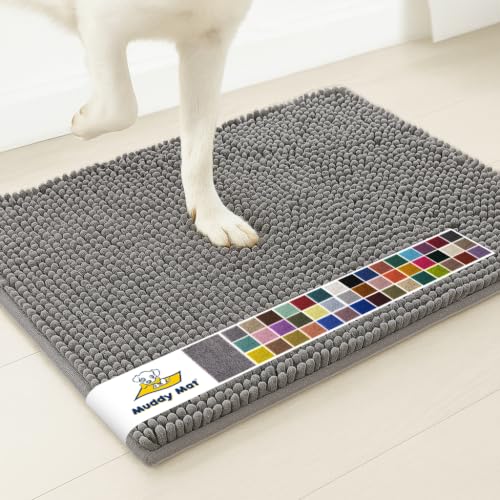
This chenille mat has racked up over 21,000 mostly five-star ratings on Amazon — a platform figure, not an independent test result. Muddy Mat’s own listing claims the chenille absorbs five times as much as a standard doormat; that’s the company’s number, not an independently verified one.
It dries fast for a mat this absorbent, and the rubber backing keeps it from sliding underfoot. The one-inch chenille pile is thick enough that dogs often lie down on it rather than just wipe their paws.
Sizing and color options are broad. One review of owner feedback noted complaints about the chenille matting down or separating with heavy use, and this mat is more expensive than the other chenille options here.
Pros
- 21,000+ mostly five-star ratings on Amazon
- High absorption capacity
- Doubles as a comfortable resting spot
Cons
- Costs more than the other chenille picks here
- Some owner reports of matting or fibers separating after heavy use
3. OLANLY (Best Value)
Best Value
Last update on 2026-10-13 / Affiliate links / Images from Amazon Product Advertising API
- MaterialChenille
- BackingRubber, non-slip
- Best ForBudget-conscious buyers
- CareMachine washable
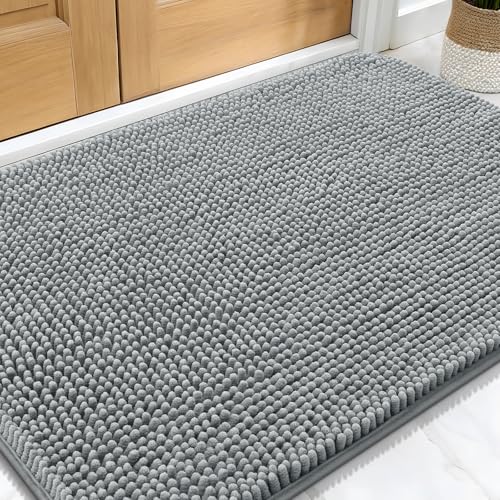
OLANLY pairs a chenille top with a rubber, non-slip backing, at roughly an inch thick so it won’t catch under a door or become a tripping hazard. The chenille absorbs moisture on contact and the rubber base keeps the mat from sliding.
It’s sized to work in more than one spot around the house — by a food bowl, under a crate, in the car — not just at the front door. One review notes the lighter grey colorway shows stains more visibly than the darker options, so a muddy household may want to skip that color.
Pros
- Rubber backing keeps it from sliding
- Low profile, no tripping or door-snagging issues
- Versatile beyond just the entryway
Cons
- Chenille surface, same outdoor-durability limits as other fabric mats
- Lighter colorways show stains more easily
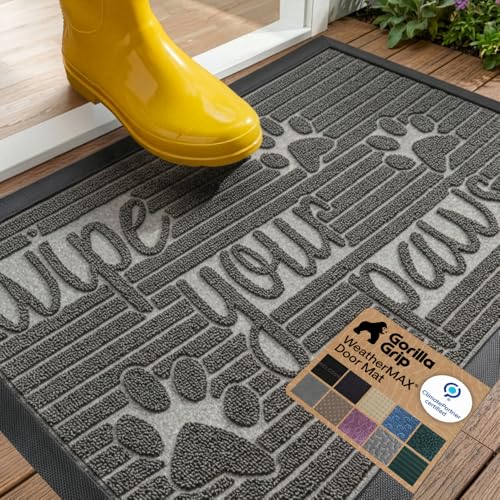
4. Gorilla Grip WeatherMax (Best True Outdoor Mat)
Best True Outdoor Mat
Last update on 2026-10-13 / Affiliate links / Images from Amazon Product Advertising API
- Material100% natural rubber
- BackingBuilt-in, low profile
- Best ForReal outdoor exposure, all-season use
- CareHose off or vacuum
Gorilla Grip sells two different mat lines under one name: a newer indoor chenille collection, and this one, the WeatherMax, made from 100% natural rubber for outdoor use. The WeatherMax is the one built for an actual outdoor entryway — the chenille line isn’t.
BestReviews rated the WeatherMax 5 out of 5 overall in its own testing, and found the rubber resisted staining and fading through repeated outdoor exposure. The low-profile design won’t interfere with door clearance.
Cleaning takes a hose or a vacuum — no washing machine cycle, and no laundry time spent on a doormat. The same testers noted a strong rubber smell coming from the package that took several days to fade, which is common with new rubber mats and not a sign of a defect.
Pros
- Outdoor-rated natural rubber, built to last outside
- Rated 5/5 overall in BestReviews testing
- Easy hose-off or vacuum cleaning
Cons
- Won’t absorb moisture the way chenille does — scrapes rather than soaks
- Strong rubber smell for the first few days
5. Buganda (Best Budget Chenille)
Best Budget Chenille

Last update on 2026-10-13 / Affiliate links / Images from Amazon Product Advertising API
- MaterialChenille
- BackingNon-slip
- Best ForTightest budget
- CareMachine washable
Buganda doesn’t have the sales history or independent coverage that Muddy Mat or OLANLY have built up — it’s a smaller, lesser-known brand. What it offers is the same basic idea as the pricier chenille mats: a plush absorbent top over a non-slip backing, at a lower relative cost.
The low-profile design avoids door-clearance issues, and the non-slip backing keeps it in place. It comes in multiple colors, so matching an entryway isn’t a problem.
Buganda is newer to the market than the other brands here, so there aren’t years of aggregated owner reports like Muddy Mat or OLANLY, and there’s less to go on for how it wears after a year or two. For the core job — trap mud, wipe paws — it does the same thing chenille always does.
Pros
- Lowest cost of the chenille mats here
- Low profile, multiple colors
- Same absorbent chenille approach as pricier picks
Cons
- Newer brand with little independent track record or long-term owner data
6. Barnyard Designs (Best Natural Coir)
Best Natural Coir
Last update on 2026-10-13 / Affiliate links / Images from Amazon Product Advertising API
- Material100% coconut coir
- BackingNon-slip
- Best ForNatural fiber, chewers/puppies
- CareShake clean, air dry
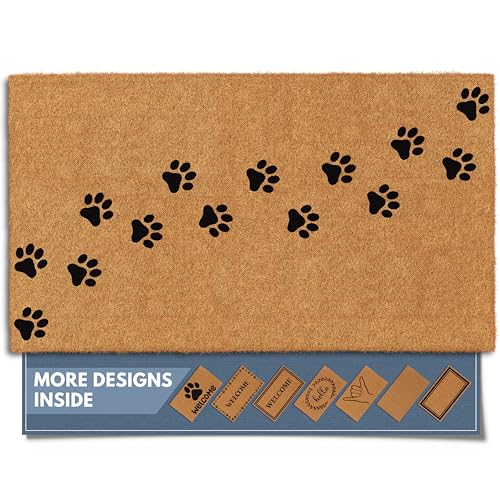
The “Paws” variant has a pawprint pattern designed for pet owners, not a generic welcome mat pressed into service. It’s made from 100% coconut coir — coarse bristles that mechanically scrape mud and debris off paws rather than absorbing it.
For a household with a known chewer or a young puppy, this sidesteps the PVC-backing question entirely — it’s natural coir front-to-back, with no plastic backing layer to worry about.
Like any coir mat, some fiber shedding is normal when it’s first unboxed. Independent testing of coir doormats has found the same pattern — shedding that continues for a while, plus discoloration on the surface underneath if the mat stays wet for days. A covered entry keeps it drier and extends its life.
Pros
- Dog-specific pawprint design
- 100% natural coir, no PVC
- Real mechanical dirt-scraping action
Cons
- Light shedding when new; can discolor if left wet
Which Doormat Should You Buy?
| Situation | Pick |
|---|---|
| Not sure where to start | Dog Gone Smart |
| Genuinely muddy dog, want maximum absorption | Muddy Mat |
| Tight budget, want it useful beyond the entryway too | OLANLY |
| True outdoor exposure, all-season use | Gorilla Grip WeatherMax |
| Absolute lowest price | Buganda |
| Known chewer, puppy, or want to avoid PVC entirely | Barnyard Designs |
Outdoor Doormat FAQ
What’s the best material for a dog doormat?
It depends on what you’re solving for. Chenille and microfiber absorb the most moisture and are machine washable. Natural rubber stands up to outdoor exposure without breaking down. Coir mechanically scrapes dirt off with coarse bristles instead of absorbing it. There’s no single best material — it comes down to whether you need absorption, outdoor durability, or scraping action most.
Is PVC backing on a doormat dangerous for dogs?
For most households, not a real concern. The peer-reviewed research on phthalate leaching from PVC pet products focused on toys dogs actively chew, not something a dog stands on for a few seconds at a time. If your dog chews on things, or you have a puppy still mouthing its way through everything, choosing a natural rubber or coir mat instead is a reasonable precaution — but it’s not a reason for most owners to avoid PVC-backed mats outright.
How often should I replace a dog doormat?
A durable mat should last at least a year of regular use; premium options can last several years with proper care. Check the mat’s condition after about 12 months, especially in high-traffic households, and replace it once it stops absorbing well or the backing wears out.
Can I machine wash any dog doormat?
Chenille and microfiber mats are typically machine washable on a gentle cold cycle. Natural rubber mats should be hosed off or vacuumed instead — machine washing can damage the material. Coir mats generally shouldn’t be machine washed either; shake clean and keep them from prolonged water exposure.
Final Thoughts
Match the material to what you’re actually solving for — chenille for maximum absorption, natural rubber for outdoor durability, coir for mechanical dirt-scraping, and a PVC-free option. Whatever you choose, size it to your entryway and expect to replace it after a year or so of regular use.