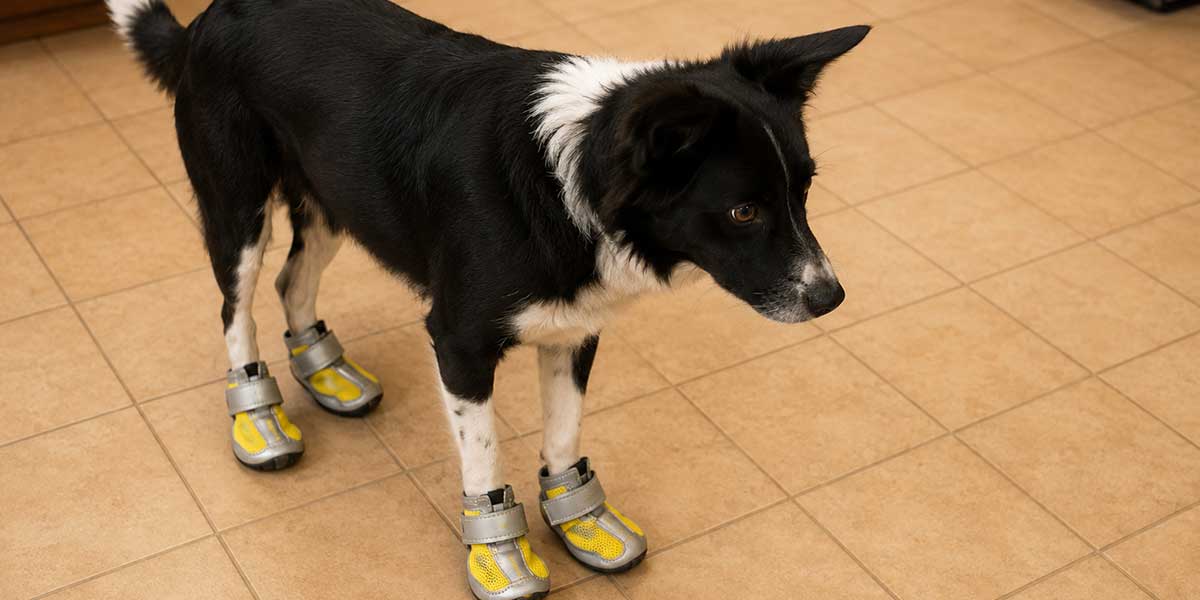
Try this before your next hot-weather walk: place the back of your hand on the pavement. If you can’t hold it there comfortably for 7-10 seconds, it’s too hot for your dog’s paws too. The advice comes from Dr. Jerry Klein, the AKC’s Chief Veterinarian. At an air temperature of 86°F, asphalt can reach 135°F, and pavement above 120°F can burn paw pads in as little as 60 seconds. A small dog stands closer to that surface than a long-legged breed, with more of its body catching the radiated heat.
Run the hand test before every hot-weather walk. Per the American Kennel Club, place your hand comfortably on the pavement for ten seconds; if it’s too hot for your hand, it’s too hot for your dog’s paws. Dark asphalt runs hottest; grass and shaded surfaces stay cooler on the same day.
Editor’s Pick
Last update on 2026-10-08 / Affiliate links / Images from Amazon Product Advertising API
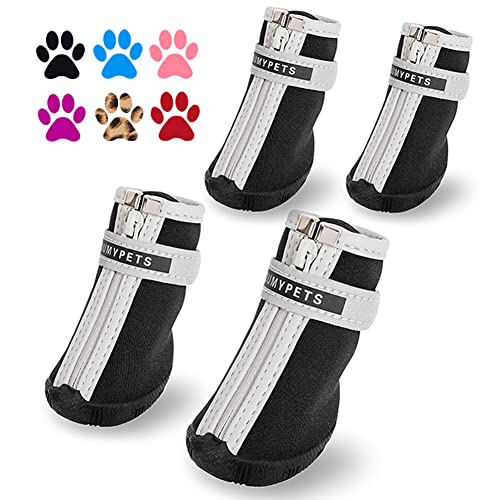
Two independent testers report the same thing about QUMY: the boots stay on, through hard play and a year of hiking. Staying on is where most small-dog boots fail first.
- MaterialWater-resistant fabric, rubber sole
- ClosureReflective adjustable straps
- Best ForAll-around use, proven stay-on fit
What’s Inside!
What Matters When Choosing Dog Boots
Size and fit. This matters more than any other factor. Measure your dog’s paw at its widest point while standing (weight-bearing paws spread slightly), not sitting. Boots that are too loose will be shed within a block; too tight causes real discomfort. When between sizes, size up rather than down — with one exception covered in the Non-stop review below.
Adjustability. Velcro or strap closures let you fine-tune fit beyond the base size, and they speed up getting boots on and off. If your dog hates the process, faster is better.
Material and sole. A textured sole gives traction on ice, wet pavement, and hardwood floors alike. Waterproof material earns its keep in rain and snow. For hot weather, breathable fabric is the bigger concern — trapped heat bothers dogs before wetness does.
Helping Your Dog Adjust to Wearing Boots
Most dogs walk strangely in boots at first — this is normal. Boots interfere with the sensory feedback dogs get from the ground, throwing off their natural gait temporarily. Start with short indoor sessions, use treats and praise, and build up wearing time gradually instead of expecting immediate comfort on a long walk.
Dog Boots for Small Dogs Comparison Table




Last update on 2026-10-13 / Affiliate links / Images from Amazon Product Advertising API
Dog Boot Reviews, by Use Case
1. QUMY (Best Overall)
Best Overall
Last update on 2026-10-08 / Affiliate links / Images from Amazon Product Advertising API
- MaterialWater-resistant fabric, rubber sole
- ClosureReflective adjustable straps
- Best ForAll-around use, proven stay-on fit
The case for QUMY is that the boots stay on. Dog Gear Review ran a pair through a year of hiking and reports they never fell off, and Dog Notebook saw the same through high-energy play. The grooved rubber sole grips rough ground, though no boot grips as well as claws do — testers still found them slippery on ice.
The water-resistant fabric handles light rain and snow, and reflective straps show up in headlights on early-morning or evening walks. They’re hand washable, and the split-seam opening makes them easier to size up as a growing puppy’s paws change.
In deep puddles, water eventually works through the seam stitching, and the fabric doesn’t breathe — Dog Gear Review found paws got hot and damp inside on longer summer hikes, and the reflective velcro straps started peeling after a year of regular use. Short daily walks won’t expose either problem; for soaked ground, PawZ is the one fully waterproof pick on this list.
Pros
- Stayed on through play and a year of hiking in independent tests
- Reflective straps for visibility
- Hand washable, split-seam sizing flexibility
Cons
- Seams admit water in deep puddles; straps wore out after a year of heavy use
2. Non-stop Dogwear (Best Professional-Grade)
Best Professional-Grade

Last update on 2026-09-28 / Affiliate links / Images from Amazon Product Advertising API
- MaterialNitrile-rubber-dipped, level 5 anti-cut
- ClosureElastic hook-and-loop
- Best ForRough terrain, maximum durability
Non-stop Dogwear is a Norwegian sled-dog racing brand, and this bootie comes out of that sport. Distance races like the Iditarod require mushers to carry spare booties for every dog on the team, and the company reports its Protector booties were used on search-and-rescue dogs after the 2020 Beirut explosion, working rubble at surface temperatures around 122°F.
The level 5 anti-cut fabric is dipped in nitrile rubber, which grips wet pavement, hardwood, and rock while flexing enough for the paw to spread naturally. That protects against glass and sharp debris that would slice open a fabric boot. The lining is seamless to prevent chafing, each bootie weighs roughly 16 grams, and they’re machine washable — a small test dog balanced on rocky terrain in them without trouble.
Sizing works backward here: Non-stop measures across the top of the paw and recommends the smaller size when a dog falls between sizes — the opposite of the size-up rule for the other boots in this list.
They’re water-resistant, not waterproof; the coating is left breathable on purpose, and if water gets in over the top, it’s slow to dry out. The pair frayed at the Velcro straps over a winter of icy walks, a defect the brand said it would look into. Expect to pay more for these than for anything else here.
Pros
- The bootie format mushers race in; used by SAR teams
- Flexible nitrile grip, seamless no-chafe lining
- Level 5 anti-cut protection, machine washable
Cons
- Not fully waterproof, slow to dry; priciest option here
3. XSY&G (Best Anti-Skid)
Best Anti-Skid
Last update on 2026-10-08 / Affiliate links / Images from Amazon Product Advertising API
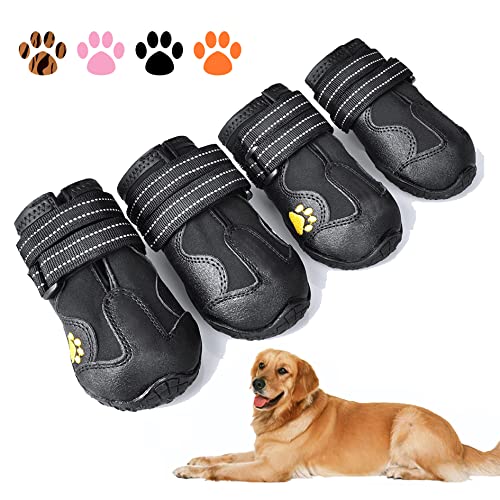
- MaterialWaterproof, breathable
- ClosureReflective velcro straps
- Best ForIcy and sandy surfaces
XSY&G builds its skid-proof sole for unstable footing — ice and sand are the two surfaces it’s aimed at. Dog Notebook’s testing rated these strong against winter salt and de-icing chemicals, with boots that stayed on well. Reflective straps cover low-light walks.
Breathable fabric keeps them wearable across seasons, and the sole puts a barrier between paws and stones, glass, hot pavement, and snow. They’re soft-sided and hand washable.
Two things to watch. Testers found the sizing chart trickier than most, and in deep snow, snow works in over the cuff. The material also breaks down more quickly than the QUMY fabric, so a hesitant dog may need a longer adjustment period.
Pros
- Built for icy and sandy footing; handles road salt well
- Breathable across seasons
- Reflective for low-light visibility
Cons
- Tricky sizing; deep snow gets in over the cuff; stiffer break-in
4. CovertSafe (Best Value 4-Pack)
Best Value 4-Pack

Last update on 2026-10-08 / Affiliate links / Images from Amazon Product Advertising API
- MaterialWaterproof, breathable
- ClosureAdjustable secure straps
- Best ForBudget-conscious buyers
Dog Notebook made CovertSafe its budget pick after testing, reporting traction and a secure fit comparable to pricier boots, plus protection from thorns and stickers along trail edges. The sole handles snow and hot pavement, reflective trim covers night walks, and the soft material is hand washable.
The listing says waterproof; the same testers found the fabric lets water through in genuinely wet conditions, and the Velcro wears down with repeated washing. Treat these as fair-weather and light-snow boots.
Sizing is also less forgiving than on the pricier picks — a half-size miss shows up in the dog’s gait sooner than it would with QUMY or Non-stop.
Pros
- Tested budget pick with a secure fit
- Reflective, anti-slip, hand washable
- Guards against thorns and hot pavement
Cons
- Fabric lets water through; velcro wears with repeated washing
5. EXPAWLORER (Best Reflective)
Best Reflective
Last update on 2026-10-08 / Affiliate links / Images from Amazon Product Advertising API
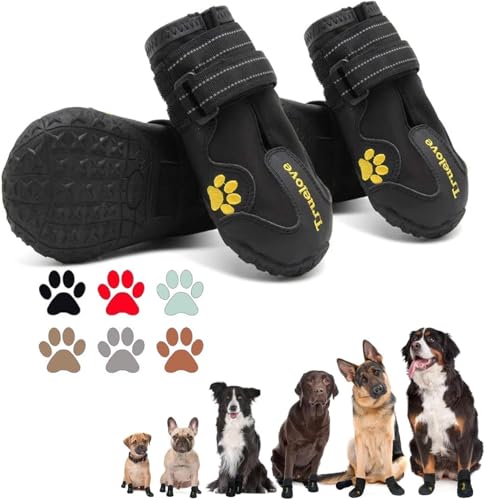
- MaterialWaterproof, superior reflective
- ClosureTwo-strap fastening
- Best ForLow-light visibility, long-wear comfort
EXPAWLORER puts reflective banding on both straps, providing wider coverage than the single accent strips on the other fabric boots here — on a dark street, these are what headlights catch first. That double-strap fastening also gives you two anchor points per boot to adjust.
Rover’s reviewers found the sizing accurate, though the numeric 1-8 range means you must measure the paw — there’s no small/medium/large shorthand. They also note new pairs arrive stiff and loosen through a break-in period, so plan a few indoor sessions before the first full walk. Once broken in, the grooved soles give good control across surfaces, and the boots are comfortable for longer wear, not just brief outings. Hand washes only.
Pros
- Widest reflective coverage on this list
- Accurate sizing in Rover’s testing
- Comfortable for longer wear once broken in
Cons
- Arrives stiff and needs break-in; hand wash only
6. PawZ (Best Disposable Rubber)
Best Disposable Rubber
Last update on 2026-10-13 / Affiliate links / Images from Amazon Product Advertising API
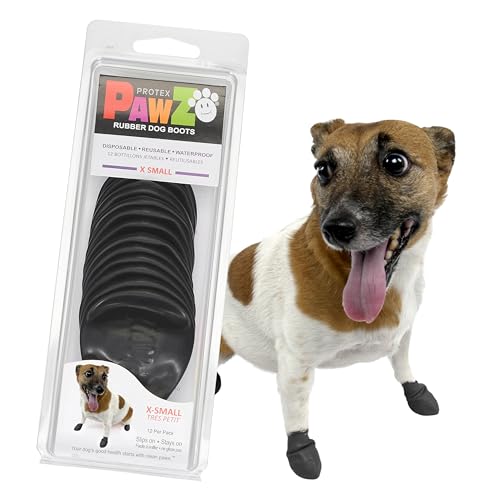
- Material100% natural rubber
- ClosureNone — stretches on like a sock
- Best ForTemporary use, licking prevention, minimal-bulk feel
PawZ is the one pick here with no sole, no straps, and no padding — a stretchy natural-rubber boot that pulls on like a balloon over a paw. The dog keeps ground feel through the thin rubber, the closest thing to barefoot that still blocks heat, salt, and water, and it’s the only fully waterproof option on this list.
Veterinarian Julie Buzby recommends them for jobs strap-and-sole boots do badly: keeping a healing paw or torn nail dry, blocking ice-melt chemicals, and stopping ice balls from forming between the toes. The 100% biodegradable natural rubber is reusable until it wears through, and the 12-pack exists because the thin rubber is treated as semi-disposable — losing or tearing one doesn’t retire the set.
The complaints are real, and the same vet states them bluntly: a too-tight opening can restrict circulation and cause tissue damage if left on too long, and sweat builds up inside because rubber doesn’t breathe — these are for walks, never all-day wear. Owner reports split on fit too: some find they stay on fine, others fight the constrictive opening every time. Sizing runs small; go up a size from the measured paw.
Pros
- Minimal-bulk sock-style format, fully waterproof
- Vet-recommended for healing paws and ice melt
- 12-pack of biodegradable natural rubber
Cons
- Constrictive opening divides owners; short wear sessions only
Which Dog Boots Should You Buy?
| Situation | Pick |
|---|---|
| Not sure where to start | QUMY |
| Rough terrain, need real durability | Non-stop Dogwear |
| Icy or sandy surfaces | XSY&G |
| Tightest budget | CovertSafe |
| Night walks, want maximum visibility | EXPAWLORER |
| Want a minimal, sock-style feel | PawZ |
Dog Boots FAQ
How hot does pavement get?
Hotter than most people realize. Per data reported in the Journal of the American Medical Association, 86°F air can mean 135°F asphalt, and surfaces above 120°F can burn in about 60 seconds. Pavement also stores heat after sundown, so an evening walk can still burn paws after the air has cooled — early morning is the safer window, and the hand test settles any doubt.
Do small dogs need boots?
It depends on your dog’s exposure. Boots make the most sense for dogs regularly walking on hot pavement, ice, chemical de-icers, sharp terrain, or recovering from a paw injury. Not every dog needs them for every walk, but in harsh conditions they prevent injuries you’d otherwise be treating.
Why does my dog walk strangely in boots?
This is normal and not a sign anything’s wrong. Boots interfere with the sensory feedback dogs get from the ground, temporarily throwing off their balance and gait. Most dogs adjust within a few short sessions of positive-reinforcement practice.
Can dogs wear boots all the time?
No. Dogs sweat through their paw pads, so extended wear traps moisture against the skin, and boots left on too long can interfere with circulation and natural paw function. Use boots for the conditions that call for them, take them off at home, and check the paws when you do.
Final Thoughts
Sizing decides more than brand: a well-fitted budget boot beats a premium one that gets shed on the first block. Measure standing paws, run the hand test in summer, and give your dog a few indoor sessions before the first real walk. If your walks are ordinary streets, QUMY covers them; buy the Non-stop booties when the ground gets rough, and reach for PawZ when the ground is wet or a paw is healing.