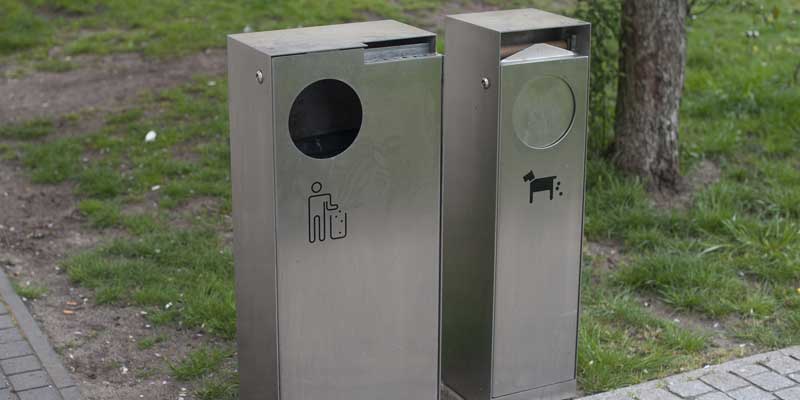
Every dog owner knows the moment — you scoop, you tie the bag, and then you’re standing there holding it, wondering where it’s supposed to go. Tossing it in with regular household trash feels wrong, and it usually smells like it too. There’s a specific reason for that beyond just the obvious: a single gram of dog waste can contain roughly 23 million fecal coliform bacteria, an EPA-documented figure, not an exaggeration. That’s worth a dedicated container, not just a stronger trash bag.
Editor’s Pick
Last update on 2026-10-07 / Affiliate links / Images from Amazon Product Advertising API
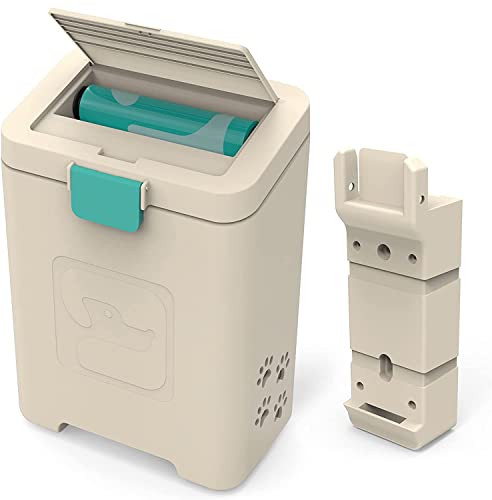
DualVent airflow paired with an activated carbon filter, weather-resistant construction, and discreet bag storage for up to 200 bags built into the lid.
What’s Inside!
What to Look For
Odor control mechanism. A tight-sealing lid is the baseline; an activated carbon filter or dual-vent airflow system goes noticeably further, actively neutralizing smell rather than just containing it.
Material for the environment it’ll live in. UV-resistant plastic or powder-coated aluminum for outdoor use; stainless steel or a sealed plastic body for indoor placement where appearance and touch-free operation often matter more.
Lid operation. Foot pedals and sensor-based lids both keep your hands off the container. Sensor lids cost more and need batteries or power, but reliably prevent a determined dog from opening it.
Capacity matched to your dog and household. A larger dog or multiple dogs will fill a small bin fast — size for how often you’re realistically willing to empty it, not the smallest option available.
Check that a product is built for dog waste, not just repurposed from something else. Some popular waste-disposal systems are designed and marketed specifically for cat litter, with only anecdotal, off-label reports of working for dog waste — not dog-specific engineering. Look for a product explicitly built and sold for dog waste if that’s what you’re managing.
Garbage Can Comparison Table


Last update on 2026-10-07 / Affiliate links / Images from Amazon Product Advertising API
Garbage Can Reviews
1. PawPail (Best Overall)
Best Overall
Last update on 2026-10-07 / Affiliate links / Images from Amazon Product Advertising API
- Odor controlActivated carbon filter, patented DualVent airflow
- MaterialUV and weather-resistant
- Best ForNot sure where to start
DualVent airflow works alongside an activated carbon filter, so odor gets pulled through and neutralized instead of sealed in behind a plain lid.
It’s built from commercial-quality, weather-resistant material with UV protection, with storage for up to 200 bags built into the lid so refills aren’t a separate errand. PawPail describes its mission as dog waste management, not a general-purpose bin adapted for the job.
It’s priced above the simpler single-lid bins on this list.
Pros
- Dual-mechanism odor control (filter plus airflow)
- Built-in storage for up to 200 bags
- Weather-resistant, purpose-built for dog waste
Cons
- Priced above simpler bins
2. Pet Genie (Best for Indoor Use)
Best for Indoor Use

Last update on 2026-10-07 / Affiliate links / Images from Amazon Product Advertising API
- Odor controlSliding lever seal, multi-layer refill barrier
- Use caseIndoor and outdoor, including puppy pads and diapers
- Best ForManaging waste from puppies, seniors, or indoor-trained dogs
It’s built and marketed for dog waste, unlike systems designed for cat litter that get used off-label for dogs. It also handles puppy training pads and dog diapers, not just bagged waste.
The sliding-lever lid locks in odor after each deposit, and scooping straight into the pail — rather than lining it with a fresh bag each time — cuts down on plastic use. UV-protected plastic construction and a top handle mean it can sit indoors or get carried outside.
Owner reviews on Chewy point to two recurring issues: the sliding lever can pop open and separate the lid from the base during transport, and the opening is narrow for larger dogs’ waste or bulkier pads. Multiple reviewers describe it working best for small dogs, cats, or puppies rather than bigger breeds.
Refill film needs periodic replacement, adding an ongoing cost beyond the initial purchase.
Pros
- Built specifically for dog waste, not repurposed
- Handles training pads and diapers, not just bagged waste
- Works indoors and outdoors
Cons
- Refill film is an ongoing cost
3. iTouchless (Best Touchless)
Best Touchless

Last update on 2026-10-07 / Affiliate links / Images from Amazon Product Advertising API
- Odor controlAbsorbX odor filter
- LidMotion-sensor, touchless
- Best ForIndoor placement, households wanting dogs and cats locked out entirely
iTouchless says it has been in business for about 20 years, and Inc. 5000 named it a 2021 honoree among the fastest-growing private companies. It holds a patent on this motion-sensor lid design.
The sensor lid means no pedal or handle for a determined dog to learn, and the AbsorbX filter targets odor directly rather than just containing it behind a sealed lid. Stainless steel construction fits a range of indoor settings from kitchen to garage.
Owner reviews are mixed on the sensor itself — some describe it as slow to respond, and several mention trash bags slipping off the retention ring inside. Home Depot reviews include at least one report of a unit failing within two years, alongside others describing an earlier iTouchless model still working after more than a decade.
It requires batteries or an AC adapter (sold separately) to power the sensor — an ongoing requirement the fully manual options on this list don’t have.
Pros
- About 20 years in business, 2021 Inc. 5000 honoree
- Touchless sensor lid, no pedal for a dog to learn
- AbsorbX odor filter
Cons
- Requires batteries or AC power
4. PetFusion (Best Portable/Budget)
Best Portable/Budget
Last update on 2026-10-07 / Affiliate links / Images from Amazon Product Advertising API
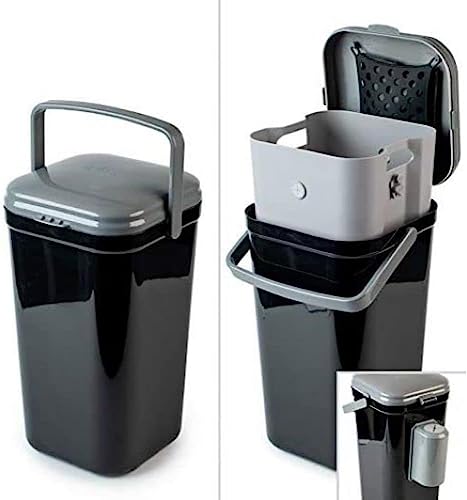
- Odor controlCharcoal filter, silicone gasket seal
- DesignPortable, lightweight, direct-scoop inner basket
- Best ForBudget-conscious buyers, smaller yards
The inner basket lets you scoop directly into the container instead of lining it with a fresh bag every time, which cuts down on ongoing bag use.
It weighs under 5 pounds, light enough to move around a yard as needed. The basket holds about ten pickups before the bag needs changing, and a locking handle, silicone gasket, and charcoal filter combine to contain odor. One hands-on review priced it below the dual-filter and sensor-lid picks on this list, but found the charcoal filter needs replacing roughly every six months.
It holds less waste than the larger stations on this list.
Pros
- Direct-scoop design reduces bag use
- Portable and lightweight
- Lower price than specialized picks
Cons
- Lower capacity than larger bins
5. Moryimi (Best for Fence Mounting)
Best for Fence Mounting

Last update on 2026-10-07 / Affiliate links / Images from Amazon Product Advertising API
- DesignHangable for fence or wall mounting
- IncludedBuilt-in trash bag dispenser
- Best ForHouseholds wanting the can off the ground entirely
It hangs from a fence or wall instead of sitting on the ground, keeping it out of reach of digging animals or a curious dog. Every other pick on this list is freestanding.
A built-in bag dispenser keeps fresh bags at the point of use, made for a yard where the same general area gets picked up repeatedly.
Fence or wall mounting requires a suitable structure to attach to — not a fit for every yard layout.
Pros
- Fence or wall mounting, off the ground entirely
- Built-in bag dispenser
- Keeps waste out of reach of digging animals
Cons
- Requires a fence or wall structure to mount to
6. Zero Waste USA (Best Commercial/HOA-Grade)
Best Commercial/HOA-Grade
Last update on 2026-10-07 / Affiliate links / Images from Amazon Product Advertising API
- MaterialRust-proof aluminum
- Warranty10 years
- Best ForHOAs, shared yards, dog parks, commercial properties
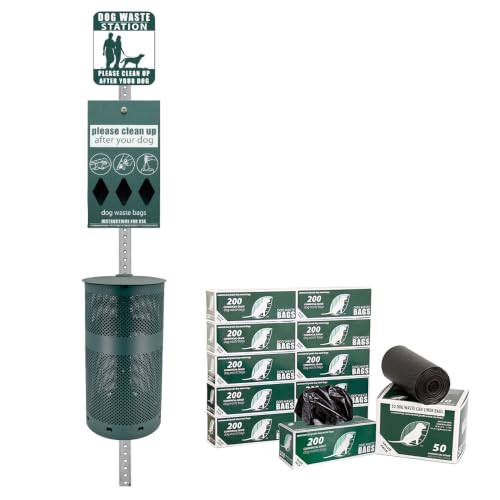
A complete kit — sign, post, bag dispenser, bags, lidded can, and mounting hardware — rather than a single bin needing separate accessories sourced elsewhere.
Rust-proof aluminum construction is backed by a 10-year warranty. Zero Waste USA reports more than 500,000 units sold in the US, a company figure rather than an independently verified count.
It’s sized for shared or public spaces more than a single-household yard. At about 33 pounds it’s heavy to move once assembled, and some owner reviews report problems with the locking mechanism.
Pros
- Complete kit, nothing extra to source separately
- 10-year warranty, rust-proof aluminum
- Substantial sales track record
Cons
- More station than most single-household yards need
Which Garbage Can Should You Buy?
| Situation | Pick |
|---|---|
| Not sure where to start | PawPail |
| Managing puppy pads, diapers, or indoor waste | Pet Genie |
| Want dogs and cats locked out entirely | iTouchless |
| Tightest budget, smaller yard | PetFusion |
| Want the can off the ground, mounted to a fence | Moryimi |
| HOA, shared yard, or commercial property | Zero Waste USA |
Garbage Cans for Dog Poop FAQ
Why can’t I just use my regular kitchen trash can?
Dog waste carries a heavy bacterial load, documented by the EPA. Mixing it with regular household trash means handling that bacteria more often, and usually worse odor containment than a dedicated, sealed dog waste bin.
Is a product designed for cat litter safe to use for dog waste?
It may function, but it’s not the same as a product engineered for dog waste. Some popular waste-disposal systems are built and marketed for cat litter, with only anecdotal reports of working for dogs off-label. If you’re managing dog waste, look for a product explicitly built and sold for that purpose.
Do I need a filter, or is a tight-sealing lid enough?
A tight lid is the baseline and works reasonably well on its own. An activated carbon or charcoal filter goes further by actively neutralizing odor molecules rather than just containing them, and that difference shows up most indoors or in larger households producing more waste.
What size trash can do I need?
Size for how often you’re realistically willing to empty it, not the smallest option available. A larger dog or multiple dogs will fill a small bin within days; a bigger capacity reduces how often you’re dealing with it, at the cost of more space taken up.
Final Thoughts
Match the can to where it’ll live. Indoor placement benefits from a sensor lid or an active filter, outdoor use needs weather resistance that can take sun and rain, and a shared or public space is better served by a proper commercial-grade station. Whatever you choose, confirm it’s built for dog waste rather than repurposed from a different job entirely.

If you fell out of a car onto the side of the road and the police saw you, They’d give you a ticket for littering