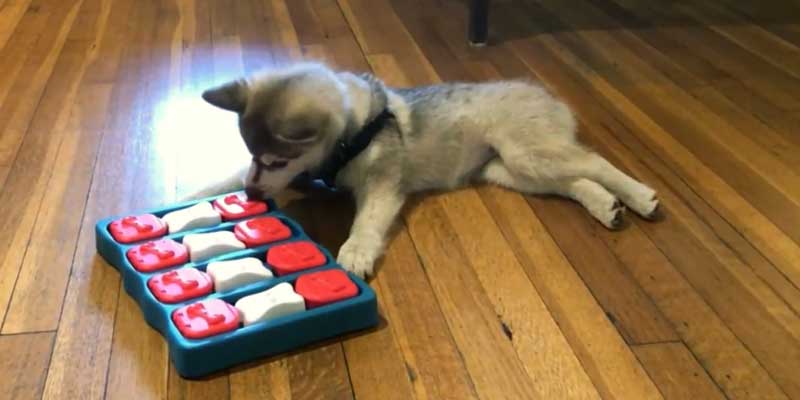
Not every toy that claims “mental stimulation” provides it. A squeaky chew toy or a bouncing ball keeps a dog occupied, but it doesn’t ask them to solve anything — cognitive engagement comes from puzzles that require sniffing, pawing, or sliding to access a reward. As Nina Ottosson, the trainer behind the category-defining puzzle line, puts it: a dog has four legs and one head, and all five need exercise, just in different ways.
Increasing the challenge only once your dog reliably solves the level they’re on keeps a puzzle useful instead of frustrating.
Editor’s Pick


Last update on 2026-10-07 / Affiliate links / Images from Amazon Product Advertising API
Over 128,000 reviews on this specific listing, Level 2 Intermediate difficulty, and multiple ways to adjust the challenge as your dog improves.
What’s Inside!
Cognitive Engagement vs. Physical Activity
Solving a puzzle — sliding a cover, flipping a lid, spinning a compartment to reach a reward — asks something different of a dog than chewing or chasing does. Outward Hound, which makes the Nina Ottosson line, says a 15-minute puzzle session can tire a dog more than a 30-minute walk, because it engages problem-solving instincts a walk or a chew toy doesn’t reach.
Puzzle boards require structured, multi-step interaction — sliding, lifting, spinning — and suit dogs who need directed mental work, such as high-drive or working breeds. Snuffle mats and plush puzzles work a dog’s nose more than its problem-solving, tend to be lower-stress, and often work better for anxious or shy dogs.
Match the difficulty level to your dog’s actual experience. Starting with an advanced puzzle is a common mistake — a dog that can’t solve it gets frustrated rather than engaged, sometimes leading them to chew the toy itself. Start at a beginner or intermediate level, and only move up once your dog reliably solves the current one. As with any toy, don’t leave a dog unsupervised with a new puzzle until you know how they interact with it.
Buying Considerations
Clear difficulty labeling. A well-designed puzzle line states its level clearly (1 through 4, or similar), not just “for smart dogs.”
Adjustability. The best puzzles let you increase or decrease difficulty within the same toy — blockers, sliders, or multiple compartment types — so one purchase grows with your dog.
Material safety. Look for BPA, PVC, and phthalate-free materials, and check whether the toy is rated for unsupervised use or supervised sessions only.
Format fit for your dog’s temperament. A structured puzzle board suits a confident, food-driven dog; a snuffle-style mat suits a more anxious or sensory-motivated one.
Mind Stimulating Toy Comparison Table


Last update on 2026-10-07 / Affiliate links / Images from Amazon Product Advertising API
Mind Stimulating Toy Reviews
1. Nina Ottosson Dog Brick (Best Overall/Starting Point)
Best Overall/Starting Point
Last update on 2026-10-07 / Affiliate links / Images from Amazon Product Advertising API
- DifficultyLevel 2 Intermediate
- MechanismFlip lids, sliders, bone covers
- Best ForDogs new to puzzle toys
Outward Hound lists the Brick’s plastic parts as BPA, PVC, and phthalate-free, which addresses one of the more common material-safety questions with treat puzzles.
Multiple treat-hiding mechanisms (flip lids, sliding red sliders, removable bone covers) give variety within a single toy, and the difficulty adjusts as your dog’s skill improves.
The manufacturer’s instructions call for supervision at all times, since no toy is fully indestructible.
Pros
- Substantial independent review track record
- Multiple treat-hiding mechanisms in one toy
- Adjustable difficulty
Cons
- Requires supervision, as with any puzzle toy
2. Nina Ottosson Dog Casino (Best for Experienced Puzzle Dogs)
Best for Experienced Puzzle Dogs
Last update on 2026-10-07 / Affiliate links / Images from Amazon Product Advertising API
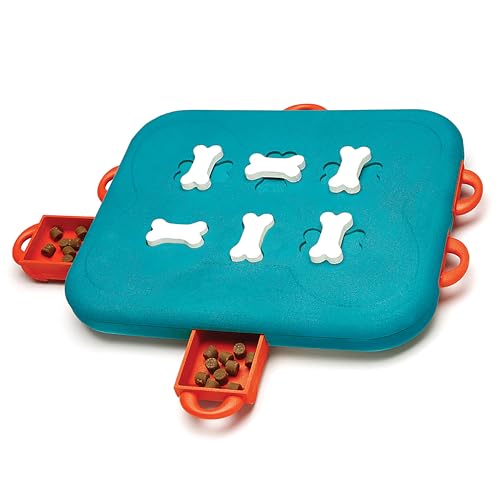
- DifficultyLevel 3 Advanced
- MechanismTwist bones to unlock drawers in sequence
- Best ForDogs who’ve already mastered easier puzzles
A multi-step challenge — the drawers only open after a dog learns to twist the bone locks first, which asks for sequential problem-solving rather than a single action.
One detailed owner account describes a dog still engaged after two months of regular use; for a larger dog, the owner looped fabric through the drawer handles to make them easier to grip.
One independent reviewer flagged a design limitation: there’s little clearance between the drawer handles and the ground, so a dog can struggle to get a grip when the puzzle sits directly on carpet. Setting it on a low box or platform gives the paws more room to pull.
The jump from Level 2 is noticeable — this isn’t the right starting point for a dog new to puzzles. Introduce easier levels first.
Pros
- Multi-step, sequential challenge
- Detailed long-term owner account
- BPA, PVC, and phthalate-free materials
Cons
- Noticeable difficulty jump — not a good starting point for puzzle beginners
- Little ground clearance for the drawer handles on carpet or soft flooring
3. Nina Ottosson Snuffle Palz (Best Low-Stress/Anxious Dogs)
Best Low-Stress/Anxious Dogs

Last update on 2026-10-07 / Affiliate links / Images from Amazon Product Advertising API
- FormatPlush toy plus non-slip snuffle mat
- MechanismNose-driven foraging, not structured puzzle-solving
- Best ForAnxious, shy, or sensory-motivated dogs
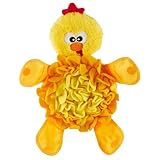
A different format from a rigid puzzle board — this combines a plush toy, a non-slip snuffle mat, and hidden pockets, engaging a dog’s nose rather than requiring the more structured problem-solving of a puzzle board.
The Chewy listing for this toy carries a 4.3-star average across roughly 300 ratings, and several owners describe 10 to 15 minutes of steady sniffing per session before the mat is cleared out.
The squeaker and plush material keep the toy interesting even after the treats are gone. A puzzle board’s compartments, by comparison, stop drawing interest once they’re empty.
The manufacturer states directly that this isn’t a chew toy and isn’t recommended for heavy chewers. Chewy reviewers report the same thing in practice — one owner described a determined chewer tearing through the fabric within days, so a dog that chews hard on toys in general is a poor match for this one regardless of supervision.
Pros
- Lower-stress format for anxious or shy dogs
- Squeaker and plush material extend engagement past the treats
- Clear manufacturer guidance on appropriate use
Cons
- Not suitable for heavy chewers, by the manufacturer’s own guidance
- Owners report the fabric tears quickly under determined chewing
Which Mind Stimulating Toy Should You Buy?
| Situation | Pick |
|---|---|
| New to puzzle toys | Nina Ottosson Dog Brick |
| Already mastered easier puzzles | Nina Ottosson Dog Casino |
| Anxious, shy, or sensory-motivated dog | Nina Ottosson Snuffle Palz |
Mind Stimulating Toys FAQ
Is a chew toy or bouncy ball mind stimulating?
Not in the same way a puzzle toy is. Cognitive engagement requires a dog to actively problem-solve — sliding, lifting, spinning — to reach a reward. A chew toy or ball provides physical activity and enjoyment, but not the same structured mental challenge.
What happens if I give my dog a puzzle that’s too hard?
Frustration, most commonly. A dog that can’t figure out the challenge may lose interest, get anxious, or start chewing the toy itself rather than solving it. Start with a beginner or intermediate level and increase difficulty gradually as your dog succeeds.
How long should a puzzle toy session last?
Most guidance suggests 15-20 minutes. Longer sessions risk a dog losing interest or becoming frustrated rather than staying constructively engaged.
Should I leave my dog alone with a puzzle toy?
Not until you know how your dog interacts with it. Manufacturers generally recommend supervision, especially for a new toy, since no puzzle toy is fully indestructible and pieces could pose a risk if damaged.
Final Thoughts
A puzzle only works as enrichment if your dog can actually solve it — success at the current level, not your own guess at how smart your dog is, is the real signal to move up. Watch how a new toy gets used the first few times, whatever the difficulty label says.

decoded and understood!