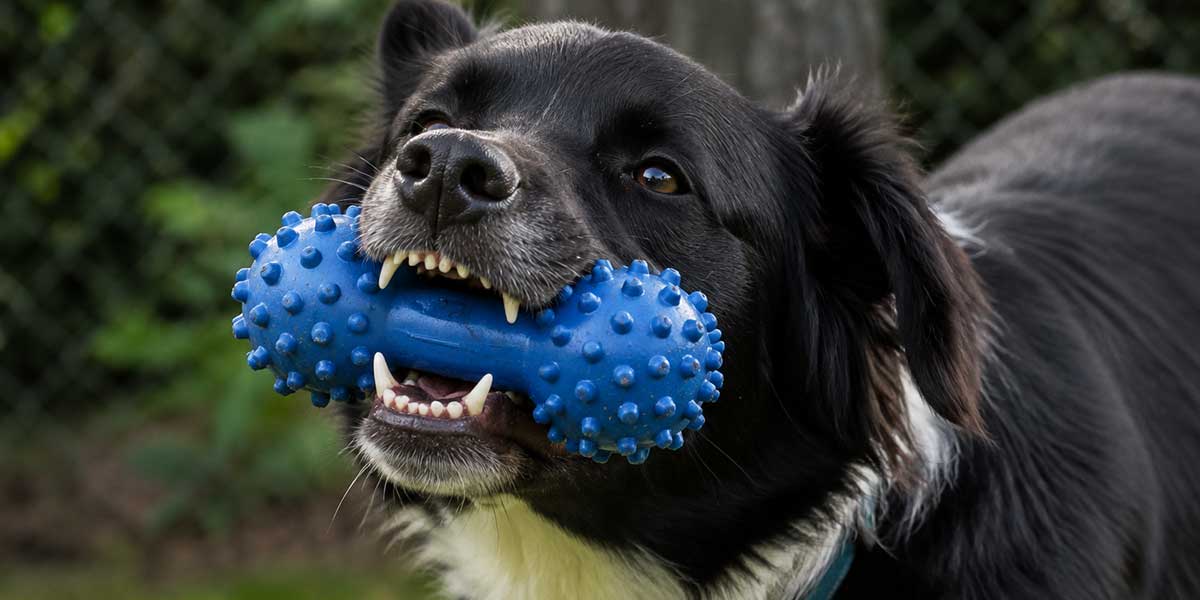
It’s tempting to assume the toughest, hardest chew toy is automatically the best one — it lasts longer, so it seems like the smarter buy. Veterinary dentists disagree, and the reasoning is worth understanding: when a dog chews something harder than their own tooth enamel, the tooth is what gives, not the toy. This is a well-documented cause of slab fractures, most often in the upper fourth premolar, and it happens with exactly the “indestructible” materials marketed as long-lasting — hard nylon, antlers, bones, hooves.
There’s a simple test for this: press a fingernail into the toy. If it leaves a dent, there’s enough give to be safe. If your fingernail bends without denting the toy, it’s too hard, regardless of how durable the packaging claims it is.
Run the fingernail test on any toy before handing it over, current picks or not.
Editor’s Pick
Last update on 2026-10-07 / Affiliate links / Images from Amazon Product Advertising API
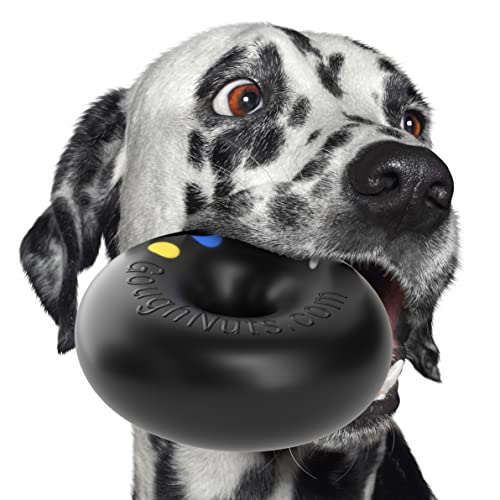
A patented red safety-indicator core that becomes visible once the outer layer wears through — a physical signal for when to replace the toy, not just a durability claim.

What’s Inside!
- 1 – Durability and Safety Aren't the Same Thing
- 2 – Sizing and Supervision
- 3 – Chew Toy Comparison Table
- 4 – Chew Toy Reviews
- 4.1 – 1. Goughnuts (Best Safety Indicator)
- 4.2 – 2. West Paw Zogoflex Hurley (Best for Fetch)
- 4.3 – 3. KONG Extreme (Best for Treat-Stuffing/Enrichment)
- 4.4 – 4. Benebone (Best for Determined Chewers)
- 4.5 – 5. SPOT Bam-Bones Plus T-Bone (Best Composite Material)
- 4.6 – 6. Petstages Dogwood (Best for Moderate Chewers)
- 5 – Which Chew Toy Should You Buy?
- 6 – Long Lasting Chew Toys FAQ
- 7 – Final Thoughts
Durability and Safety Aren’t the Same Thing
Dog enamel is only about a third as thick as human enamel, while a dog’s bite force is roughly three times greater than a human’s. That combination is why very hard materials pose a serious risk: the force from a dog’s jaw has to go somewhere, and if the object won’t give, the tooth does.
Materials consistently flagged by veterinary dentists as high-risk, regardless of how “indestructible” they’re marketed: bones (raw or cooked), antlers, cow hooves, hard nylon, and hard plastic. Ice cubes are a lesser-known but valid addition to that list.
The fingernail test is a practical way to check any toy before giving it to your dog. Press your fingernail into the material. If it dents, there’s enough give to be safe. If your fingernail bends without leaving a mark, the toy is too hard and carries a fracture risk. Also look for the Veterinary Oral Health Council (VOHC) seal on dental-specific chews — an independently reviewed certification, not a manufacturer’s own claim.
Sizing and Supervision
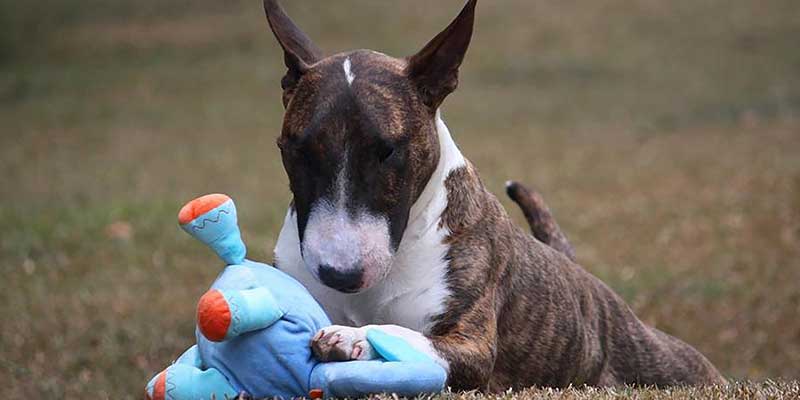
Size relative to your dog’s mouth. A toy should be too large for your dog to get full leverage on with their back teeth. Most “destroyed in minutes” stories involve a toy sized for a smaller dog than the one chewing it.
Material with give. Natural rubber is generally the safest high-durability option, since it flexes under pressure rather than transferring force directly to the tooth.
Supervised vs. unsupervised use. Rope and reinforced fabric toys are fine for supervised tug play but aren’t safe for unsupervised chewing, since loose fibers can be ingested.
A safety guarantee. Some brands offer a damage guarantee or a built-in wear indicator that tells you when it’s time to replace the toy.
Chew Toy Comparison Table


Last update on 2026-10-07 / Affiliate links / Images from Amazon Product Advertising API
Chew Toy Reviews
1. Goughnuts (Best Safety Indicator)
Best Safety Indicator
Last update on 2026-10-07 / Affiliate links / Images from Amazon Product Advertising API
- Material100% natural rubber, engineered rubber compound also used in aerospace applications
- Safety featurePatented red safety-indicator core
- Best ForAggressive chewers, owners who want a clear replace-it signal
A bright red inner core becomes visible once your dog chews through the outer layer — a physical cue to replace the toy rather than guessing at when it’s worn out.
The rubber compound was designed by a chemist with a background in the category, and it’s the same general type used in aerospace applications rather than a generic “tough” rubber blend. Independent testing backs up the durability: reviewers who ran an aggressive chewer against the toy found no visible marks afterward, and Goughnuts backs its toys with a no-questions-asked replacement guarantee if a dog does manage to destroy one. One recurring complaint: new toys can carry a strong rubber smell for the first few days, which fades once the toy has aired out.
The dense rubber dents under the fingernail test, unlike hard nylon alternatives, though it’s still firm enough that determined chewers will need the largest appropriate size.
Pros
- Patented safety-indicator core
- Aerospace-grade rubber compound
- Designed specifically for power chewers
Cons
- Sizing matters more here than with softer alternatives
2. West Paw Zogoflex Hurley (Best for Fetch)
Best for Fetch
Last update on 2026-10-07 / Affiliate links / Images from Amazon Product Advertising API
- CertificationCertified B-Corp, FDA-compliant material
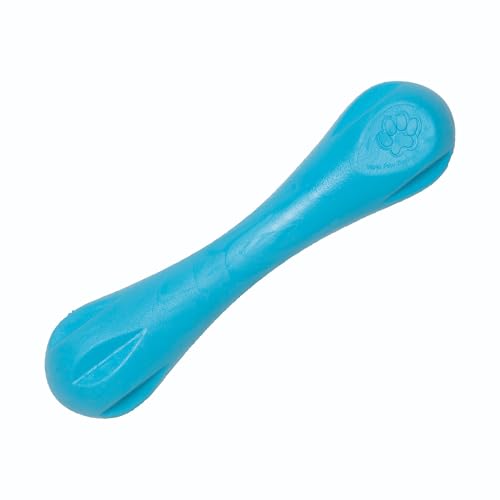
- DesignBone-shaped, floats, dishwasher safe
- Best ForCombining fetch and chew play
West Paw backs the Hurley with a 100% guarantee against damage, honored directly by the company rather than through a third-party seller, and it’s made in the USA. The Zogoflex material contains no latex, silicone, BPA, or phthalates, and West Paw takes worn-out toys back through its Join the Loop recycling program rather than sending them to a landfill.
The bone shape and buoyancy make it work for fetch and water play beyond straight chewing, and it’s dishwasher safe. One independent tester reported a year of fairly aggressive chewing with no visible wear.
Extreme power chewers may wear through it faster than the denser Goughnuts rubber — the softer material is part of what lets it double as a fetch and water toy. The guarantee itself has limits: it’s a one-time replacement per design per household within six months of purchase, and it doesn’t cover normal wear and tear.
Pros
- 100% guarantee against damage, backed directly by the company
- Certified B-Corp, FDA-compliant material
- Doubles as a fetch and water toy
Cons
- Less specialized for the most extreme power chewers
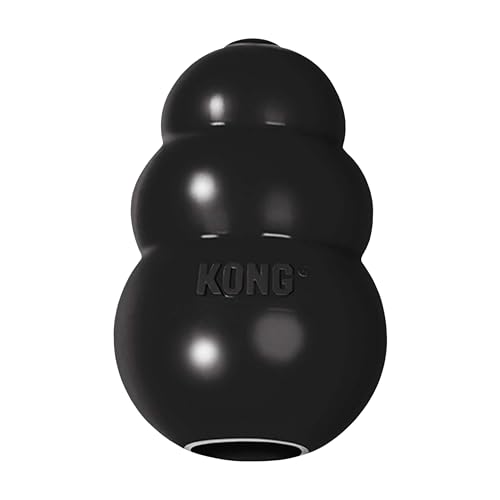
3. KONG Extreme (Best for Treat-Stuffing/Enrichment)
Best for Treat-Stuffing/Enrichment
Last update on 2026-10-07 / Affiliate links / Images from Amazon Product Advertising API
- Brand historySince 1976
- DesignHollow, stuffable, erratic bounce
- Best ForMental enrichment alongside chewing
A dual-purpose toy — the hollow interior takes peanut butter, kibble, or treats, turning chew time into a mental enrichment activity rather than pure destruction.
KONG has built this product line since 1976, a long track record in the category. The natural rubber gives under the fingernail test, and the erratic bounce keeps interactive play engaging. Owner reviews are mixed on recent consistency: many report the toy holding up for months against determined chewers, but some longtime customers say current production runs wear out faster than older ones did, and a strong enough chewer can still puncture or shear a piece off it.
Extreme power chewers may wear through the Extreme formula faster than the specialized picks above, since the hollow, stuffable design isn’t built purely for raw durability.
Pros
- Dual-purpose chew and treat-stuffing design
- Brand history since 1976
- Natural rubber with real give
Cons
- May not outlast the most specialized power-chewer picks
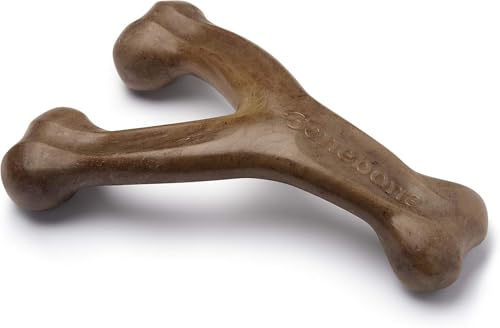
4. Benebone (Best for Determined Chewers)
Best for Determined Chewers
Last update on 2026-10-07 / Affiliate links / Images from Amazon Product Advertising API
- MaterialNylon, bacon flavor infusion
- ShapeCurved wishbone, paw-friendly grip
- Best ForDogs that need flavor to stay engaged
The manufacturer is direct about a tradeoff worth respecting: their own listing states that because the material is hard, owners should confirm their dog has strong, healthy teeth, and check with a vet if unsure — exactly the fingernail-test caution this guide covers.
Unlike unflavored nylon competitors, the bacon flavor gives dogs an incentive to keep engaging, and the curved shape gives a dog without thumbs an easier grip to reposition it. Veterinary guidance on hard nylon chews like this one is blunt: aggressive chewers who bite down forcefully risk fracturing a tooth, so the fingernail test matters more here than with softer picks. That guidance also recommends replacing the toy every one to two months depending on wear, and skipping it for puppies under six months, dogs with weak teeth, or dogs with a history of swallowing chunks of toys.
Given the hardness, this is a better fit for a confirmed hard-nylon-safe chewer than as a default first pick — run the fingernail test before relying on it as a primary chew.
Pros
- Bacon flavor infusion, engaging for most dogs
- Direct manufacturer disclosure about hardness
- Ergonomic curved shape
Cons
- Hard nylon — run the fingernail test before relying on it as a primary chew
5. SPOT Bam-Bones Plus T-Bone (Best Composite Material)
Best Composite Material

Last update on 2026-10-07 / Affiliate links / Images from Amazon Product Advertising API
- MaterialBamboo fiber and nylon composite
- DesignNon-splintering, T-bone shape
- Best ForModerate to aggressive chewers wanting a material alternative
A different material approach — bamboo fiber blended with nylon, rather than pure hard nylon or rubber, marketed as reducing splintering risk.
The T-bone shape is easier for a dog to hold and reposition, and the beef flavor adds engagement without a fully flavor-infused nylon formula. That “non-splintering” claim is worth checking against real use, though: owner reviews on Chewy report the composite can wear into sharp, sliver-like pieces once a dog chews it down, which is a splintering pattern the marketing name argues against.
It’s positioned for moderate to aggressive chewers rather than the most extreme power chewers — check the fingernail test to confirm it fits your dog, and pull the toy once it starts breaking into pieces rather than wearing down evenly.
Pros
- Bamboo-nylon composite material
- Marketed as non-splintering
- T-bone grip shape
Cons
- Not built for the most extreme power chewers
6. Petstages Dogwood (Best for Moderate Chewers)
Best for Moderate Chewers

Last update on 2026-10-07 / Affiliate links / Images from Amazon Product Advertising API
- MaterialWood blend
- Made inUSA
- Best ForModerate chewers specifically, not aggressive power chewers
It’s labeled for moderate chewers rather than aggressive ones, a distinction most picks in this guide don’t spell out as clearly.
The wood blend — real wood combined with a food-safe polypropylene binder — gives a texture and scent closer to an actual stick than rubber or nylon alternatives. Unlike a real stick, it’s built to flake apart under pressure instead of splintering into sharp points, it floats, and it can be washed with soap and water. Because it looks and smells like real wood, keep an eye on dogs around driftwood or yard sticks outdoors, since they may not tell the difference.
It won’t last as long against an aggressive power chewer as the rubber and nylon picks above — it’s built for moderate chewers instead.
Pros
- Clear positioning for moderate chewers
- Wood-blend material and scent
- Made in the USA
Cons
- Not built for aggressive power chewers
Which Chew Toy Should You Buy?
| Situation | Pick |
|---|---|
| Aggressive chewer, want a clear replace-it signal | Goughnuts |
| Want fetch and chew combined | West Paw Zogoflex Hurley |
| Want treat-stuffing mental enrichment | KONG Extreme |
| Dog needs flavor to stay engaged | Benebone |
| Want a composite material alternative | SPOT Bam-Bones Plus T-Bone |
| Moderate chewer, not an aggressive power chewer | Petstages Dogwood |
Long Lasting Chew Toys FAQ
Is the hardest, most “indestructible” toy always the best choice?
No. Very hard materials — bones, antlers, hooves, hard nylon, hard plastic — are a well-documented cause of tooth fractures in dogs, since the force from a dog’s bite has to go somewhere, and if the material won’t give, the tooth does. Durability and safety aren’t the same thing.
How do I check if a chew toy is too hard for my dog?
Press your fingernail into the material. If it leaves a dent, there’s enough give to be reasonably safe. If your fingernail bends without denting the toy, it’s too hard and carries a fracture risk.
Can I give my dog a bone to chew?
Veterinary dentists generally advise against it. Bones, cooked or raw, are consistently flagged as a common cause of slab fractures, most often to the upper fourth premolar. A toy with give is a safer choice for the same chewing satisfaction.
Are rope toys safe for unsupervised chewing?
No. Rope and reinforced fabric toys are fine for supervised tug-of-war play, but loose fibers can be ingested if a dog chews on them unsupervised. Reserve rope toys for interactive play sessions rather than solo chew time.
Final Thoughts
Run the fingernail test before handing over any new chew toy, regardless of how “indestructible” the marketing claims. Match the material to your dog’s chewing intensity rather than defaulting to the toughest option available, and look for a safety indicator or damage guarantee as a sign the manufacturer stands behind the product.

This is by far the most helpful article for me regarding chewy toys for dogs. Thanks for sharing!
I think this is an informative article and it is extremely useful and knowledgeable.
I truly enjoyed reading this post. big fan, thank you!
Best regards,
Thomassen Schneider