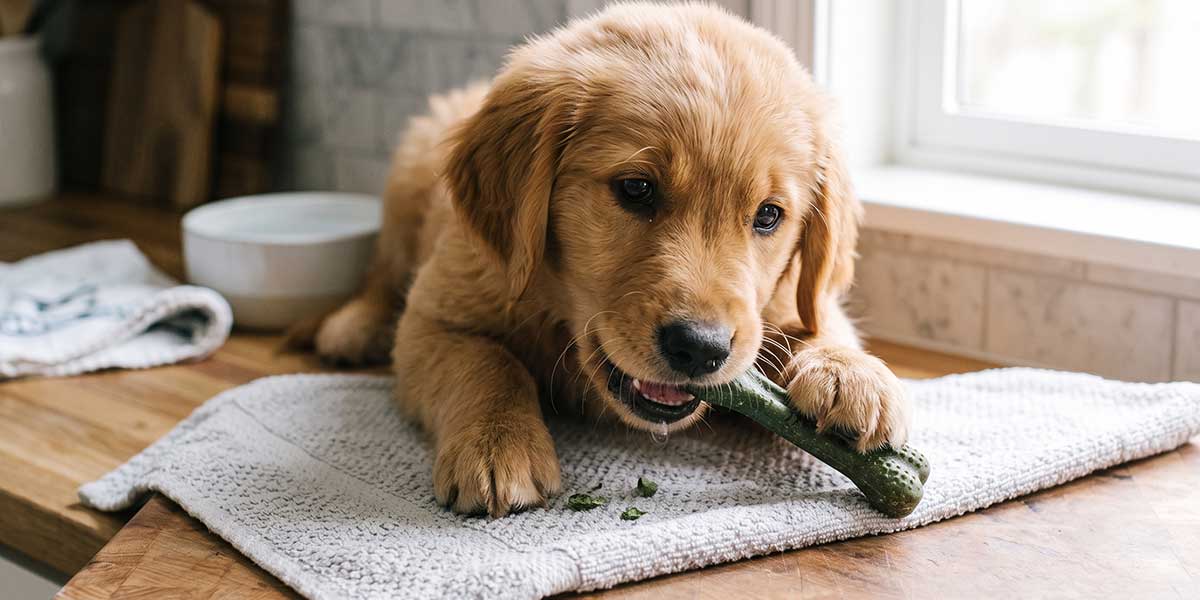
If you’re here because you want a natural way to help your dog’s teeth without wrestling them into a brushing routine, that instinct is right — but the word “bones” is where it gets complicated. The FDA has issued a formal consumer advisory that bones, cooked or raw, are generally unsafe for dogs, and Cornell, AAHA, and the AVMA all warn against them for the same reason: tooth fracture. A controlled study found that normal chewing forces alone are enough to break the tooth most often damaged this way.
The good news: you don’t need an actual bone to get the dental benefit. Vets point instead to VOHC-accepted dental chews, which are independently tested and shown to reduce plaque and tartar. That is the outcome you were hoping a bone would deliver, without the risk of fracture and splintering. Cornell has a rule of thumb that applies to everything in this guide: if you can’t dent it with your fingernail, it’s too hard for your dog to chew safely.
Real bones — cooked or raw, any size — carry documented risk, not a theoretical one. The FDA’s advisory is built on real reports: 68 incidents involving roughly 90 dogs, including about 15 deaths, linked to bone treats over a several-year period. Reported problems included broken teeth, cuts in the mouth, choking, and intestinal blockages requiring surgery. If your dog has chewed a bone and isn’t acting right, the FDA recommends calling your vet right away.
Editor’s Pick

Last update on 2026-10-13 / Affiliate links / Images from Amazon Product Advertising API
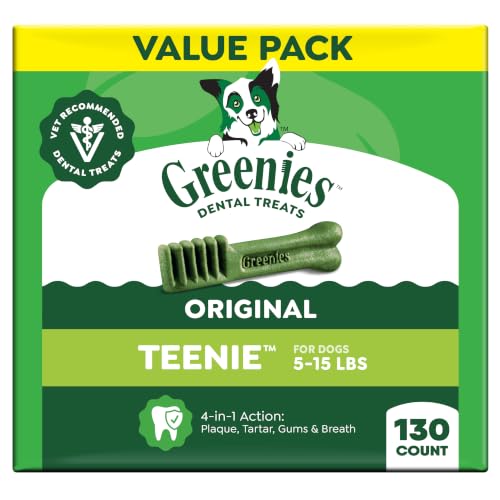
Greenies carries the VOHC seal for both plaque and tartar, meaning it has been independently tested, not just marketed as dental-friendly. The treat is flexible, so it avoids the fracture risk of real bones while still scrubbing teeth the way a bone was supposed to.
- TypeDental treat
- VOHC AcceptedYes
- SizeMultiple sizes by dog weight
- Best ForDaily use, proven results
What’s Inside!
- 1 – Why "Bones" Is the Wrong Word for What You Want
- 2 – Dog Dental Chew Comparison Table
- 3 – Dog Dental Chew Reviews, by Type
- 3.1 – 1. Lucky Premium Treats (Best Value Rawhide)
- 3.2 – 2. Best Bully Sticks (Best Long-Lasting Chew)
- 3.3 – 3. Greenies (Best Overall, VOHC-Accepted)
- 3.4 – 4. Virbac VeggieDent (Best Plant-Based, VOHC-Accepted)
- 3.5 – 5. Purina DentaLife (Best Tested Results, VOHC-Accepted)
- 3.6 – 6. WHIMZEES (Best Grain-Free, VOHC-Accepted)
- 3.7 – 7. Raw Paws (Best Compressed Rawhide)
- 3.8 – 8. Pawstruck (Best Rawhide-Free Alternative)
- 3.9 – 9. Minties (Best Budget, VOHC-Accepted)
- 4 – Which Dental Chew Should You Buy?
- 5 – Dog Dental Chew FAQ
- 6 – Final Thoughts
Why “Bones” Is the Wrong Word for What You Want
In the wild, canines do clean their teeth by chewing on the bones of prey, so the instinct behind reaching for a bone makes sense. Fed to a pet dog, though, real bones carry risks that the “it’s natural” framing glosses over.
The Real Risk: Tooth Fracture
Tooth fractures are common in dogs — reported in 10% to 29% of small-animal veterinary patients, and even more often in working dogs. A cadaveric mechanical study confirmed that normal chewing forces can fracture the maxillary fourth premolar, the tooth most commonly fractured against hard objects such as bones and antlers. Once fractured, a tooth usually needs a root canal or an extraction under anesthesia; left untreated, it can cause chronic pain and infection.
Cornell University’s veterinary dentistry team recommends a test before giving your dog anything to chew: if you can’t make a dent in it with your fingernail, it’s too hard and could cause a fracture. That covers bones, antlers, and hard nylon toys alike.
Cooked, Smoked, and Processed Bones Are the Riskiest Category
Cooking denatures the collagen in bone, leaving it brittle and prone to shattering into sharp splinters that can cut the mouth or throat or perforate the digestive tract. This is the category the FDA’s advisory focused on — commercial products such as ham bones, pork femur bones, and rib bones. Never feed a dog bones from your own cooked meals, and be cautious with any commercial “bone treat,” even one that looks natural.
Edible vs. Recreational Bones — and Why Neither Is the Real Answer
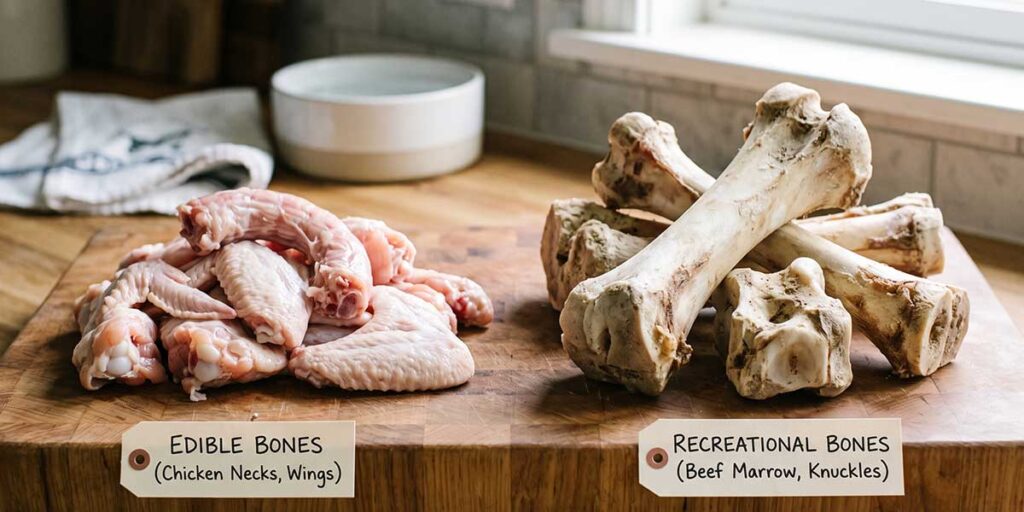
Edible bones (like chicken necks) are soft enough to be swallowed and digested, but according to Animal Planet, a dog needs to chew for a full 30 minutes to get any dental benefit — most dogs swallow edible bones far too fast for that. Recreational bones (harder, not meant to be swallowed) do scrape teeth during nibbling, but they are the category with the fracture and splintering problems described above.
What Works Instead
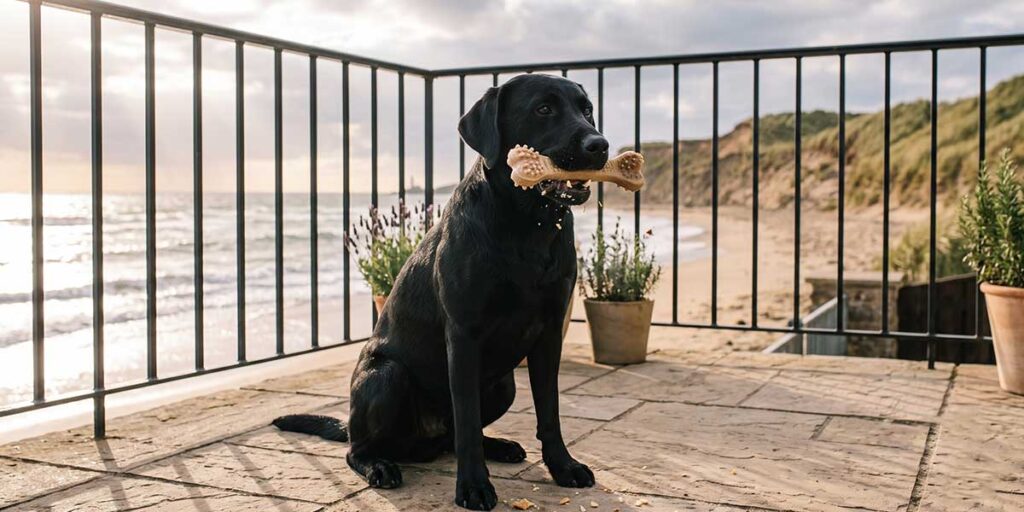
VOHC-accepted dental chews are the evidence-backed alternative: they’re tested for safety and for measurable plaque and tartar reduction, the result most people want from a bone in the first place. Look for the VOHC seal itself; “vet recommended” on a label is not the same thing, and nobody verifies it.
Rawhide and rawhide-free chews (bully sticks, collagen sticks) are a reasonable middle ground for dogs who want something to gnaw on. They’re softer than real bone and less likely to break a tooth, though they still need supervision, since any chew can become a choking hazard once a dog works off a piece large enough to swallow.
Water additives can be used alongside any chew you choose — see our water additive guide for options that passively support dental health.
General Safety Reminders
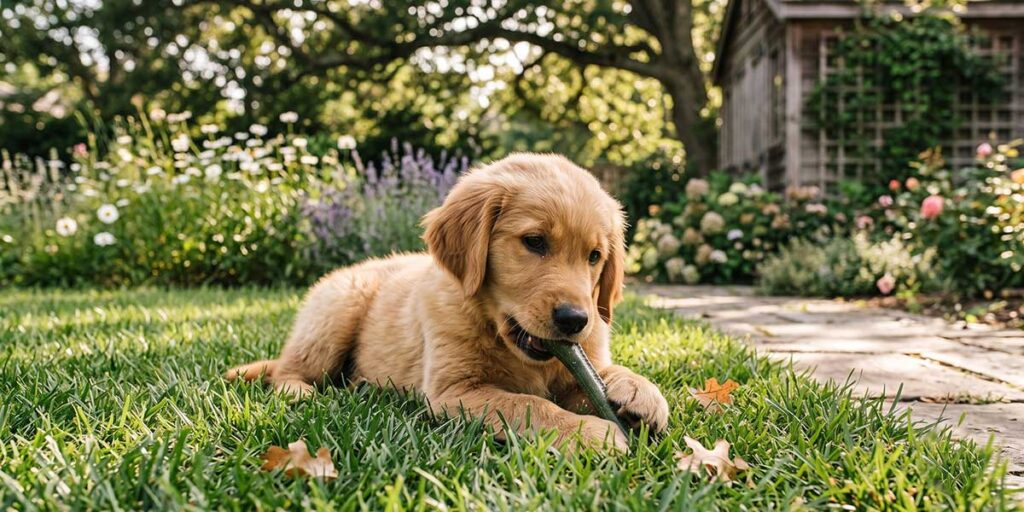
- Always supervise your dog with any chew, especially one they haven’t had before.
- Choose a size larger than anything your dog could swallow whole.
- Avoid corn, gluten, soy, or unnecessary fillers in any chew product.
- Call your vet immediately if your dog seems off after chewing anything — vomiting, lethargy, refusing food, or straining are all reasons to act quickly, not wait it out.
Dog Dental Chew Comparison Table



Last update on 2026-10-13 / Affiliate links / Images from Amazon Product Advertising API
Dog Dental Chew Reviews, by Type
1. Lucky Premium Treats (Best Value Rawhide)
Best Value Rawhide

Last update on 2026-10-13 / Affiliate links / Images from Amazon Product Advertising API
- TypeRawhide stick
- SizeAvailable for all dog sizes
- FlavorPeanut butter, beef, chicken
- Best ForBudget-conscious buyers
Made from 100% rolled beef skin with no chemicals, preservatives, or fillers, these are among the cheapest chews in this guide. Lucky Premium Treats says its rawhide is sourced and made in the USA, and that sizes range from puppies under 10 lbs to dogs over 70 lbs.
Rawhide isn’t risk-free. Whole Dog Journal’s buying advice for rawhide is to pick US-made hide that’s naturally tan rather than bleached white, with a mild smell (a strong or rotten odor can signal a high bacterial load), and to take any rawhide away once it’s chewed down small enough to swallow. Softer than actual bone, rawhide lowers the fracture risk while still giving the teeth something to scrape against.
Owners report some variation in size among sticks in the same bag, so expect a spread if your dog needs a consistent size.
Pros
- Affordable
- No chemicals, gluten-free
- Available for all dog sizes
Cons
- Some size inconsistency between sticks
2. Best Bully Sticks (Best Long-Lasting Chew)
Best Long-Lasting Chew
Last update on 2026-10-13 / Affiliate links / Images from Amazon Product Advertising API
- TypeBully stick
- SizeMultiple sizes
- FlavorBeef
- Best ForAggressive chewers
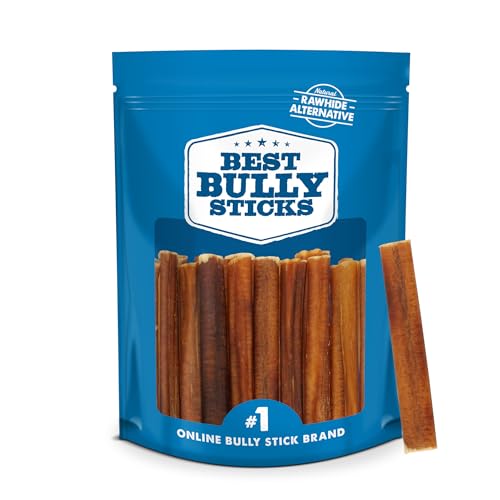
Bully sticks are a single beef ingredient, sourced from free-range Brazilian cattle, and they’re fully digestible, so they don’t splinter the way real bone does. They’re high in protein and outlast most other chews under aggressive chewing, and the extended gnawing is what scrapes plaque and tartar off.
Two findings from Tufts veterinary researchers who tested bully sticks: they’re calorie-dense, at 9 to 22 calories per inch, so a 6-inch stick can approach 100 calories, a big share of a small dog’s daily food. And 9 of the 26 sticks they sampled carried bacteria, including one with MRSA and seven with E. coli. Wash your hands after handling them, and subtract the calories from the day’s meals.
The smell is the classic bully stick complaint; the brand sells a separate line processed to be odor-free for exactly that reason. They also cost more than basic rawhide.
Pros
- Single-ingredient, fully digestible
- Long-lasting for aggressive chewers
- High in protein
Cons
- Pricier than basic rawhide options
3. Greenies (Best Overall, VOHC-Accepted)
Best Overall, VOHC-Accepted
Last update on 2026-10-13 / Affiliate links / Images from Amazon Product Advertising API
- TypeDental treat
- VOHC AcceptedYes
- SizeMultiple sizes by weight
- Best ForDaily dental care, proven results
Greenies holds the VOHC seal for both plaque and tartar across its size range, and that seal, not the brand name, is why it leads this list. The texture is designed to bend, not snap, so the chew cleans without the hardness that breaks teeth on actual bones.
Sizes run from Teenie (dogs 5 to 15 lbs) to Large (50 to 100 lbs), and matching the size to your dog is a safety point: the treat is meant to be chewed down gradually, not gulped whole. Greenies’ feeding guidance is one treat per day, and a Regular is 88 calories, enough to figure into a smaller dog’s daily food.
The first ingredients are chicken, glycerin, wheat flour, and wheat gluten, so this is not the pick for a grain-sensitive dog; WHIMZEES below covers that case. It also costs more than basic rawhide.
Pros
- VOHC-accepted, independently tested
- Wide size range for accurate fit
- Well-established, widely available
Cons
- Higher price than basic rawhide
4. Virbac VeggieDent (Best Plant-Based, VOHC-Accepted)
Best Plant-Based, VOHC-Accepted

Last update on 2026-10-13 / Affiliate links / Images from Amazon Product Advertising API
- TypePlant-based dental chew
- VOHC AcceptedYes
- Size4 sizes by weight
- Best ForSensitive digestion
VeggieDent holds the VOHC seal and is plant-based, with no animal hide or bone. The Z-shape is built to be gripped by the teeth, so the chew scrapes the back teeth as well as the front ones.
Virbac’s own testing puts the numbers at 37% less plaque and 70% less tartar with daily use, and its FR3SH additions (erythritol, inulin, and pomegranate) target breath and digestion, which most dental chews don’t attempt. Four sizes cover dogs from under 11 lbs to over 66 lbs.
Dogs used to meat-based chews sometimes need a few tries before they accept the texture; a picky eater may refuse it at first.
Pros
- VOHC-accepted, plant-based formula
- Shape designed for full-mouth contact
- Includes digestive support
Cons
- Some dogs need time adjusting to the texture
5. Purina DentaLife (Best Tested Results, VOHC-Accepted)
Best Tested Results, VOHC-Accepted

Last update on 2026-10-13 / Affiliate links / Images from Amazon Product Advertising API
- TypeDental chew
- VOHC AcceptedYes
- SizeMultiple sizes by weight
- Best ForDaily oral care with proven tartar results
DentaLife carries the VOHC seal, and Purina’s clinical testing (the company’s own, not third-party) measured an average 57% reduction in tartar buildup.
One distinction from the other sealed chews here: DentaLife’s VOHC acceptance covers tartar only, while Greenies, VeggieDent, and WHIMZEES hold seals for both plaque and tartar. The porous, air-pocketed texture is built to stretch out chewing time, and contact time is what produces the cleaning. It’s made in Purina-owned US facilities.
As with the other dental chews, match the size to your dog’s weight — for safety and for the intended contact with the teeth.
Pros
- VOHC-accepted; Purina reports 57% less tartar
- Porous texture encourages longer chewing
- Made in USA facilities
Cons
- Size range is more limited than some competitors
6. WHIMZEES (Best Grain-Free, VOHC-Accepted)
Best Grain-Free, VOHC-Accepted

Last update on 2026-10-13 / Affiliate links / Images from Amazon Product Advertising API
- TypeGrain-free vegetarian dental chew
- VOHC AcceptedYes
- SizeMultiple sizes
- Best ForDogs with food allergies or sensitivities
WHIMZEES holds the VOHC seal for both plaque and tartar, and the recipe is vegetarian and grain-free: six primary ingredients and no artificial colors, flavors, meat, or preservatives. For dogs whose food sensitivities rule out most dental treats, this is usually the one that still works.
The hollow shapes give teeth surfaces to sink into, and the texture is firmer than Greenies. Wellness, the parent company, reports trials showing its chews last longer than a leading competitor’s. That’s the company’s own claim, but a relevant one: chew time is where the cleaning happens.
That firmness is also a caution: follow the weight guidelines closely, and remember that Cornell’s fingernail test applies to dental chews, too.
Pros
- VOHC seal covers both plaque and tartar
- Grain-free, good for sensitive dogs
- Hollow shapes give teeth a gripping surface
Cons
- Firmer texture requires careful size matching
7. Raw Paws (Best Compressed Rawhide)
Best Compressed Rawhide
Last update on 2026-10-13 / Affiliate links / Images from Amazon Product Advertising API
- TypeCompressed rawhide
- Size4 to 10 inches, by version
- FlavorBeef
- Best ForLarge and medium dogs, aggressive chewers
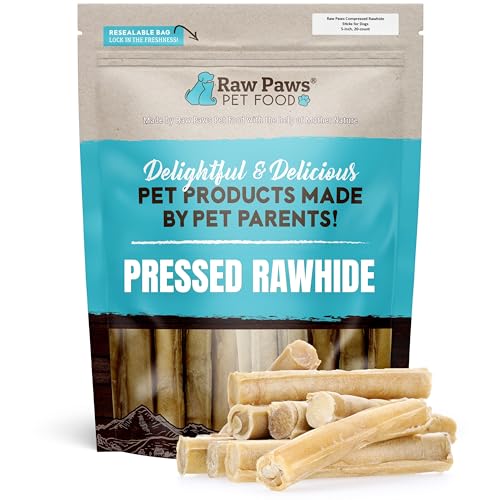
Compressed rawhide is layers of hide pressed into a dense stick instead of a single rolled sheet, so it resists breaking off in large chunks, the failure mode that makes standard rawhide risky for aggressive chewers.
Raw Paws says the hide comes from free-range water buffalo raised without antibiotics or added hormones, is processed without preservatives or flavorings, and is made in India in lengths from 4 to 10 inches. The company also markets a product with chondroitin and glucosamine for joint support, though that is its own claim, not a tested one.
Density means hardness, and this is the firmest chew in the guide. Run Cornell’s fingernail test on the size you buy, supervise the first few sessions, and pull the stick once it’s short enough to swallow.
Pros
- Denser, more break-resistant than standard rawhide
- Single ingredient, no preservatives
- Works across most adult dog sizes
Cons
- Firmest chew here — check it against the fingernail test
8. Pawstruck (Best Rawhide-Free Alternative)
Best Rawhide-Free Alternative

Last update on 2026-10-13 / Affiliate links / Images from Amazon Product Advertising API
- TypeCollagen stick (rawhide-free)
- Size5-7 in and 10-13 in options
- FlavorBeef collagen
- Best ForOwners avoiding rawhide entirely
These are made from beef corium, the inner layer of the hide, which breaks down more readily in the gut than the tougher outer layer used for traditional rawhide. It’s a single ingredient, produced in Paraguay or Brazil, in 5-7-inch and 10-13-inch lengths.
Pawstruck says collagen carries glucosamine and chondroitin for joints (a manufacturer claim) and that the sticks smell milder than bully sticks or rawhide. Owner reviews on Chewy back up the low odor; the recurring notes there are that a stick occupies a determined dog for an hour or more, and that the last couple of inches should be thrown out before they become small enough to swallow.
A few dogs refuse them outright. If yours is picky about texture, start with the small count before committing to a big bag.
Pros
- Rawhide-free, softer and more digestible
- Lower odor than most alternatives
- Adds glucosamine and chondroitin
Cons
- Shorter-lasting than a dense rawhide for a determined chewer
9. Minties (Best Budget, VOHC-Accepted)
Best Budget
Last update on 2026-10-13 / Affiliate links / Images from Amazon Product Advertising API
- TypeDental chew
- VOHC AcceptedFormerly (2014); not on the current list
- SizeMultiple sizes by weight
- Best ForBudget-conscious buyers
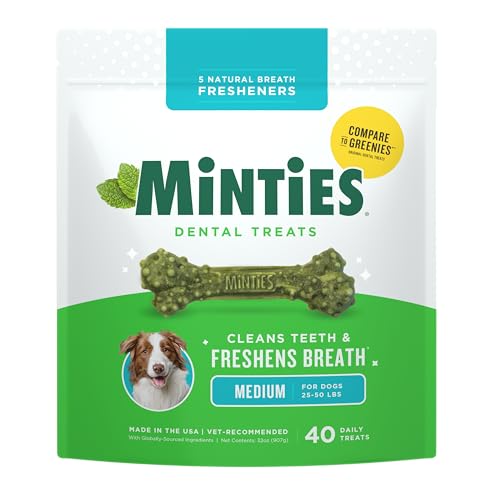
Minties costs less than Greenies, and for years its pitch was the same VOHC seal at a lower price. Check that before you rely on it: Minties was accepted by the VOHC in 2014 for tartar control, but it no longer appears on the VOHC’s current list of accepted products. If the seal is your reason for buying, confirm the current list first.
The formula includes five natural breath fresheners (alfalfa, peppermint, parsley, fennel, and dill) with no wheat, corn, or soy, and the bumps and divots in the shape are there to scrub teeth during chewing, not just to look like a bone.
It won’t replace brushing, and no dental chew does. Treat it as a daily supplement to dental care, not a substitute for it.
Pros
- Costs less than Greenies
- No wheat, corn, or soy
- Made in the USA
Cons
- Not on the VOHC’s current accepted-product list
Which Dental Chew Should You Buy?
| Situation | Pick |
|---|---|
| Not sure where to start | Greenies |
| Tightest budget | Minties |
| Prefer plant-based over animal-derived | Virbac VeggieDent |
| Dog has food allergies or sensitivities | WHIMZEES |
| Want a published tartar-reduction number | Purina DentaLife |
| Aggressive chewer, want maximum durability | Raw Paws |
| Want to avoid rawhide entirely | Pawstruck Collagen Sticks |
| Simplest, most affordable rawhide | Lucky Premium Treats |
| Want the longest-lasting single chew | Best Bully Sticks |
Dog Dental Chew FAQ
Are real bones dangerous for dogs, or is that overly cautious?
It’s a real, documented risk, not an overcautious warning. The FDA’s advisory is built on real reports — 68 incidents involving about 90 dogs, including roughly 15 deaths, tied to bone treats. Cornell, AAHA, and the AVMA all warn against bones for the same reason: tooth fracture, which shows up in 10-29% of small-animal veterinary patients from chewing hard objects.
What does VOHC-accepted mean?
The Veterinary Oral Health Council reviews clinical trial evidence for dental products and awards its seal only to products shown to reduce plaque or tartar; manufacturer say-so doesn’t count. Seals are granted per claim: some products are accepted for tartar only, others for both plaque and tartar. The accepted-product list is public and updated, so you can check any brand’s current status before buying.
Is rawhide safer than a real bone?
Generally, yes — rawhide is softer than actual bone and less likely to cause a tooth fracture. It’s not risk-free (supervision matters, and a piece chewed down small can be a choking hazard), but it avoids the splintering and fracture risks that make real bones, above all cooked ones, dangerous.
How can I tell if a chew is too hard for my dog?
Cornell’s veterinary dentistry team recommends a test: if you can’t dent it with your own fingernail, it’s too hard and risks fracturing your dog’s teeth. That applies to bones, antlers, and hard nylon toys, not just the products reviewed here.
Final Thoughts
Wanting a natural dental option for your dog is a fine instinct — the bone itself is the problem, and the FDA, Cornell, AAHA, and the AVMA all say so. A VOHC-accepted chew provides the cleaning a bone is supposed to, without the fractures and splinters, and with independent testing to back it up. Whatever you pick, supervise the first few sessions and call your vet if anything seems off afterward.

Greenies are the best I am feeding these to my pet for months and they don’t harm. I need some alternative to satisfy my dog’s taste buds as he’s doesn’t find them interesting now. I am shooting for the bully sticks for the first time, and let’s see how it works in teeth cleaning.
Sophia
Best article I have ever seen for dog breath and teeth cleaning!