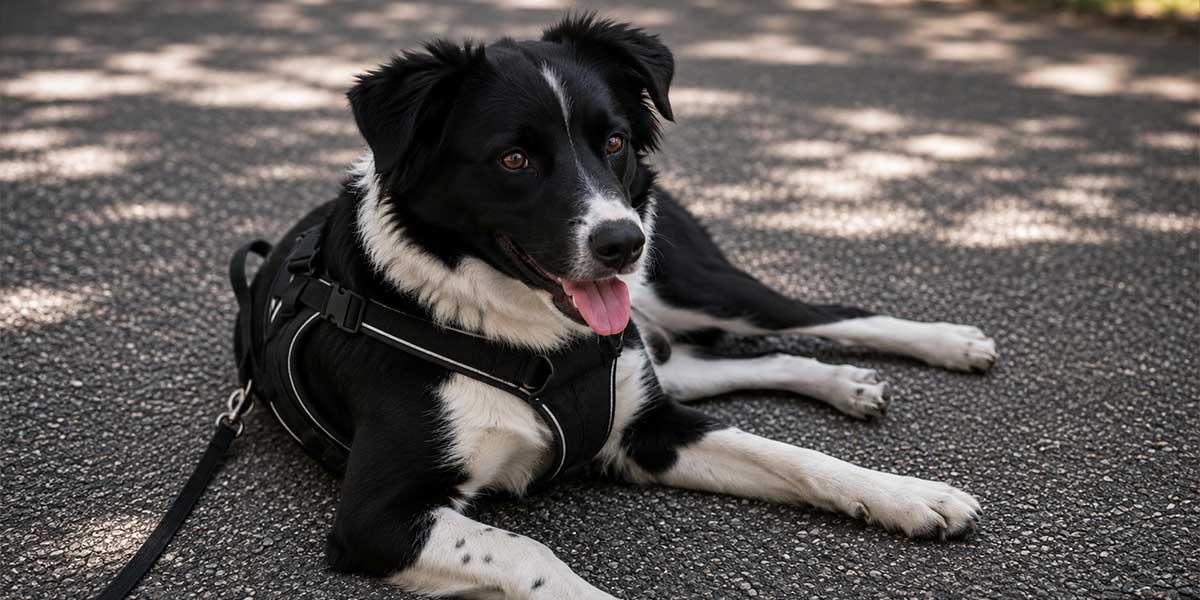
Not every harness that’s marketed as anti-pull functions as one. Back-clip attachment alone doesn’t disrupt a dog’s instinct to pull against pressure — it can even make pulling easier. Front-clip attachment works because it redirects a pulling dog sideways, breaking that instinct rather than fighting it directly.
A harness is a management tool, not a training substitute. It makes walks safer and more manageable while you teach loose-leash walking; it isn’t a permanent fix on its own.
Editor’s Pick
Last update on 2026-10-03 / Affiliate links / Images from Amazon Product Advertising API
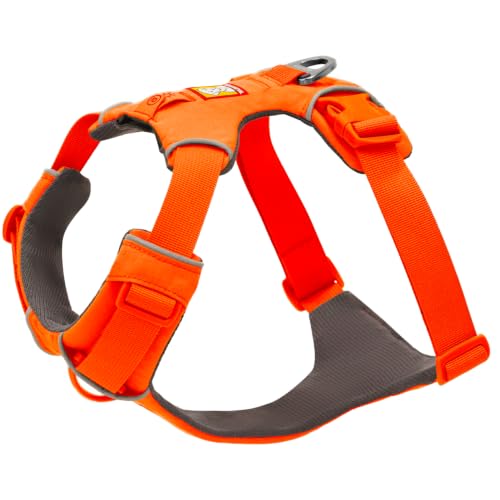
One padded harness with both a front training clip and a back clip for everyday walks — and a multi-year durability record in independent long-term testing.
What’s Inside!
The Physics Behind Front-Clip
Dogs have a natural opposition reflex — the same instinct that makes a sled dog lean into a harness and pull harder. A back-clip harness sits directly over a dog’s center of gravity, letting them brace their full pulling muscles against it, so pulling gets more efficient, not less. A front-clip attachment changes the physics: when the dog surges forward, the leash swings them sideways, interrupting the reflex instead of fighting it head-on.
Front-clip design isn’t a guaranteed fix for every dog, though. A determined puller can drop their shoulders, brace lower, and push through part of the redirection. Think of the harness as a head start on loose-leash training, not a replacement for it.
Pulling against a flat collar puts pressure on the throat, which can lead to coughing, gagging, and in extreme cases tracheal damage — brachycephalic breeds like French Bulldogs, Pugs, and Bulldogs are especially at risk given their airway structure. A harness distributes that pressure across the chest instead. One more safety note: take the harness off when your dog is unsupervised. It can snag on crate bars or furniture and become a hazard of its own.
What to Check Before Buying
Clip location. Front-clip or dual-clip designs are what provide anti-pull function. A back-clip-only harness is comfortable for casual walks but won’t meaningfully help with pulling.
Fit check. You should be able to fit two fingers between the harness and your dog’s body. Too loose and a dog can back out of it; too tight causes discomfort.
Escape resistance. For a dog that’s previously slipped a harness, look for a design built around preventing backing-out, not just a standard adjustable fit.
Material for the activity. A lightweight everyday harness differs from a heavy-duty tactical design built for hiking or working use — match the harness to what you’ll use it for.
Anti-Pull Harness Comparison Table




Last update on 2026-10-03 / Affiliate links / Images from Amazon Product Advertising API
Anti-Pull Harness Reviews
1. PetSafe Easy Walk Comfort (Best for Strong Pullers)
Best for Strong Pullers

Last update on 2026-10-03 / Affiliate links / Images from Amazon Product Advertising API
- MechanismPatented martingale loop, front chest clip
- Brand historySince 1998, 11+ million dogs protected
- Best ForDogs with an established pulling habit
The front clip sits on a patented martingale loop rather than a fixed ring. When the dog pulls, the loop tightens gently across the chest and shoulders; the moment they stop, it releases. That instant tighten-and-release is feedback a fixed front clip can’t give.
PetSafe has made pet gear since 1998 and says the design came from a veterinary behaviorist. By the company’s description, the Comfort version adds full-body padding, five adjustment points, and a second leash ring on the back — the original Easy Walk had no back ring at all, so you had to switch harnesses for relaxed walks.
Fit is where this one demands attention. Rover’s testers followed PetSafe’s size chart for the original Easy Walk and still ended up with a loose chest strap — one size down would have fit better. They also caution that the horizontal chest strap can limit shoulder movement if it rides too low, so run the two-finger check after every few walks, not just once. And like any front-attachment design, it may not fully control an extremely powerful puller on its own — pair it with training.
Pros
- Martingale loop gives tighten-and-release feedback
- Back clip added on the Comfort version
- Full-body padding for comfort
Cons
- Size chart ran large in independent testing, and fit is critical to how it works
2. Ruffwear Front Range (Best Overall/Everyday)
Best Overall/Everyday
Last update on 2026-10-03 / Affiliate links / Images from Amazon Product Advertising API
- ClipsDual — front chest and back V-ring
- ReviewsSubstantial independent volume
- Best ForEveryday walks, training, and general use
Two leash points help with different stages of training your dog. First, clip to the front webbing loop while your dog learns leash manners. Then, switch to the back V-ring once walks become calmer. One harness can handle both stages.
The harness is made from 300-denier ripstop polyester and has closed-cell foam padding. It has four adjustment points and an ID pocket for tags. The harness has proven durable through years of skijoring, trail running, hiking, and hunting.
However, there are some drawbacks. The harness goes over the dog’s head, which some dogs may not like. The neck and chest straps can be loose on dogs with narrow necks. The front clip helps reduce moderate pulling, but it may not be enough for strong pullers. This harness is a general-purpose option, not designed for extreme pulling or specific working use.
Pros
- Dual front and back clip flexibility
- Survived three years of hard use in long-term testing
- Foam-padded, comfortable for all-day wear
Cons
- Goes on over the head; can fit loose on narrow-necked dogs
3. 2 Hounds Design Freedom (Best Escape-Resistant)
Best Escape-Resistant

Last update on 2026-10-03 / Affiliate links / Images from Amazon Product Advertising API
- Made inUSA, since 2003
- DesignSecure, escape-resistant fit
- Best ForDogs that have previously backed out of a harness
2 Hounds Design has made this harness in the USA since 2003, and the company says it works with rescue and adoption organizations as part of its mission.
The escape resistance comes from the mechanism itself, not just a snug fit. The back attachment is a martingale loop between the shoulders that cinches slightly when a dog pulls or tries to reverse out — that cinch is what stops the back-out. The girth strap is lined with Swiss velvet to prevent chafing behind the front legs, the hardware is stainless steel, and it pairs with a double-connection leash that clips to the front and back rings at the same time for two points of control.
Two caveats. The fit takes more care to dial in than a looser everyday harness, and Dog Gear Review recommends treating it as a training-phase tool: the strap layout crosses the shoulders, so they advise against making it a dog’s permanent everyday harness or using it for long runs and hikes.
Pros
- Made-in-USA manufacturing since 2003
- Martingale cinch stops backing out
- Velvet-lined girth strap prevents chafing
Cons
- Best as a training-phase tool, not an all-day everyday harness
4. Auroth Tactical (Best Heavy-Duty)
Best Heavy-Duty

Last update on 2026-10-03 / Affiliate links / Images from Amazon Product Advertising API
- DesignMOLLE-compatible, front clip, control handle
- CertificationsRecycled materials, safer chemicals, measured carbon emissions
- Best ForWorking, hiking, or heavy-duty everyday use
The MOLLE webbing on the sides takes standard pouches, so a dog can carry water, a collapsible bowl, or gear on a hike — actual load-carrying function, not just a tactical look. Auroth builds it from 900-denier nylon with four adjustable straps, two quick-release buckles, and both front and back leash clips, per the company’s own specs.
It also carries sustainability certifications: at least 50% recycled material, safer chemical formulation, and measured carbon emissions.
The heavy build cuts both ways. It’s bulkier than a lightweight everyday harness, and Rebarkable’s review found the leash rings are aluminum rather than steel — theirs scratched up during testing. The stiff chest plate isn’t adjustable either, so barrel-chested dogs can fit poorly, and that reviewer wouldn’t recommend it for dogs over about 60 pounds despite the XL sizing.
Pros
- MOLLE webbing takes standard gear pouches
- Sustainability certifications on materials and emissions
- Control handle for crowded areas
Cons
- Aluminum leash hardware and a non-adjustable chest plate
5. PHOEPET (Best Value/Highest Review Volume)
Best Value/Highest Review Volume
Last update on 2026-10-03 / Affiliate links / Images from Amazon Product Advertising API
- ClipsDual — front and back
- ReviewsExceptionally high volume
- Best ForBudget-conscious buyers wanting a proven track record
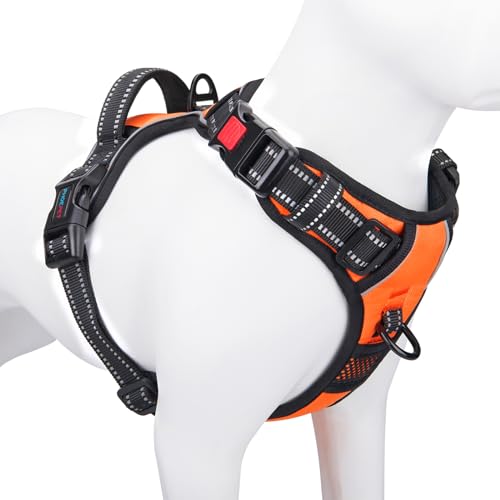
This is the budget pick, backed by one of the largest owner-review bases of anything in this lineup — years of buyers reporting back, at a price well under the name brands.
Dual front and back clips match the flexibility of the pricier options, and the listing includes a fit-check instruction matching the two-finger rule covered in the buyer’s guide above. Tony Reviews Things tested it on a fast-growing Great Dane puppy and highlighted two things: three quick-release buckles mean nothing gets pulled over the dog’s head, and the padded top handle lets you grab close control in a hurry.
The same test found the sizing runs large, the straps are vulnerable to a chewer, and the vest-style build is heavier than a minimalist strap harness. You also give up the brand history and certifications of the picks above — that’s where the savings come from.
Pros
- Exceptionally high owner review volume
- Dual front and back clip flexibility
- Buckles snap on, nothing over the head
Cons
- Sizing runs large in independent testing
Which Anti-Pull Harness Should You Buy?
| Situation | Pick |
|---|---|
| Established pulling habit | PetSafe Easy Walk Comfort |
| Not sure where to start, everyday use | Ruffwear Front Range |
| Dog has backed out of a harness before | 2 Hounds Design Freedom |
| Hiking, working, or heavy-duty use | Auroth Tactical |
| Tightest budget, want a proven track record | PHOEPET |
Anti-Pull Harness FAQ
Why doesn’t my back-clip harness stop my dog from pulling?
Back-clip attachment sits directly over a dog’s center of gravity, letting them brace their full pulling muscles against it — the same mechanics that make sled dogs effective haulers. It’s comfortable for casual walks, but it doesn’t disrupt the pulling instinct the way front-clip attachment does.
Will a front-clip harness stop pulling completely?
Often it cuts pulling significantly, but not always completely. Some dogs learn to drop their shoulders and brace low enough to power through the sideways redirection. Combine the harness with loose-leash training for lasting results — the harness manages the problem while the training fixes it.
Is a harness safer than a collar for a dog that pulls?
Yes. Pulling against a flat collar puts pressure directly on the throat, risking coughing, gagging, or in extreme cases tracheal damage — brachycephalic breeds are especially vulnerable. A harness distributes that pressure across the chest instead.
Should I leave the harness on my dog all the time?
No. Remove it when your dog is unsupervised — a harness can snag on crate bars or furniture, creating a safety hazard. Keep it for walks and supervised time.
Final Thoughts
Check the clip location first — front or dual-clip is what provides anti-pull function, not just a “no pull” label on the packaging. Fit with the two-finger rule, keep up the loose-leash training the harness is buying you time for, and take it off when your dog is unsupervised.

It’s by far the most comprehensive article that I found on anti-pull harnesses. I have purchased the right harness for my Yorkie easily, thanks a lot.