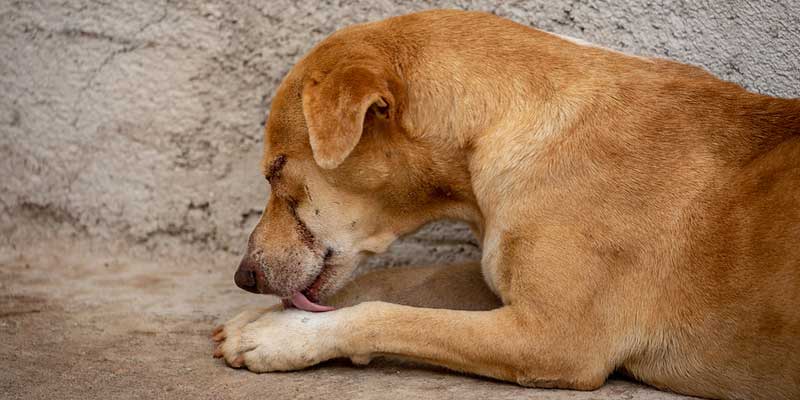
Our furry friends never fail to surprise us with their cute gestures — imagine your puppy licking his paw slowly while lying right in front of you; it’s purely mesmerizing to watch, but can the moisture affect their cute little paws?! Is it normal for them to lick constantly and excessively?
Let’s solve this ambiguity by reading all the potential reasons to cause this behavior with its management.
9 REASONS WHY YOUR DOG IS LICKING HIS PAWS:
1. Healthy self grooming habits
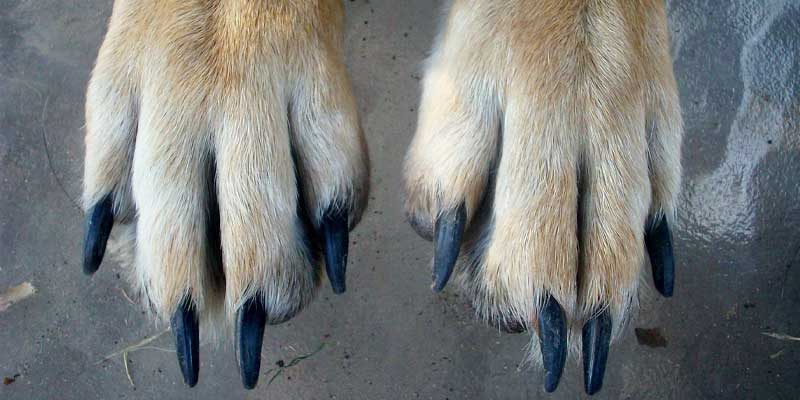
It might be hard to believe, but your pup is way more sensitive about his cleaning than any other pet animal. They constantly lick their paws, legs, and tail to clean the debris, and moisture in these average amounts is not harmful to them as they shake their body afterward and shake off the excess moisture from the body.
It is generally the self-grooming habit that adds to their health and is indicative of their habitat equivalent lifestyle.
Good to know: A little paw licking after a walk, meal, or nap is normal self-grooming. Vets generally start paying closer attention when it becomes frequent, focused on one spot, or leaves the fur damp, red, or thinned out, since that pattern points to a cause beyond routine cleaning (AKC).
2. The type of skin your pup has
The type and texture of the skin have a lot to do with such issues as dry and oily skin. Both have separate issues related to the type. If your pup has dry skin, they are more prone to produce itching in limbs that cause them to excessively lick their paws and legs to ease themselves.
Weather changes are also evidence of pups getting affected and licking their paws constantly and excessively. Warmer months and their outdoor activities can cause this behavior. If the reason is the skin type, you will get to know it by observing their skin. There is nothing to worry about, and no need to take them to the vet immediately.
3. Allergic response
Food allergy is the second reason after dry skin that can cause frequent paw licking habits in our pups. Food allergy can develop whether on the first exposure to a specific added ingredient in the food, or it can develop after intake of more than twice or thrice. It’s pretty tricky to diagnose a food allergy. Instead, it would help if you went through some trials of changing their diet to get to know about that. You can change the diet to a single ingredient, e.g., a Protein diet or carbohydrate diet entirely for a month can help you tell the allergic response occurrence.
4. Skin infections
Dog’s legs are the perfect hiding spot for parasites like fleas and ticks. They cause excessive itching in the body, but parasites can also cause skin infection in the place they linger mostly. Excessive itching caused by them initiates a licking and scratching reaction by our pups, resulting in inflammation and itchiness of the specific area. Bacteria, yeast, fungi, and parasites are all recognized causes of paw inflammation, or pododermatitis, in dogs (VCA Hospitals).
You can easily observe a “red spot” on their body that licks or scratches the most. The only treatment for such spots is consulting a professional vet. They will prescribe you antibiotics (topical creams) to treat the infections.
Parasites can also cause yeast and Fungal infections on the skin, and a professional vet will suggest the treatment.
Moisture content on the paws or legs after excessive licking can also serve as a perfect host for bacteria to grow their colony and cause infection.
Skin infections also develop when their paws contact the de-icing salts on the driveways that cause cracking and bleeding. It can make your pup lick his paws or sometimes pull his hair out.
5. Dermatitis
Dermatitis is a skin condition caused by bacterial problems, allergies, or food sensitivities. Vets also point to sensitivities to yard chemicals, de-icing salts, and certain plants as common triggers of paw dermatitis (AKC).
You might be unaware that the pest control you are spraying in your yard affects your furry friend’s paws. The grass you are growing is causing skin infection to your pup, leading to excessive licking of paws.
This can be avoided by keeping a wet towel or rug on the door, so they can easily rub their paws to clean when coming inside from the yard.
See a vet if: your dog is chewing one paw far more than the others, the paw is swollen, red, foul-smelling, or oozing, they’re limping, or the licking looks compulsive and won’t stop even when you distract them. These can point to an infection, an injury like a torn nail or embedded thorn, arthritis pain, or an obsessive-compulsive licking disorder called a lick granuloma, all of which need veterinary treatment rather than home care (VCA Hospitals).
6. Pain
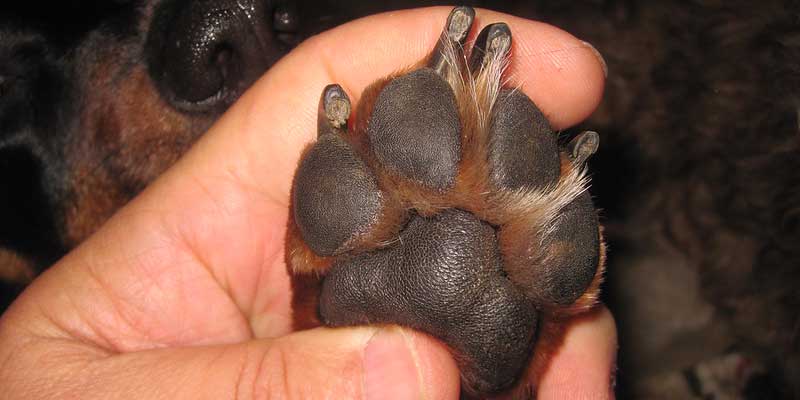
Abnormal licking can also be an indication of underlying pain in the body. Arthritis, foot conditions, or leg conditions are responsible for the pain in the body, and dogs will often lick whichever paw or joint is causing them discomfort as a coping response (AKC).
Dogs lick their paws wherever the pain arises in any part of the body.
A veterinary study also found that dogs with gastrointestinal issues showed significantly more excessive licking behavior than healthy dogs — most often directed at surfaces like floors and furniture, though some dogs direct the same compulsive licking at their own paws or legs (Clinician’s Brief).
The visible signs can be a tired or lethargic body with less appetite and activity. If you notice such symptoms and licking excessively, it’s the right time to visit the vet to avoid worse conditions.
7. Lack of mental stimulation
As dog parents, you must be well aware of how energetic and playful dogs are. They not only love to get engaged in games or play, but it also keeps them healthy. Lack of such activities can cause them mental fatigue, anxiety, and laziness.
It can also cause excessive boredom or anxiety in dogs.
Vets note that compulsive paw licking often has a real psychological component — fear, anxiety, or obsessive-compulsive behavior — and that increasing physical exercise and mental stimulation is a standard part of managing it (VCA Hospitals). It’s better to tire them enough to sleep well and not get into any such activity that might affect their health later.
Fact: Paw and leg licking driven by boredom or anxiety can develop into a lick granuloma — a thickened, often hairless sore from constant licking of the same spot — and vets say these can become chronic, relapsing problems that need ongoing management, not just a one-time fix (VCA Hospitals).
8. Hormonal imbalance
Hormonal imbalance is a primary cause of disturbance of normal metabolic functions of the body. The overproduction of cortisol (linked to Cushing’s disease) and reduced production of thyroid hormone (hypothyroidism) can cause metabolic and skin disturbances that lead to excessive paw licking in dogs — both conditions are recognized causes of paw inflammation, or pododermatitis (VCA Hospitals).
They cannot be noticed or seen quickly, and it’s essential to go for vet supervision to avoid any mishap.
9. De-icing salts
We love to take our pups for a walk regardless of whether it’s raining, a hot sunny day, or heavy snowfall. We often fail to notice that the salt we use can affect our dogs’ little paws. Yes! You read that right. Our dogs accompany us every evening or morning walk without realizing that they are being affected by that. It can be noticed by keeping a keen eye whether they start licking their paws right after they come home after walking. It means the salt encounter is scratching their cute little paw pads.
A vet prescription and treatment are the only way to treat this condition.
BOTTOM-LINE TAKEAWAYS
- Paw licking can be an expected and healthy activity if it’s not excessive and hurting your dog. There is nothing to be worried about until you see the extra moisture on the paws or the building of a habit of licking.
- Parasites like fleas and ticks can cause infections on the skin’s epidermis (upper) layer. They can be treated with antibiotics taken under the supervision of a professional vet.
- Food allergy can cause your pup to lick its paws. Changing their diet can help them get rid of this habit.
- Dermatitis bacterial and fungal infections can also be the cause of licking. Vet supervision and prescription can treat such conditions.
- Paw licking is a condition in dogs that develops over time as a habit. We can also use different collars available online. For instance, an Elizabethan collar is widely used to help stop this habit in dogs.
References:
- https://www.fourpaws.com/pets-101/health-and-wellness/why-do-dogs-lick-their-paws
- https://www.akc.org/expert-advice/health/why-does-my-dog-lick-and-chew-his-paws/
- https://firstvet.com/us/articles/my-dog-wont-stop-licking-his-paws-help
- https://www.animaltrust.org.uk/conditions/dermatitis-dogs/
- https://vcahospitals.com/know-your-pet/pododermatitis-in-dogs
- https://vcahospitals.com/know-your-pet/lick-granuloma-in-dogs
- https://www.cliniciansbrief.com/article/excessive-surface-licking-potential-gi-pathology