A walk with your dog will make a walk to remember if they pee 30 times from your home to the place you go. That would be an alarming call for you and can make you feel numb or helpless. This article will tell you about all the possible reasons your dog starts to urinate frequently and how you can get familiarized with the habits and management.
There are 2 categories in which you will be reading the causes.
- Behavioral Grounds
- Medical Conditions
What’s Inside!
- 1 – BEHAVIORAL GROUNDS CAUSE YOUR DOG TO PEE FREQUENTLY
- 1.1 – 1. Age
- 1.2 – 2. Urine Marking Can Be the Reason Your Dog Is Peeing Frequently
- 1.3 – 3. Lack of House Training Can Cause Frequent Urination in Your Pup
- 1.4 – 4. Excitement Can Also Be a Cause of Frequent Peeing
- 1.5 – 5. Separation Anxiety Affects Urinating Cycle in Dogs
- 1.6 – 6. Weather Changes Can Cause Your Pup to Pee Frequently
- 2 – MEDICAL CONDITIONS THAT CAN LEAD TO EXCESSIVE URINATION IN DOGS
BEHAVIORAL GROUNDS CAUSE YOUR DOG TO PEE FREQUENTLY
1. Age
Age is the most critical factor when considering urination problems, especially in dogs. Till the age of 2-7 months, puppies pee about twice as often as adult dogs do; very young puppies may need a bathroom break as often as every 1 to 2 hours while awake. Younger dogs usually don’t get into these problems unless an underlying condition is involved. Female furry friends are more prone to have urination problems in pregnancy, post-pregnancy, and sometimes separation anxiety from puppies or their parents.
Aging can affect dogs mostly when there is a lack of sufficient house training or they cannot manage the stress. A force of any habit can also cause frequent Urination that comprises just a few drops every 5 to 6 minutes.
If you face the situation of your dog peeing multiple times in a day, observe if you are trying to make a habit of some specific routine those days. If yes, the stress your pup is going through these days makes him pee frequently. These cases are typical and don’t need any particular medication to treat.
Good to know: Puppies also tend to need overnight bathroom breaks until they’re around 5 months old, so frequent nighttime peeing in a young pup usually isn’t a red flag on its own, per VCA Animal Hospitals.
2. Urine Marking Can Be the Reason Your Dog Is Peeing Frequently
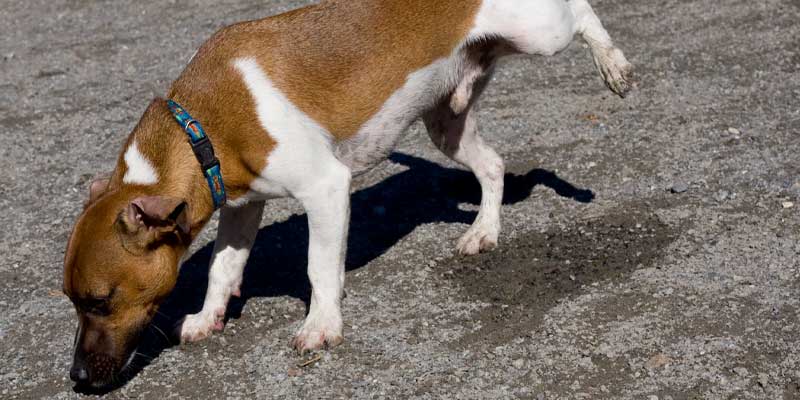
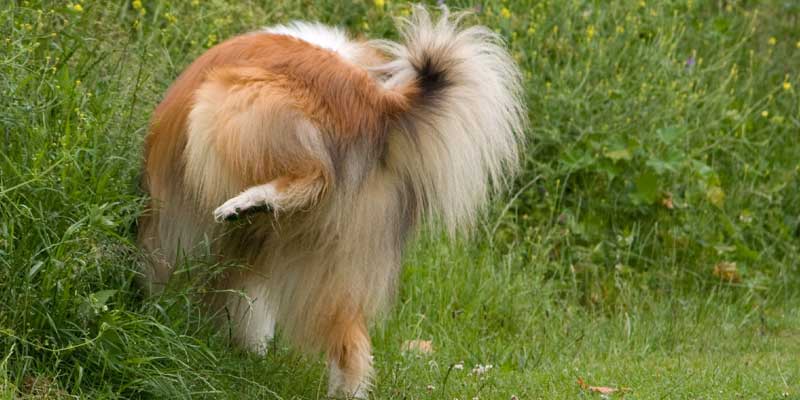
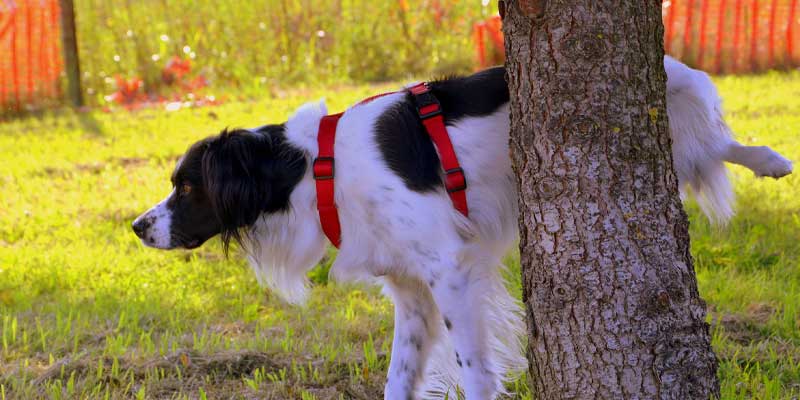
Urine marking is also one of the causes you shouldn’t be worried about. Marking their territory is what is said to be innate in these species. Whenever they change their place or parents and start to live in a new environment, they mark their territory by peeing more than usual or twice as usual.
Now, you must be wondering how you will distinguish between a territorial pee from others that might have any other medical cause. It’s simple; A normal pee will be a streamlined flow once for a more extended period than the territorial pee that is just a few drops at a time.
You might also notice this behavior when you adopt a new pup while already having one. A new pup will get into this canine behavior because he is sharing space and has to make it his territory.
3. Lack of House Training Can Cause Frequent Urination in Your Pup
When you adopt the pet, you start to google how you can potty train them. Sometimes you gather all the details with the methods you must adopt, but the only thing that might get missed is the consistency. Some breeds and dogs learn more quickly than others, and some take time to be trained enough in different conditions. It’s also possible that we train them to use a crate or a specific place to pee but are unable to get them to stick to it when some guests arrive, and a lot of the situations that might put a bit of stress on them where they need their parent for guidance. This stress or absence of their parent in such a situation can make them pee in different places at different schedules and times.
If you notice such behavior every time any specific condition or situation comes up, know that you need to train or spend a little more time with them to pee where they are supposed to be.
4. Excitement Can Also Be a Cause of Frequent Peeing
Just like stress affects them to change the hormonal balance or how they feel emotionally, Excitement can also change the way they feel; this reflex initiates a response that causes frequent peeing. It can be the Excitement of going for a walk or their favorite treat after they have done something their parents like. There is nothing to be worried about taking to the Vet here as they will get used to it eventually.
5. Separation Anxiety Affects Urinating Cycle in Dogs
Separating from the loved one is much more painful in dogs than in other species. It affects them to the extent that they feel sad, lose appetite, and alter sleeping habits. Aside from these, changes in the urination cycle are also a symptom of feeling anxious about being separated from their parents. They will be okay after meeting them again.
6. Weather Changes Can Cause Your Pup to Pee Frequently
Warm weather and outdoor activities can increase thirst in pups. With the increased thirst, they will be drinking a lot of water, which will eventually result in frequent peeing, mostly much more than they usually do in colder weather.
You will notice them peeing in different areas of the house wherever they will feel that you won’t notice quickly. It’s because the urge increases to the extent that they can’t wait for long enough to find a place to pee.
MEDICAL CONDITIONS THAT CAN LEAD TO EXCESSIVE URINATION IN DOGS
All the above-mentioned behavioral conditions do not need medical supervision or prescription to treat them; they get better with time or just by focusing on the cause of why it is happening.
The medical conditions you will read below need serious medical attention and a treatment prescription.
See a vet if: your dog’s frequent urination comes with bloody or straining urine, unusual thirst paired with a bigger appetite or weight loss, sudden accidents in a previously house-trained dog, or leaking urine while sleeping or resting. These are common red flags for a UTI, diabetes, kidney disease, Cushing’s disease, or urinary incontinence, and they all warrant a veterinary visit rather than home management.
There are two categories of Medical Conditions.
- Urinating consciously
- Urinating Unconsciously (Incontinence)
Urination can be caused Unconsciously without the knowledge or will of our furry friend, but if it’s conscious and you see the peeing in the odd or unusual places of the house, it can be because they can’t hold it even if they want to. They know that they are doing it but cannot hold it; in short, they experience a “bursting bladder” dilemma. If you notice the symptoms given below, it’s a good time for a trip to the Vet at your earliest leisure.
Causes
Causes include:
- URINARY TRACT INFECTIONS: they happen when bacteria, most commonly E. coli from the feces, travel up the urethra and into the bladder, according to VCA Animal Hospitals. Bloody urine with noticeable pain or tension during urinating are the symptoms of UTIs. Antibiotics prescribed by the Vet can treat them.
- STONES IN BLADDER: different Ions and minerals from the body make up these stones that stay in the bladder and affect Urinating cycle in dogs, as explained by VCA Animal Hospitals. Symptoms of UTIs and Stones are almost similar.
- DIABETES MELLITUS: it’s the condition when the excess or unmetabolized Glucose in the body leaves the body through urine, taking water with it. Excessive Urination with an enormous appetite and increased thirst are common yet noticeable symptoms, per VCA Animal Hospitals.
- KIDNEY ISSUES: when the kidney struggles to maintain water balance in the body, this can lead to excessive Urination and excessive thirst. The Vet typically manages this with medication, fluid therapy, and a kidney-friendly diet, with the approach depending on the severity of the condition, according to the Merck Veterinary Manual.
- CUSHING’S DISEASE: it’s a disease caused by excessive cortisol (a hormone produced by the adrenal glands), according to the American Kennel Club. This condition also leads to excessive thirst and excessive Urination in the body.
- Urinating Unconsciously
It is also called Urinary Incontinence which means your pup leaks urine involuntarily. It is caused when the urethral sphincter mechanism weakens and can no longer hold urine back, a condition VCA Animal Hospitals calls urethral sphincter mechanism incompetence. Most old-age dogs develop this condition and need medical supervision as soon as possible.
Fact: Urethral sphincter mechanism incompetence may affect over 20% of all spayed female dogs and up to 30% of large-breed dogs, most often middle-aged to senior, medium-to-large females, according to VCA Animal Hospitals.
References:
- https://wagwalking.com/condition/frequent-urination
- https://pets.webmd.com/dogs/guide/medical-causes-house-soiling-dogs
- https://www.dogster.com/dog-health-care/is-your-dog-peeing-a-lot-should-you-worry