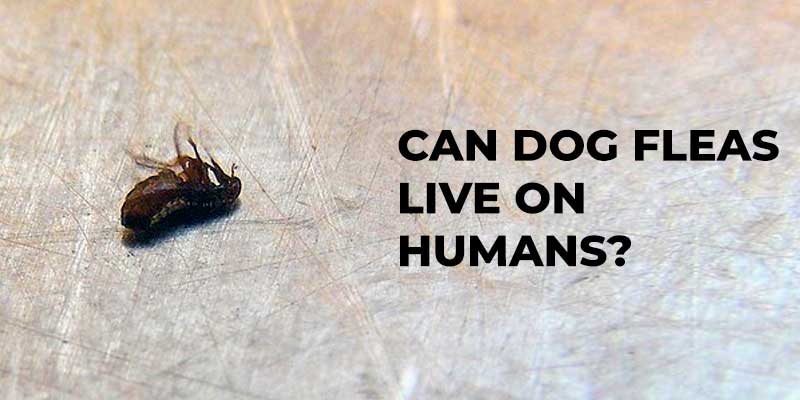
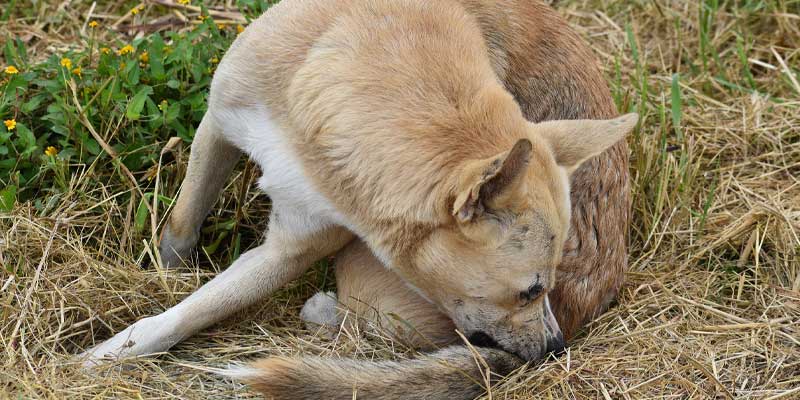
Where there is a pet or our furry companion, there is a flea. You might have noticed dogs being itchy sometimes in their crates or circling as if they are following their tail? It’s a good sign of a flea attack on you and your Pup’s territory. And trust me, it’s normal.
Fleas are teeny tiny wingless critters that live in your Pup’s fur, replicate and multiply. Not only on dogs, but they also live on birds, rodents, and livestock. These critters live on mammals and are fed on the warm blood of dogs and cats. They are the cause of our canine friends being itchy and irritating. You must be wondering if they can attack you and live on you.
Let’s break this together; fleas live on humans only till they find any furry host to live and replicate in. It’s said that they need a furry place to live in and complete their life cycle. So they might stay on your skin till they find any cat and dog near you to jump on, and they will leave you happy.
According to the CDC, there are more than 2,500 flea species worldwide, though only a handful commonly affect pets in the US. The cat flea (Ctenocephalides felis) is by far the most common species found on both cats and dogs, according to the Merck Veterinary Manual, and it’s the one most likely to jump between pets and people.
A lab study observed that a flea would have to feed on a human for 12 good hours to reproduce and complete its lifecycle.
What’s Inside!
Can a flea live on me?

A flea can bite you, but it can not live on until a flea finds a perfect host or a pet to jump on, as they are master jumpers capable of leaping up to 13 inches, according to Ohio State University Extension.
You can also say that any pet within 13 inches can transmit its fleas to you. Fleas, according to their habitat, love to live in moist and dark places, and that’s the reason they choose furry Pup to thrive. Common species of flea are
Fact: Fleas can jump up to 13 inches horizontally and about 7 inches vertically — roughly 150 times their own body length — according to Ohio State University Extension. That’s how they leap from carpet or grass straight onto a passing dog, cat, or person.
- Ctenocephalides felis
- Ctenocephalides canis
They can get easily transmitted from one pet to another in the US by close contact.
DOES A DOG FLEA BITE ME?
The flea will bite you, leaving a red itchy spot on your skin and can be recognized by its appearance. If the spot is red, itching with a small scab on the skin, it’s a flea.
You will also notice a small red bite mark just like the bite of mosquitoes and a red spot in the center.
It’s even easier to know if fleas have been active on you. If you notice tiny black specks that look like ground pepper, that’s flea dirt (flea feces) — flea eggs themselves are tiny and white, not black, according to PetMD.
Initial bites won’t affect your skin too much by making lesions or wounds. However, the allergy develops after repetitive exposure, resulting in hypersensitive reactions known as flea allergy dermatitis, according to the Merck Veterinary Manual.
HEALTH RISKS TO HUMANS AND DOGS
Not only do they bite, but there are certain health risks involved once they start living on you.
- Vector-borne diseases: If these critters end up on your skin, there’s a chance they can get into your gastrointestinal tract by mouth and cause serious health effects. These tiny wingless brown critters can transmit diseases like murine typhus and, more rarely, plague, according to the CDC.
- Allergic reactions to humans: You might be allergic to dust or pollen; being allergic to fleas is no different from those allergies. You can be severely allergic to flea bites, and you might notice red spots everywhere on your skin.
- Tapeworm infection: tapeworm infection can also be caused by fleas, since fleas can carry the larvae of the tapeworm Dipylidium caninum. If you accidentally swallow an infected flea from your Pup, the larvae can develop into an adult tapeworm in your gut. This mainly happens in young children, and it’s usually mild and easily treated, according to the CDC.
- Tapeworm infection to dogs: the same thing can happen to your Pup if they swallow an infected flea while grooming. Tapeworm infections in adult dogs are usually mild, but heavy infestations in puppies can cause more serious effects like weight loss and stunted growth, according to VCA Animal Hospitals.
See a vet if: your dog is scratching excessively, losing fur, or you spot small rice-like segments near their tail or in their bedding — these can be signs of a heavy flea or tapeworm burden that needs a vet’s help, not just an over-the-counter spray.
TACKLING A FLEA WAR- HOW TO GET RID OF FLEAS:
Making a flea-free zone is neither an easy nor a difficult job to do. Instead, it’s about maintaining consistency in some routines to eliminate fleas.
Here are some of the routines to follow to make a flea-free home and your surroundings.
- Cleaning your pet and all the places once in 2 days will make it free from fleas automatically.
- It will help if you clean the crates of your dog and your car where your Pup may have settled to avoid transmission of the fleas.
- You can clean your Pup by using medicated sprays and gels to get rid of fleas. However, make sure you never use these medications on yourself as they might have potential risks to your skin and overall health.
- Speaking to the healthcare professional or vet at the right time will save you from any harm.
- Consulting your vet for medicated topical creams to soothe the itching on your skin is the best way to deal with those marks or allergic patches.
- If a flea has bitten you and you have recognized it, avoid scratching the place to prevent any open wound that might get more sensitive to your health.
- Tablets by a vet and flea collars are highly recommended nowadays for fleas; make sure you get the right prescription at the right time for your Pup.
- Vacuuming regularly the room and the carpets or rugs you share will be in your benefit for the long term.
- Flea combs are easily available online and onsite; having one will make your life easy. You can comb your furry friend right after getting him out of the shower, and you are good to go.
- Dish soap can drown adult fleas on contact during a bath by breaking the water’s surface tension, but it’s only a short-term fix and isn’t a substitute for real flea treatment, according to PetMD. Don’t leave soap sitting on your Pup’s skin for long, as it can dry out and irritate their coat.
Good to know: most of a flea infestation is actually eggs, larvae, and pupae hiding in your carpet, bedding, and yard rather than adult fleas on your Pup, so treating your home and your pet at the same time matters more than any single bath.
CONCLUSION:
Fleas are the tiny critters that live on mammals to thrive. They are picked up by dogs due to close contact with other animals and the environment. Taking care of the environment and your Pup, it can be easily avoided by following simple routines. Being consistent is the key!
References:
- https://ca.mypetandi.com/parasites/fleas/can-dog-and-cat-fleas-live-humans/
- https://www.healthline.com/health/can-fleas-live-on-humans#how-to-get-rid-of-fleas
- https://www.healthline.com/health/can-fleas-live-on-humans
- https://www.thoughtco.com/can-fleas-live-on-people-1968296