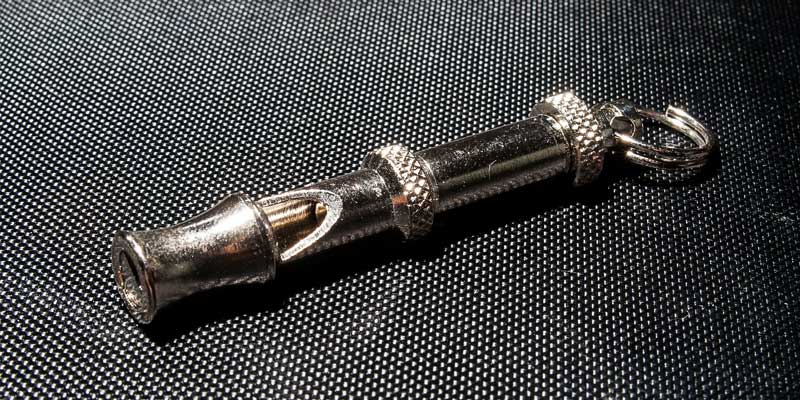
Dog whistles are a form of canine communication that use a simple sound in place of the body language dogs typically detect and respond to. The whistle’s frequency is designed to be too high for human ears to hear, but dogs can easily hear it. The dog whistle — also known as a Galton whistle — was invented in 1876 by scientist Francis Galton, originally to test the differences in hearing range between species, not just to train dogs.
As a dog parent, you must be wondering about how dog whistles work and if it hurts the dog’s ear. In this post, we will discuss a few of the most common dog-whistle concerns.
What’s Inside!
- 1 – How do dog whistles work?
- 2 – Why is it necessary to Train your Dog with a Whistle?
- 3 – What is the actual use of Dog Whistle?
- 4 – What do you mean by audible and silent dog whistles?
- 5 – Types of Dog Whistles
- 6 – Can the dog whistle hurt your pet's ears?
- 7 – Does a dog whistle really work?
- 8 – Summing Up
How do dog whistles work?
Dog whistles work by emitting a high-frequency sound that dogs can hear but not humans. The higher the frequency, the better it can be heard by dogs. The best dog whistle usually uses frequencies in the upper 20 kHz or lower 30 kHz range. Sounds below 20 Hz are referred to as infrasound, while sounds above 20 kHz are known as ultrasound.
Most physical dog whistles don’t use any batteries, crystals, or electricity at all. A traditional dog whistle is simply a lung-powered tube: when you blow into it, the air rushes across a narrow opening inside the whistle and creates rapid, repeating pressure waves, an effect acousticians call an “edge tone.” It’s the same basic principle behind an ordinary whistle, just tuned to a much higher pitch.
The size and shape of that internal chamber determine the pitch. A smaller chamber produces a higher-frequency, higher-pitched sound, while a larger one produces a lower-pitched sound. Only battery-powered “electronic” dog whistles use more complex parts, such as piezoelectric emitters, to generate an ultrasonic tone without you needing to blow into them.
Why is it necessary to Train your Dog with a Whistle?
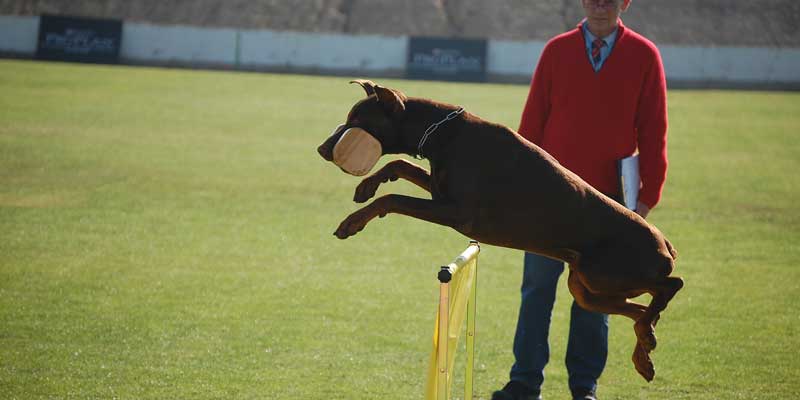
You may know that dog whistles are most commonly used to train dogs. They are trained so that they have to perform a task accurately. Because the noise that whistles make usually seizes the attention of dogs. But this will not make them go wild as we may see in most series or cartoons.
It does not matter what type of dog whistle you will use; however, primarily physical whistles are used. But you can also use a digital one, as dog-whistle apps are also available nowadays on your smartphones.
Like many other types of training, training a dog with a whistle may take you a lot of time. But it’s worth it because it would be one of the best and most successful ways of communicating with your dog. And especially when you need to perform a particular behavior or task from it, it will significantly help you.
Good to know: Most whistle training starts the same way — blow the whistle in a quiet spot while your dog watches, then reward immediately. Once the dog links the sound to a reward, the whistle gets paired with a command it already knows, and the verbal cue is phased out over time. (Source: AKC)
What is the actual use of Dog Whistle?

As a dog parent, you certainly enjoy the directness that a whistle gives to your dog. Along with it, a dog whistle will also help you a lot in many other dog activities. In many sporting competitions and events, silent whistles are used to communicate with a dog when it has to stop or when to go.
In addition, in sheepdog competitions, you may see that whistle instructs or commands the dog on what to do. These whistles are mostly not “silent” whistles; they do almost the same as silent whistles.
Silent whistles are primarily engaged with gun dogs or hunting dogs. Because dogs’ hearing range extends much higher than humans’, keep in mind that silent whistles mean silent for humans, not dogs, as their hearing frequency range reaches about 45,000 Hz.
Fact: Dogs can hear frequencies up to roughly 45,000 Hz, more than double the upper limit of human hearing, which tops out around 20,000 Hz. (Source: LSU School of Veterinary Medicine)
What do you mean by audible and silent dog whistles?
Commonly two types of dog whistles are available from which you have to choose. These are silent and audible whistles. Whenever you or your dog’s trainer are talking about a silent whistle, it means it is quiet for humans only. Such whistles are set to the frequency that is audible for dogs. However, some of them are also fixed with adjustable pitches.
An audible whistle may be helpful when you are sure or consistent about the sounds you will use for training your dog. This type of whistle is similar to that style of whistles used in different sporting events and may be used during shepherd dog events.
However, most of the time, pet parents prefer silent whistles and the reason behind this is that it makes less noise than people’s interference. You can also use the term “ultrasonic whistle” for silent whistles as it is more accurate. Because as mentioned above, this whistle is not silent as it emits ultrasonic sounds audible to dogs and responds to it.
One of the main advantages of silent or ultrasonic whistles is that their sound signals may travel farther than a human voice, as well as they may reach your dog at farther distances.
Types of Dog Whistles
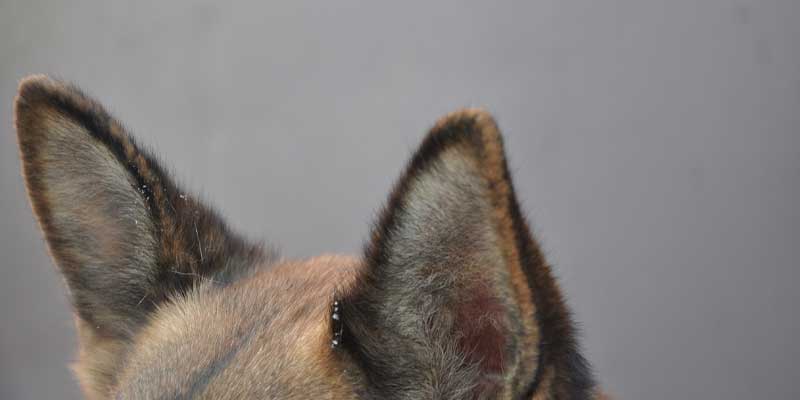
Various types of dog whistles can be used for making different noises and need another skill to use or blow. Some of them are given below:
Silent Dog Whistles
A type of dog-whistle that is silent for human beings. These whistles are set at a frequency according to the hearing capability of dogs.
Pea Whistles
In this type of whistles, a small ball or “pea” inside moves up and down. The pea in the whistle can create a variety of noises that can support you in teaching a dog multiple instructions and giving commands.
Dual Tone Whistles
Like pea whistles, dual-tone whistles can also make various types of noises. As attention is the leading cause of using a whistle, this whistle can make two different types of sounds which may be used for separate orders.
Can the dog whistle hurt your pet’s ears?
Some of the pets’ parents are highly concerned about it as they think that a high range of whistle frequencies can hurt or may damage pet ears. So, we recommend you get a dog whistle instead of any other whistle.
The dog whistle will never hurt or damage your dog’s ears unless you blow it loudly, for a very long period, or directly or very close to its ear — the same is true of dogs’ whistles for dogs themselves.
Therefore, if you are not going to blow a dog whistle very loudly, for an extended period, or directly next to your dog’s ear or head, it will never cause any damage to your dog. However, it is better to learn from a professional dog trainer how to use a dog whistle safely before using it.
See a vet if: your dog stops responding to sounds, seems disoriented, or won’t react when called after exposure to a loud whistle or other loud noise. Hearing damage from severe noise exposure is often permanent, so it’s worth a professional check. (Source: Merck Veterinary Manual)
Does a dog whistle really work?

This is the most commonly asked question, and unluckily, its answer may also be given as “might be,” likewise with most training techniques. This is because every dog has a different nature, and some do not even respond to a whistle command.
While some of them are responsive to that command but not as much as some other dogs are, some dogs can show you an adequate response on even your voice or special treats.
So before training your dog with this type of training, it is better to know your dog before proceeding. But if you once start, never dismiss the training if your dog is not responsive to the whistle command. Keep in mind that some animals may take more time than usual to pick up something. However, you can also try an alternative way of training until you find the best one for your dog’s training.
Summing Up
A whistle is one of the most helpful and effective ways to communicate with dogs. It is considered the silent type of communication, but it may also be set to audible frequencies. There are several types of whistles available in the market, and all make different sounds to control dogs. However, before using a whistle for communicating with your dog, you must know more about its training and behavior so that you can take care beforehand.