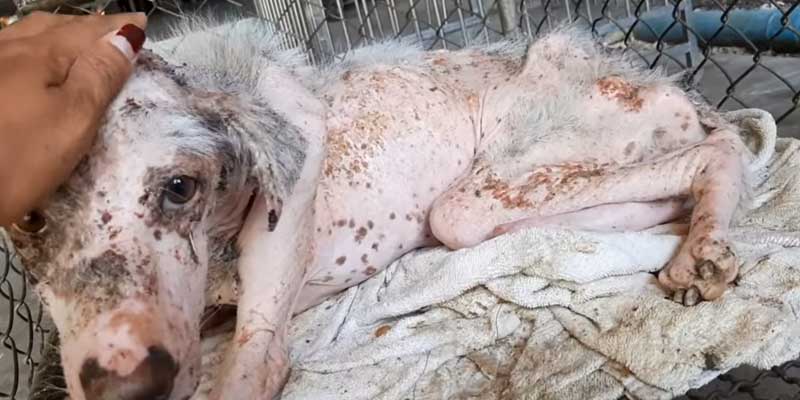
Picture the scenario most people land on this page from: your dog is scratching constantly, you’ve spotted some hair loss, and you’re standing in front of a shelf of “mite shampoo” bottles hoping one of them fixes it. Here’s the thing most shampoo guides skip past: no over-the-counter shampoo cures mites or mange on its own. Veterinary sources — including the Merck Veterinary Manual — are consistent on this: sarcoptic mange needs prescription antiparasitic medication, and demodectic mange usually does too in anything beyond a mild, localized case. A shampoo alone, no matter how good, isn’t going to finish the job.
That’s not a reason to skip this guide — it’s the reason to read it with the right expectations. The right shampoo does help: soothing irritated skin, supporting a vet-prescribed treatment plan, managing the secondary infections mange often causes, and making your dog more comfortable while the treatment does its work. But see your vet first for a diagnosis, since demodectic and sarcoptic mange are treated differently, and a proper skin scraping is the only way to know which one you’re dealing with.
See your vet before shopping, if you can. A skin scraping is the only reliable way to tell demodectic mange from sarcoptic mange, and they’re treated differently. According to the Merck Veterinary Manual, generalized demodicosis is a serious condition requiring real medical treatment, and sarcoptic mange is highly contagious to other pets and can even spread to humans. Shampoo is part of a treatment plan, not a substitute for one.
Editor’s Pick

Last update on 2026-10-13 / Affiliate links / Images from Amazon Product Advertising API
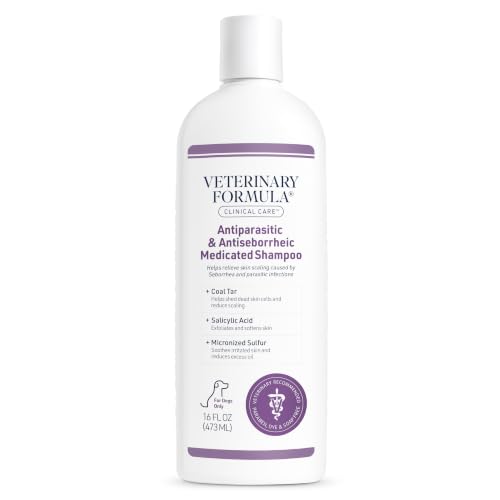
Coal tar, salicylic acid, and micronized sulfur target surface mites and flaky skin, while colloidal oatmeal and allantoin soothe the irritation mange leaves behind. It’s affordable, pH-balanced, and free of soap, dyes, and parabens.
- TypeMedicated shampoo
- RoleAntiparasitic + skin support
- Size16 fl oz
- ScentLight coconut
What’s Inside!
- 1 – Understanding Mange Before You Shop
- 2 – Mite Shampoo Comparison Table
- 3 – Mite Shampoo Reviews, by Role
- 3.1 – 1. Veterinary Formula Clinical Care (Best Overall)
- 3.2 – 2. RenuPlex (Best for Comfort & Coat Support)
- 3.3 – 3. Happy Jack Sardex (Best OTC Spray Treatment)
- 3.4 – 4. Pet MD (Best Multi-Condition Formula)
- 3.5 – 5. SensoVet (Best Vet-Developed Formula)
- 3.6 – 6. Nootie (Best for Secondary Infection Support)
- 3.7 – 7. Dechra MiconaHex + Triz (Best Premium Antifungal Care)
- 4 – Which Mite Shampoo Should You Buy?
- 5 – Mite and Mange Shampoo FAQ
- 6 – Final Thoughts
Understanding Mange Before You Shop
Mites are common on dogs — some live harmlessly on healthy skin their whole lives. The problem is specific: certain types multiply out of control and cause mange, a skin condition with two distinct forms that need different treatment.
Demodectic Mange
Demodex mites live on most dogs’ skin as a normal part of their microfauna and typically cause no problems in a healthy dog. Issues start when a dog’s immune system is compromised — puppies, senior dogs, or dogs with an underlying illness are most at risk. The mites multiply, leading to hair loss and scaly skin, and in more severe cases, a secondary bacterial infection. It isn’t considered contagious in a healthy dog.
Sarcoptic Mange
Caused by Sarcoptes scabiei, this form is highly and directly contagious — it burrows into the skin and causes intense itching, typically starting on the legs or head before spreading. It can also transfer to humans (where it’s called scabies) and other pets in the household.
Per PetPlace, sarcoptic mange often improves within weeks with proper (vet-directed) treatment, while generalized demodicosis can take several months, with repeated skin scrapings needed to confirm it’s resolved before stopping treatment. Stopping early is a common reason mange comes back.
What a Vet Visit Involves
Your vet will do a physical exam and skin scraping to identify which type of mange (if either) your dog has, since other skin conditions can look similar. From there, expect a prescription antiparasitic — commonly ivermectin, milbemycin, or a newer isoxazoline-class oral medication — often alongside a medicated shampoo or dip, per vet-reviewed guidance on mange treatment. If a secondary bacterial infection has set in from the scratching, antibiotics may be added too. Shampoos and insecticidal dips used to be the front-line treatment for demodectic mange; according to VCA Animal Hospitals, that approach is used far less today, with vets now leaning on prescription isoxazoline or macrocyclic-lactone medications and treating shampoo as support rather than the main fix.
What to Look For in a Shampoo
- Natural, gentle ingredients — already-irritated skin doesn’t need added dyes, soap, or parabens on top of it.
- pH-balanced for dogs — a dog’s skin pH differs from ours, which is part of why human shampoo isn’t a substitute.
- Medicated where appropriate — ingredients like sulfur, benzoyl peroxide, or salicylic acid can help manage surface mites and skin buildup as part of a broader plan.
- Antiparasitic support ingredients — some formulas add general antiparasitic agents like salicylic acid alongside their primary active ingredient.
- Moisturizing agents — oatmeal, shea butter, coconut oil, or aloe vera help with the dry, itchy skin mange leaves behind.
How to Use a Mite Shampoo for Best Results
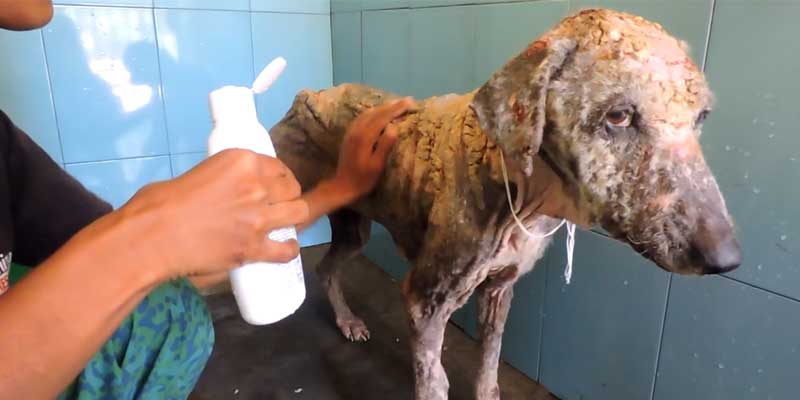
- Dampen your dog thoroughly with gentle, warm water.
- Work a small amount of shampoo into the skin and coat, avoiding the eyes, nose, and ears.
- Let it sit — most formulas need 5–15 minutes to work; check the specific product’s instructions.
- Keep your dog distracted and calm while it sits.
- Rinse thoroughly with clean, warm water.
- Comb through once dry to remove dead hair and check the coat.
- Towel-dry rather than blow-drying, which can further irritate already-sensitive skin.
Along with treating your dog, wash bedding and vacuum areas your dog frequents — mites and eggs left in the environment can cause reinfection even after a successful treatment.
Mite Shampoo Comparison Table


Last update on 2026-10-08 / Affiliate links / Images from Amazon Product Advertising API
Mite Shampoo Reviews, by Role
1. Veterinary Formula Clinical Care (Best Overall)
Best Overall
Last update on 2026-10-13 / Affiliate links / Images from Amazon Product Advertising API
- TypeMedicated shampoo
- RoleAntiparasitic + skin support
- Size16 fl oz
- ScentLight coconut
Coal tar (0.6%), salicylic acid (2.0%), and micronized sulfur (1.0%) do the heavy lifting here, per the manufacturer’s listed ingredients — a combination aimed at both surface mites and the flaky, greasy skin mange often leaves behind. Colloidal oatmeal and allantoin are added to soothe and rehydrate skin that’s already irritated from scratching.
It’s formulated for dogs 12 weeks and older — not labeled for cats — and pH-balanced for canine skin. Directions call for 10–15 minutes of contact time before rinsing, longer than a regular bath but typical for a medicated formula, and the label recommends washing 2–3 times a week at first, tapering off as skin health improves.
For a medicated shampoo, it’s on the affordable side — a reasonable first product to try alongside whatever your vet prescribes.
Pros
- Broad formula — targets mites, fungal/bacterial issues, and dry skin
- Free of soap, dyes, and parabens
- Affordable for a medicated shampoo
Cons
- Needs 10–15 minutes of contact time for best results
- Not labeled safe for cats
- A supportive product, not a standalone mange cure
2. RenuPlex (Best for Comfort & Coat Support)
Best for Comfort & Coat Support

Last update on 2026-10-13 / Affiliate links / Images from Amazon Product Advertising API
- TypeNatural grooming shampoo
- RoleCoat & comfort support
- Size12 fl oz
- ScentLavender, peppermint
RenuPlex’s own listing describes this as a non-medicated grooming shampoo — not intended to diagnose, treat, or cure any medical condition, and not a substitute for veterinary care. It suits comfort and coat maintenance, just not as a mite treatment.
Aloe vera, oatmeal, jojoba oil, and calendula extract calm irritated skin and help a dry, itchy coat feel better — useful during the weeks a dog is mid-treatment and uncomfortable. The lavender-and-peppermint scent is a change from the usual clinical shampoo smell, and it’s made in the USA.
Use this for comfort and coat maintenance alongside your vet’s treatment plan, not in place of it.
Pros
- Gentle, natural ingredient list
- Real comfort for irritated, itchy skin
- Pleasant scent, made in the USA
Cons
- Not medicated — the maker’s own listing confirms it doesn’t treat mange
- Smaller bottle for the price
3. Happy Jack Sardex (Best OTC Spray Treatment)
Best OTC Spray Treatment

Last update on 2026-10-13 / Affiliate links / Images from Amazon Product Advertising API
- TypeOTC treatment spray
- RoleSurface mite support, no-rinse
- Size9.5 oz
- ScentOdorless
This is a leave-on spray rather than a shampoo — spray it on, rub it in gently, let it dry, no rinse needed, which suits dogs where a full bath isn’t easy. It’s marketed for sarcoptic mange, along with hot spots, fungal issues, and general allergy-related itching. The active ingredient is benzyl benzoate at 29%; per the product label, it’s applied twice the first time — spray, rub in, let dry, then reapply — and then repeated every 7 days until the mange clears.
It’s sold as an over-the-counter mange treatment rather than a cosmetic shampoo, but the same rule still applies: a confirmed sarcoptic mange case typically needs your vet’s involvement too, especially if other pets in the house are at risk of catching it.
It’s odorless and doesn’t stain, useful if you’re treating a dog that spends time on furniture. One thing to plan around: the label warns the petroleum-distillate carrier is flammable, and it isn’t meant for puppies under 12 weeks or for pregnant or nursing dogs.
Pros
- No-rinse spray — easier than a full bath
- Odorless and non-staining
- Labeled as an OTC mange treatment
Cons
- Small bottle for a large dog
- Repeat applications every 7 days until mange clears, not a one-time fix
- Flammable petroleum-distillate carrier; not for puppies under 12 weeks or pregnant/nursing dogs
4. Pet MD (Best Multi-Condition Formula)
Best Multi-Condition Formula

Last update on 2026-10-13 / Affiliate links / Images from Amazon Product Advertising API
- TypeMedicated shampoo
- RoleAntiparasitic + multi-condition
- Size12 fl oz
- ScentFresh citrus
Benzoyl peroxide, sulfur, and salicylic acid target mites, dandruff, and general bacterial or fungal skin issues rather than just one problem — useful if your dog’s mange has already led to secondary complications, which is common. Directions call for 5–10 minutes of contact time, used 2–3 times a week for about four weeks before tapering to once a week, per the product label.
It’s soap-free and paraben-free, foams well, and leaves a light citrus scent — lighter than the heavier medicated smell most sulfur- or peroxide-based shampoos carry. Made in the USA in federally regulated facilities.
Results build with repeated use, not a single wash, and overusing it can dry the skin — stick with the label’s frequency guidance instead of bathing more often for faster results.
Pros
- Addresses multiple skin issues, not just one
- Soap-free and paraben-free
- Made in the USA under regulated standards
Cons
- Can dry out skin with overuse
- Not intended for very young puppies
- Works better with repeated use than a single wash
5. SensoVet (Best Vet-Developed Formula)
Best Vet-Developed Formula

Last update on 2026-10-13 / Affiliate links / Images from Amazon Product Advertising API
- TypeMedicated shampoo
- RoleAntiparasitic + skin support
- Size12 fl oz
- ScentTropical
SensoVet says its formulas are developed by veterinarians for pet skin conditions, and the ingredient list backs that focus — benzoyl peroxide targets bacteria, oil buildup, and surface mites, while added vitamin E helps offset how drying benzoyl peroxide can be on its own.
It’s soap-free despite being a strong formula, and it’s safe for both dogs and cats — useful in a multi-pet household dealing with a shared mange or dandruff issue. The tropical scent is mild, not clinical-smelling.
It’s backed by a satisfaction guarantee, useful if you’re trying a new brand for the first time on a dog with already-sensitive skin.
Pros
- Formulas developed by veterinarians, per the brand
- Safe for both dogs and cats
- Vitamin E offsets benzoyl peroxide’s drying effect
Cons
- Small bottle for the price
- Not ideal for dogs with open sores or very dry skin
- Needs consistent use for tougher cases
6. Nootie (Best for Secondary Infection Support)
Best for Secondary Infection Support
Last update on 2026-10-13 / Affiliate links / Images from Amazon Product Advertising API
- TypeMedicated shampoo
- RoleSecondary-infection support
- Size16 fl oz
- ScentSoft lily
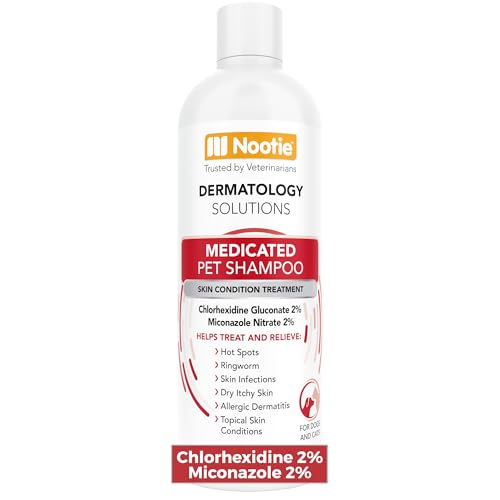
Nootie doesn’t kill mange mites, and it isn’t marketed to. What it does well is treat what mange leaves behind: chlorhexidine gluconate and miconazole nitrate target the bacterial and fungal infections that often set in once a dog has been scratching broken skin for a while. That combination has been studied specifically for Malassezia (yeast) skin infections in dogs — one randomized trial found plain 3% chlorhexidine shampoo cleared yeast overgrowth about as effectively as a 2% miconazole-chlorhexidine blend, per a controlled comparison published in Veterinary Dermatology, meaning the added antifungal ingredient isn’t always the deciding factor for that particular condition.
This is useful support during or after treatment, not a lesser substitute for a mite shampoo — it treats a different problem. The brand markets it for use in vet clinics and pet stores, consistent with how it’s typically paired with mite treatment rather than sold as a standalone fix.
It has a soft lily scent, is soap-free, and needs 5–10 minutes of contact time. Made in the USA.
Pros
- Effective against secondary bacterial/fungal infection
- Marketed for use in vet clinics and pet stores
- Gentle, soap-free formula
Cons
- Doesn’t kill mites directly — pair with prescribed treatment
- Pricier for regular use
7. Dechra MiconaHex + Triz (Best Premium Antifungal Care)
Best Premium Antifungal Care

Last update on 2026-10-08 / Affiliate links / Images from Amazon Product Advertising API
- TypeMedicated shampoo
- RoleFungal/bacterial infection care
- Size16 fl oz
- ScentUnscented
Dechra is a veterinary pharmaceutical company, and the formula reflects that — miconazole nitrate targets fungal infection, TrizEDTA adds antibacterial support, and ceramides help repair the skin’s damaged barrier instead of just cleaning the surface. On Chewy, it holds a 4.7-star average across more than 2,300 ratings, with owners most often crediting it for clearing up ringworm, yeast, and chronic allergy-related skin issues, per customer reviews on Chewy.
Like Nootie, this doesn’t kill mites directly — it’s positioned for the fungal and bacterial fallout mange (or other skin conditions) commonly causes. It also keeps working on the skin after rinsing, without needing a fixed contact time to be effective.
It’s safe for dogs, cats, and horses, useful if you’re managing more than one animal’s skin issue with a single product. It’s the priciest option on this list, and the most common complaint among Chewy reviewers is cost, along with the 16-ounce bottle not stretching far for a large dog bathed frequently.
Pros
- Keeps working after rinsing, not just during contact time
- Strong owner ratings for chronic, hard-to-manage cases
- Safe across dogs, cats, and horses
Cons
- Doesn’t kill mites directly
- Priced highest on this list
- Better fit for tough, ongoing cases than mild ones
Which Mite Shampoo Should You Buy?
| Situation | Pick |
|---|---|
| Not sure where to start | Veterinary Formula Clinical Care |
| Want gentle comfort during treatment, natural ingredients | RenuPlex |
| Prefer a spray over a full bath | Happy Jack Sardex |
| Multiple skin issues beyond just mites | Pet MD |
| Multi-pet household with cats too | SensoVet |
| Managing a secondary skin infection from scratching | Nootie |
| Chronic or tough ongoing case | Dechra MiconaHex + Triz |
Mite and Mange Shampoo FAQ
Can shampoo alone cure my dog’s mange?
No. Sarcoptic mange requires prescription antiparasitic medication, and demodectic mange usually does too beyond a mild, localized case. A good shampoo does help — soothing skin, supporting a treatment plan, managing secondary infection — but it isn’t a standalone cure. See your vet for a diagnosis and treatment plan.
What’s the difference between demodectic and sarcoptic mange?
Demodectic mange comes from mites that live harmlessly on most healthy dogs; it becomes a problem when a dog’s immune system is compromised, and it isn’t considered contagious. Sarcoptic mange is caused by a different, burrowing mite and is highly and directly contagious — to other pets and even to humans. A vet skin scraping is the only reliable way to tell which one you’re dealing with.
How long does mange treatment take?
It varies by type. Sarcoptic mange often improves within a few weeks of proper treatment. Localized demodicosis may resolve in 1–2 months. Generalized demodicosis can take several months, with repeated skin scrapings needed to confirm two consecutive negative results before treatment is considered complete — stopping early is a common cause of relapse.
Can my dog give mange to me or my other pets?
Sarcoptic mange, yes — it’s directly contagious to other animals and can transfer to humans (where it’s called scabies, though human cases from dogs are usually mild and short-lived since the mite can’t complete its life cycle on human skin). Demodectic mange is not considered contagious in a healthy dog.
Should I try a mite shampoo before seeing a vet?
If your dog is scratching more than usual or shows early hair loss, a gentle medicated shampoo won’t hurt and may bring some relief. But if symptoms are worsening, spreading, or your dog seems uncomfortable, see a vet rather than waiting to see if shampoo alone resolves it — especially with sarcoptic mange, where delay means more contagion risk to other pets in the house.
Final Thoughts
The single most useful step before buying anything here is getting a diagnosis — demodectic and sarcoptic mange are treated differently, and only a skin scraping tells you which one you’re dealing with. From there, the shampoo you pick should match what’s actually going on: is your dog fighting active mites, recovering from broken and infected skin, or just uncomfortable during treatment? None of these shampoos replace your vet’s treatment plan — they support it.

Hi, we have tried the RenuPlex natural shampoo on our fido, which worked so well. I have a 4 year Boston terrier, he was scratching more than usual for a few days, and we have included this into his routine. It’s an effective shampoo certified by our fido. It’s a natural product, which is the best thing.
you’re really a good webmaster. The website loading speed is incredible. It seems that you are doing any unique trick. In addition, The contents are masterpiece. you have done a great job on this topic!
Completely perceive what your stance on this matter. Although I might disagree on some of the finer particulars, I believe you probably did an awesome job explaining it. Positive beats having to research it on my own. Thanks. Anyway, in my language, there are usually not much good source like this.
That’s one cool post.