
Dogs experience the world through senses that work nothing like ours, and every so often that gap produces something genuinely strange: a breed that physically cannot bark, a nose so sensitive it has been used as courtroom evidence, and an ear problem so common it is often mistaken for something else entirely. None of these are folklore. Each one has a real anatomical or biological explanation, and in one case, a real health risk worth knowing how to spot.
Here is what is actually going on with a dog’s silence, its sense of smell, and one specific ear problem every owner should be able to recognize.
What’s Inside!
The Dog That Doesn’t Bark: Meet the Basenji

The Basenji is often called Africa’s “Barkless Dog,” and unlike most breed nicknames, this one is literally true. A Basenji cannot produce a standard dog bark. It is a purebred, medium-sized sighthound-and-scenthound hybrid originally developed to hunt by both scent and sight, and it is the only widely recognized dog breed with this particular trait.
Why the Basenji Can’t Bark Like Other Dogs
This isn’t a training quirk or a personality trait — it’s anatomy. The Basenji’s larynx has an unusually shallow laryngeal ventricle, the small pocket between the vocal folds that most dogs use to produce a full, resonant bark. Because that space is flatter than in other breeds, the vocal folds can’t move the way they need to for a typical bark, according to research cited by the Basenji Club of America.
Instead, Basenjis communicate with a sound the American Kennel Club describes as “something between a chortle and a yodel” — owners usually call it a “baroo.” They also growl, whine, and crow, they just skip the bark entirely. One theory for why this trait persisted is behavioral rather than mechanical: a loud alarm bark would have drawn predators like leopards toward a hunting camp in the Basenji’s native Central African forests, so a quieter dog may have had a genuine survival edge.
Fact: The Basenji may be the oldest dog breed still in existence. Cave paintings in Libya dated to roughly 6,000 B.C. depict hunters with curled-tail dogs resembling the breed, and the dogs appear again on ancient Egyptian artifacts as gifts brought to the pharaohs from Central Africa — long before the breed reached the West in the early 1900s. Source.
Because Basenjis couldn’t bark to signal their location during a hunt, Central African hunters traditionally tied small bells around their necks to keep track of them in dense brush, per the AKC. The breed’s traditional name, roughly translated as “the jumping-up-and-down dog,” refers to its habit of leaping straight up above tall grass to spot prey — a workaround for a dog that also can’t rely on its voice to flush game.
An adult female Basenji stands around 16 inches tall and weighs 21–22 pounds; adult males run slightly larger, at about 17 inches and 21–24 pounds. Life expectancy is typically 10–12 years. Basenjis also groom themselves the way cats do, which is part of why they carry very little of the “doggy” odor most short-coated breeds have — one more reason people sometimes assume, wrongly, that this is a low-maintenance breed rather than simply a quiet, independent one.
The Bloodhound’s Nose: Why It Has the Best Sense of Smell in the Dog World

If the Basenji is defined by what it can’t do, the Bloodhound is defined by what almost nothing else can do as well. Nicknamed the “Sleuth Hound” by the AKC, it is widely considered the dog with the single best sense of smell of any breed — good enough that its trailing work has been used in real search-and-rescue operations and criminal investigations for centuries.
The number most often cited for a Bloodhound’s nose is around 300 million scent receptors, roughly the highest count documented in any dog breed, according to veterinary-reviewed reporting from Dogster. Two physical traits most people overlook actually help make that nose more effective: a Bloodhound’s long, droopy ears sweep along the ground and help funnel scent particles up toward its nostrils, and the loose, wrinkled skin around its face and neck traps odor close to the nose instead of letting it dissipate. Big shoulders let the dog keep its nose down and working for hours without tiring.
Good to know: Humans have around five million scent receptors. A dog with a strong nose for scent work, like a German Shepherd, has roughly 225 million — a Bloodhound’s count runs even higher than that. Source.
Bloodhounds don’t just track a person’s scent directly, either — they also follow disturbed soil, crushed vegetation, and skin cells shed along a path, which is part of why a trained Bloodhound can pick up a trail that is many hours or even days old. Some documented searches have followed a scent for 200 hours or more, and successful trails covering dozens of miles have been recorded under good conditions.
Fact: The Bloodhound is Guinness World Records’ answer to “first animal whose evidence is legally admissible in some U.S. courts,” a status the breed earned through its long, documented track record of accurate scent trailing. Source.
Off duty, none of this scent-tracking intensity shows. The AKC describes a Bloodhound at rest as one of the most docile, easygoing dogs there is — the same nose that can pick a single trail out of a crowded city block belongs to a breed that’s otherwise happiest curled up at home.
When a Waxy Ear Isn’t Just Wax: What Dog Ear Mites Look Like
Here’s where the tone shifts from fun trivia to something worth actually watching for. If your dog has been shaking its head or pawing at an ear more than usual, it’s worth knowing what you’re looking at — because the answer isn’t always “just wax,” and ear mites are one of the more common culprits.
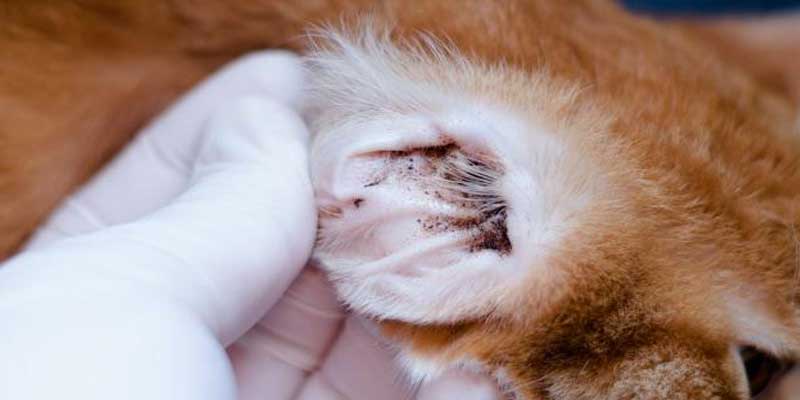
Otodectes cynotis, better known as the ear mite, is a tiny parasite that lives in the ear canal and on the surrounding skin. It’s genuinely tiny — barely visible without magnification — and it’s highly contagious, spreading through direct contact with an infested animal, and even indirectly through shared bedding or toys, per PetMD. Puppies are especially vulnerable, often picking mites up from their mother during nursing and early grooming.
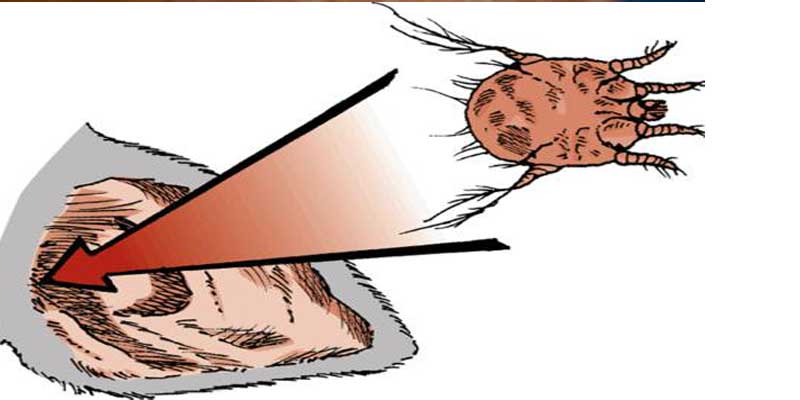
So what does an ear mite infestation actually look like? The mite itself may appear as a tiny moving white speck against dark, waxy debris if you look closely enough, but a proper diagnosis needs a vet’s otoscope or microscope, according to VCA Animal Hospitals. What’s usually far more obvious is the discharge the infestation leaves behind: dark, dry, and crumbly, often compared to used coffee grounds, sometimes with a reddish tint from scratching, per the AKC.
Ear Mites vs. Other Causes of Ear Irritation
The tricky part is that ear mites can look almost identical to a bacterial or yeast ear infection, or even a food or environmental allergy — all of them can cause redness, odor, dark discharge, and head shaking. The only reliable way to tell them apart is a test called ear cytology, where a vet swabs the debris and examines it under a microscope to see whether mites, bacteria, or yeast are actually present, per PetMD. Secondary bacterial or yeast infections are also very common in ears already irritated by mites, which is part of why guessing at home isn’t a reliable plan.
See a vet if: your dog is shaking its head or scratching at an ear for more than a day or two, you notice dark or crumbly discharge, a strong odor, redness, hair loss around the ear, or signs of pain when the ear is touched. These symptoms can mean ear mites, but they can also point to a bacterial or yeast infection, an allergy, or even an aural hematoma — and only a vet exam can tell you which one you’re actually dealing with. Left untreated, any of these can progress to a more serious infection or, rarely, affect hearing or balance. Source.
If you’ve already noticed frequent head shaking on its own, our guide to why dogs keep shaking their heads walks through the full range of causes, mites included. If scratching is the bigger issue, why dogs keep scratching covers that territory in more depth.
The good news is that ear mites are very treatable once correctly diagnosed. A vet will typically clean the ear thoroughly, then prescribe a topical or oral parasiticide, sometimes as a single dose, sometimes over two to four weeks depending on the product — the Merck Veterinary Manual notes that every animal in contact with an infested pet should be treated at the same time, even if they aren’t showing symptoms yet, since the mites spread so easily between housemates.
Good to know: Ear mites are actually less common in dogs than in cats, and within dogs they’re seen most often in puppies and dogs that spend a lot of time outdoors or around other animals. An adult dog living mostly indoors with no other pets is a less likely candidate, though it’s never impossible. Source.
The Common Thread
A silent hunting breed, a nose that can outperform every human forensic tool, and a nearly invisible parasite that hides in plain sight — all three come down to the same idea: a dog’s senses and quirks almost always have a real, explainable reason behind them, even the strange ones. Knowing the explanation is fun trivia when it’s the Basenji or the Bloodhound. When it’s an ear that won’t stop bothering your dog, that same habit of looking for the real reason is what gets you to the vet’s office instead of just hoping it clears up on its own.
FAQs
Can Basenjis bark at all?
Not a true bark. Their larynx anatomy prevents the standard dog bark, but they can growl, whine, crow, and produce their signature “baroo” yodel-chortle sound.
Is head shaking always a sign of ear mites?
No. Head shaking can also mean a bacterial or yeast infection, an allergy, trapped debris like a grass seed, or an aural hematoma. A vet exam, not a guess, is the only reliable way to tell them apart.
How much better is a dog’s sense of smell than a human’s?
The clearest comparison is receptor count: humans have roughly five million scent receptors, while dogs bred for scent work carry hundreds of millions — a difference of many orders of magnitude, not just a modest edge.
Are ear mites contagious to other pets in the house?
Yes. They spread easily through direct contact and even shared bedding or toys, so vets generally recommend treating every pet in the household at the same time, not just the one showing symptoms.
Can ear mites spread from a dog to a person?
It’s rare, but not impossible. VCA Animal Hospitals notes that ear mites can occasionally cause a temporary, itchy rash on people in a household with an infested pet, though this is uncommon and resolves once the pet is treated.
References:
- https://www.akc.org/dog-breeds/basenji/
- https://www.akc.org/expert-advice/lifestyle/fun-facts-basenji/
- https://www.snopes.com/news/2021/06/06/basenji-rare-barkless-dog/
- https://www.akc.org/dog-breeds/bloodhound/
- https://www.akc.org/expert-advice/lifestyle/how-to-unleash-your-dogs-super-sense-of-smell/
- https://www.dogster.com/dog-breeds/how-good-is-a-bloodhounds-sense-of-smell/
- https://www.guinnessworldrecords.com/world-records/first-animal-whose-evidence-is-admissible-in-court
- https://www.akc.org/expert-advice/health/ear-mites-in-dogs/
- https://www.petmd.com/dog/conditions/infectious-parasitic/ear-mites-dogs-what-are-they-and-how-do-you-treat-them
- https://vcahospitals.com/know-your-pet/ear-mites-otodectes-in-cats-and-dogs
- https://www.merckvetmanual.com/ear-disorders/diseases-of-the-pinna/mite-infestations-in-animals