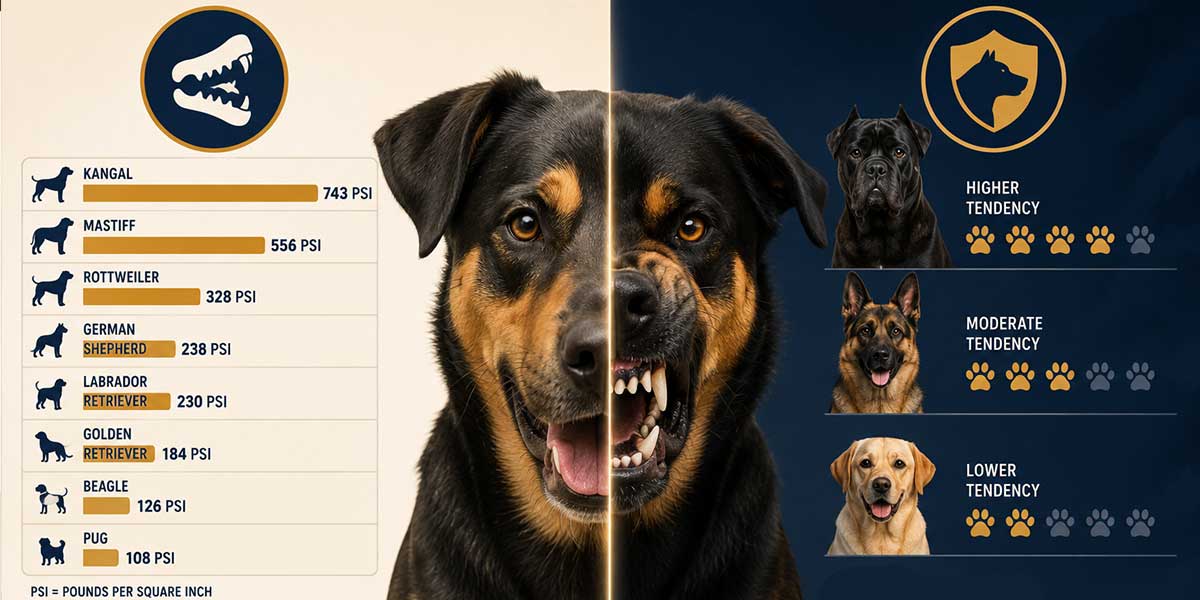
Search “how strong is a pit bull’s bite” or “what dog can kill a wolf,” and within seconds you’ll land on PSI charts and “which breed wins” rankings. Almost none of those numbers come from an actual, peer-reviewed measurement of a dog biting down on a sensor — and the breeds most often named in these lists, Kangals, Rottweilers, and Sarplaninacs among them, were bred for a specific, unglamorous job: standing between a flock and a predator, night after night, for centuries. Not fighting for sport, and not settling scores with other dogs.
This article separates the two questions that usually get tangled together online. First: what does the actual science say about bite force, and why does a figure like “743 PSI” keep circulating with no real source behind it? Second: what do veterinary researchers — including the American Veterinary Medical Association (AVMA) — actually find when they study which dogs bite people, and how much of that risk really comes down to breed at all?
What’s Inside!
Where Do Numbers Like “743 PSI” Actually Come From?
Measuring exactly how hard a live, willing dog bites down is harder than it sounds. A 2018 review of bite-force research in Frontiers in Veterinary Science notes that it’s “difficult or impossible to install a transducer in the mouth or force the animals to chew it deliberately,” which is a big part of why only a handful of studies have ever measured real dogs biting down on a sensor. In the rare cases researchers have tried, results swing wildly — one study recorded forces anywhere from 13 to nearly 1,400 newtons within the same small group of dogs, because “chewing enthusiasm, personality, breed, and training” all affect the result, not breed alone.
Most of the specific PSI numbers people quote online, including the 743 PSI figure attached to the Kangal, don’t come from that kind of direct measurement at all. A lot of them trace back to a widely referenced on-camera test featured in a National Geographic special, where herpetologist Brady Barr measured three dogs — a German Shepherd, a Rottweiler, and an American Pit Bull Terrier — averaging 269 PSI, with the Rottweiler recording the highest single reading at 328 PSI — a widely cited but never peer-reviewed result from a sample of three individual dogs. The 743 PSI figure attached to the Kangal appears to have no verifiable origin at all; vet-reviewed estimates put a healthy adult Kangal’s bite closer to 250–400 PSI — roughly the same range commonly attributed to Rottweilers and pit bull-type dogs. Treat any single PSI number tied to a breed, including the ones in this article, as a rough estimate rather than a lab-measured fact.
Worth noting: the one large study that actually modeled bite force across dog skulls — a peer-reviewed analysis of cranial measurements published in the Journal of Anatomy — found that body size and skull shape predicted bite strength far more reliably than breed identity itself. A bigger head with a wider muzzle generates more force almost regardless of what breed name is attached to it. Read the study abstract.
Guardian Breeds Were Bred to Deter Predators, Not Fight Them
The Kangal, Anatolian Shepherd, Rottweiler, and Sarplaninac all turn up on “which dog could kill X” lists, but their actual histories point somewhere far more practical: livestock protection. Long before barbed-wire fencing and rifles were reliable options, shepherds in mountainous, predator-heavy regions relied on big, independent-minded dogs that could live with a flock full-time and stand their ground against a wolf or bear without a human there to direct them.
Kangal & Anatolian Shepherd

The Kangal is a livestock-guardian breed native to the Kangal district of Sivas Province in central Turkey, descended from dogs brought by nomadic Turkic herding tribes migrating into Anatolia as early as the 11th century, according to the United Kennel Club’s breed standard. Males stand 29–33 inches and weigh 110–145 pounds — a size built for endurance and presence, not speed. Crucially, the UKC standard notes that Kangals “prefer to intimidate predators” using sheer size, bark, and body language, and only escalate to a physical confrontation if a wolf or bear won’t back off first. The closely related Anatolian Shepherd Dog, a distinct AKC-recognized breed from the same broad region, is described in the AKC’s own breed page as “a rugged, imposing flock guardian of ancient lineage” — bred to patrol a flock’s territory independently rather than herd it, the opposite job of a Border Collie or Australian Shepherd.
Rottweiler
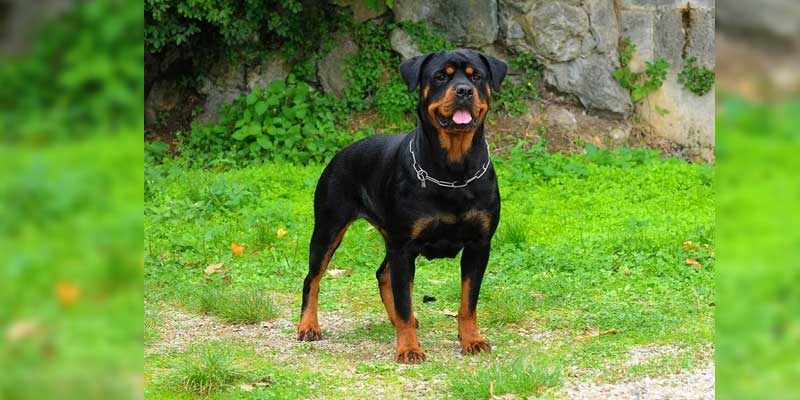
The Rottweiler’s guardian job looked different but came from the same root need. The breed descends from Roman drover mastiffs that accompanied legions across the Alps, herding and protecting cattle along the way; some of those dogs stayed behind in the German trading town of Rottweil, where they earned the nickname “Rottweiler Metzgerhund” — the butcher’s dog of Rottweil — for driving cattle to market and guarding drovers’ money pouches from robbers, according to the AKC’s breed history. That working, protective temperament carried the breed through a near-collapse in the late 1800s — reportedly only one Rottweiler appeared at a Heilbronn dog show in 1882 — into a second career as an early 20th-century German police dog, and eventually into the AKC’s Working Group in 1931. None of that history involves fighting other dogs for sport; it’s a cattle-and-cart guardian’s résumé.
Sarplaninac
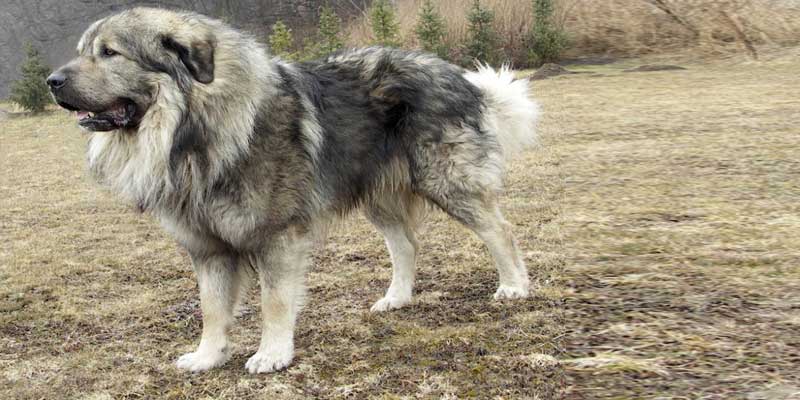
The Sarplaninac, also called the Illyrian Shepherd Dog, comes from the Šar Mountains along the Kosovo–North Macedonia border — an ancient livestock-guarding breed the FCI formally recognized in 1939. Bred to work at altitude in genuinely wolf- and bear-populated terrain, it’s built heavy-boned and thick-coated, standing 22–24-plus inches and reaching up to 99 pounds, per the UKC breed standard, which describes its “extraordinary strength and large teeth” as tools against predatory animals, not other dogs. Historically, Sarplaninacs were bred to deter wolves and bears from flocks in the Balkan mountains. Exporting a Sarplaninac out of Yugoslavia was restricted until 1970, and the breed’s small numbers in North America today still trace back mostly to livestock operations that specifically wanted a working predator deterrent, not a companion or show dog.
Fact: livestock guardian dogs work — and the effect is measurable. Ranchers who switch from trapping or removal programs to using guardian breeds like these report lambing and kidding survival rates improving by as much as 100% within a year, largely because a guardian dog’s presence and body language deter a predator before any physical confrontation happens. Source: Texas A&M AgriLife Today.
Does Breed Actually Predict Aggression? What the Research Says
This is where the “which dog would win” framing breaks down completely, according to the organizations that actually study dog bites for a living. The AVMA’s official position is direct: “any dog can bite, regardless of its breed,” and the organization opposes breed-specific legislation as “a simplistic answer to a far more complex social problem.” Research the AVMA cites found “substantial within-breed variation” in aggressive behavior, concluding it’s inappropriate to predict a given dog’s likelihood of aggression based solely on its breed.
Good to know: a 2013 study of 256 fatal dog-bite cases in the United States could reliably confirm the dog’s breed in only 45 of them — 17.6% of the total — because media reports, animal-control records, and witness accounts disagreed with each other on breed roughly 30–40% of the time. In 80.5% of the deaths, four or more other preventable factors (no supervision, an unfamiliar victim, an unneutered dog, prior mismanagement) were present together. Read the study.
A second, separate problem compounds the breed question: people are genuinely bad at identifying breed by sight in the first place. Studies compiled by the National Canine Research Council found that even experienced shelter staff and veterinarians frequently disagree with each other, and with DNA results, about what breed a dog in front of them actually is — which means a real share of “pit bull attacked someone” headlines may describe a dog that isn’t genetically a pit bull-type breed at all.
None of this means genetics play zero role. VCA Hospitals’ behavior team notes there “may be a genetic propensity to aggression in some lines of some breeds,” but frames that as a minor factor next to a larger, better-supported list: fear, pain or an underlying medical condition, inadequate socialization, and learned behavior. The AVMA’s own list of real risk factors reads almost nothing like a breed chart — lack of supervision, an unneutered dog, insufficient socialization, and poor containment show up again and again in the research, regardless of what breed is involved. If you’re trying to work out why your own dog reacts aggressively to specific dogs or situations, the more useful starting point is usually the actual trigger — see our guide to why dogs attack other dogs — rather than a breed chart.
Do Breed Bans Actually Reduce Dog Bites?
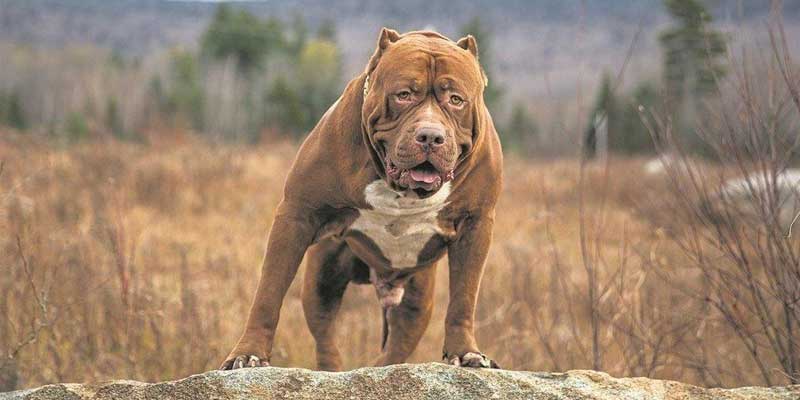
Given all of that, it’s worth asking directly whether banning specific breeds — the policy response most often built on “which breed is most dangerous” thinking — actually works. The AVMA’s own review of the evidence says no: “it has not been demonstrated that introducing a breed-specific ban will reduce the rate or severity of bite injuries occurring in the community.” The organization instead recommends enforcing breed-neutral “dangerous dog” ordinances that focus on an individual dog’s actual behavior and its owner’s conduct — leash laws, containment requirements, and consequences tied to a real bite history — rather than a list of banned breeds that shifts as different breeds cycle in and out of popularity.
If you’re renting, buying, or traveling with a dog: breed-specific legislation is still very real in many places even though the research doesn’t support it. Some cities, counties, and homeowners’ or renters’ insurance policies restrict or surcharge specific breeds regardless of an individual dog’s temperament or training. Check local ordinances and your policy’s breed list before adopting a Kangal, Rottweiler, Pit Bull, or similar breed — the evidence settles the science question, not the legal or insurance one.
The short version: guardian breeds like the Kangal, Rottweiler, and Sarplaninac earned their size and confidence doing a real job — protecting livestock from wild predators — not fighting each other or humans for sport. And when it comes to which dogs actually bite people, the strongest available research points away from breed and toward supervision, socialization, and individual history every time. If your own dog struggles with reactivity or aggression regardless of breed, our guide on how to make a dog less aggressive covers practical, behavior-based steps.
Is the 743 PSI bite-force figure for the Kangal real?
Not verifiably. No published, peer-reviewed study has measured that number in a live Kangal. Vet-reviewed estimates put a healthy adult Kangal’s bite closer to 250–400 PSI, in the same broad range cited for Rottweilers and pit bull-type dogs.
Which dog breed has the strongest bite, based on real science?
There’s no reliable, peer-reviewed ranking of bite force across every breed. The largest study to model bite force from skull measurements found that body size and skull shape predict bite strength better than breed name does — bigger, broader-skulled dogs of any breed tend to generate more force.
Do Kangals and Sarplaninacs actually fight wolves to the death?
Their job is deterrence, not combat. Livestock guardian breeds are bred to intimidate predators with size, bark, and body language first, and only physically engage if a predator won’t back off — the goal is to protect the flock, not to win a fight.
Does breed-specific legislation actually reduce dog bites?
According to the AVMA’s review of the evidence, no. Breed bans haven’t been shown to reduce the rate or severity of bite injuries in a community. The AVMA instead recommends enforcing breed-neutral dangerous-dog laws focused on individual behavior.
If breed doesn’t predict aggression, what does?
Research consistently points to a handful of non-breed factors: lack of supervision (especially around children), an unneutered dog, poor socialization, and prior mismanagement or neglect by an owner. Most fatal dog-bite cases involve several of these factors stacking together, not one breed acting alone.
References:
- https://www.avma.org/resources-tools/pet-owners/dog-bite-prevention/why-breed-specific-legislation-not-answer
- https://www.avma.org/sites/default/files/resources/dog_bite_risk_and_prevention_bgnd.pdf
- https://www.avma.org/resources-tools/pet-owners/dog-bite-prevention
- https://pubmed.ncbi.nlm.nih.gov/19245503/
- https://pubmed.ncbi.nlm.nih.gov/24299544/
- https://www.frontiersin.org/journals/veterinary-science/articles/10.3389/fvets.2018.00076/full
- https://www.psychologytoday.com/us/blog/canine-corner/201005/dog-bite-force-myths-misinterpretations-and-realities
- https://www.dogster.com/lifestyle/kangal-bite-force/
- https://www.akc.org/expert-advice/dog-breeds/rottweiler-history/
- https://www.akc.org/dog-breeds/rottweiler/
- https://www.akc.org/dog-breeds/anatolian-shepherd-dog/
- https://www.ukcdogs.com/kangal-dog
- https://www.ukcdogs.com/sarplaninac
- https://a-z-animals.com/animals/sarplaninac/
- https://agrilifetoday.tamu.edu/2023/10/23/livestock-guardian-dogs-unsung-heroes-of-the-livestock-protection-business/
- https://vcahospitals.com/know-your-pet/dog-behavior-problems-aggression-diagnosis-and-overview
- https://nationalcanineresearchcouncil.com/research_library/visual-breed-identification-a-literature-review/