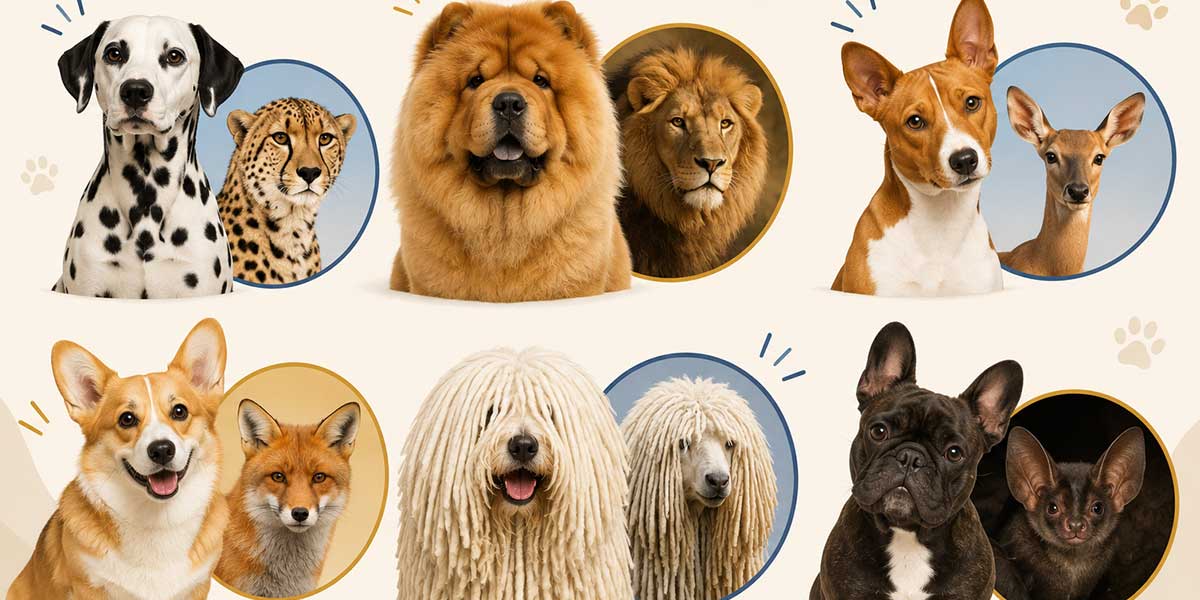
Scroll through enough dog photos and you’ll eventually do a double-take: is that a sheep, a bear cub, or a fox curled up on the porch? It’s not your imagination. A handful of dog breeds have coats, builds, or faces that read as unmistakably “wrong species” at first glance, and the resemblance usually traces back to a real reason — a working job the breed was bred for, a shared ancestor, or a coat type that convergently evolved to do the same job as another animal’s.
Below are six of the most striking look-alikes, the real breed behind each one, and the other breeds that get mistaken for the same animal — with actual height, weight, lifespan, and temperament facts, not just a punchline photo.
What’s Inside!
- 1 – The Komondor: The Dog That Looks Like a Mop
- 2 – The Tibetan Mastiff: The Dog That Looks Like a Bear
- 3 – The Chow Chow: The Dog That Looks Like a Teddy Bear
- 4 – The Belgian Malinois: The Dog That Looks Like a German Shepherd
- 5 – The Shiba Inu: The Dog That Looks Like a Fox
- 6 – The Siberian Husky: The Dog That Looks Like a Wolf
- 7 – Dog Look-Alike FAQ
The Komondor: The Dog That Looks Like a Mop
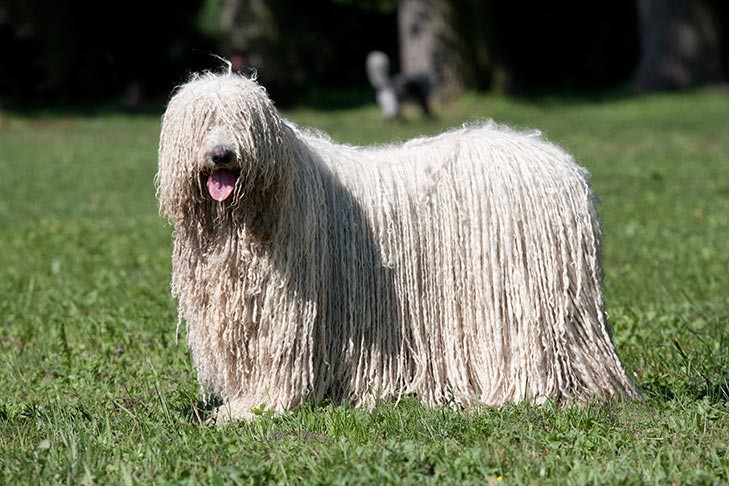
The Komondor’s rope-like white coat isn’t a grooming style — it’s the entire point of the breed. Hungary’s Cuman herders, who arrived on the Great Hungarian Plain around the 13th century, bred the Komondor to guard sheep flocks, and its shaggy, felted coat did double duty: it blended the dog into the herd so predators didn’t spot the guardian until it was too late, and it gave the dog padding against wolf and bear bites during an actual confrontation, according to the AKC’s breed history.
Adult females stand around 25.5 inches and 80+ pounds, and males run closer to 28 inches and 80–100 pounds, per the AKC breed standard. Despite the wild look, Komondorok are calm, intelligent guardians with a low bite tendency and moderate bark — they were bred to watch and deter, not to be aggressive on a hair trigger. They typically live 10–12 years, according to PetMD.
Fact: The mop look isn’t styled — it grows in on its own. A Komondor’s soft undercoat and coarser outer coat tangle together naturally as the puppy coat sheds out, and it takes roughly two years for the cords to fully form and reach the ground, per the AKC. Owners have to separate the cords by hand as they develop so the coat doesn’t mat into one solid block.
The Komondor isn’t the only corded or shag-coated breed that gets the “mop dog” reaction:
- Puli — a smaller Hungarian herding breed with the same natural cording, just in a compact package.
- Bergamasco — an Italian flock guardian whose coat mats into flat “flocks” instead of round cords.
- Spanish Water Dog — a curly-coated Iberian herding and retrieving breed, usually kept clipped short rather than fully corded.
- Poodle — the same curly coat that’s normally clipped into show trims can be left to cord, giving a corded Poodle the identical mop silhouette.
The Tibetan Mastiff: The Dog That Looks Like a Bear
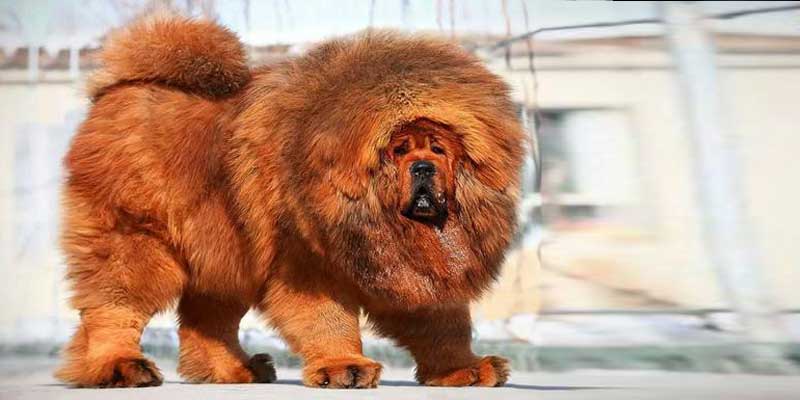
The Tibetan Mastiff’s huge frame, thick double coat, and mane-like ruff around the neck are what give it the bear-cub look, and that’s not an accident of breeding either. For centuries, these dogs guarded Himalayan monasteries and nomadic camps against wolves, leopards, and other large predators, which meant they needed the size and coat to physically stand up to something that size, according to the AKC’s breed history.
Females run 24 inches and 70–120 pounds, males 26 inches and 90–150 pounds. They live 10–12 years and shed their heavy coat just once or twice a year rather than year-round, per PetMD. Temperament-wise, they’re serious watchdogs — protective, independent, and prone to loud, deep barking at anything unfamiliar, which tracks with a breed built to patrol on its own overnight rather than take orders constantly.
Fact: In 2014, a Tibetan Mastiff puppy reportedly sold for nearly $2 million at a luxury pet fair in China, making it one of the most expensive dogs ever sold, per Smithsonian Magazine. The breed’s rarity and guardian reputation had made it a status symbol among China’s newly wealthy at the time — a bubble that later cooled sharply.
Other bear-lookalike breeds worth knowing:
- Akita — Japan’s powerful, silent hunting breed, made internationally famous by Hachikō, the Akita who reportedly waited at a Tokyo train station for years after his owner’s death, per the AKC.
- Great Pyrenees — a French/Spanish livestock guardian with a shaggy white coat, built for the same predator-deterrence job as the Tibetan Mastiff.
- Samoyed — a fluffy white Siberian sled and herding breed known for its upturned mouth, often called the “Sammy smile.”
The Chow Chow: The Dog That Looks Like a Teddy Bear
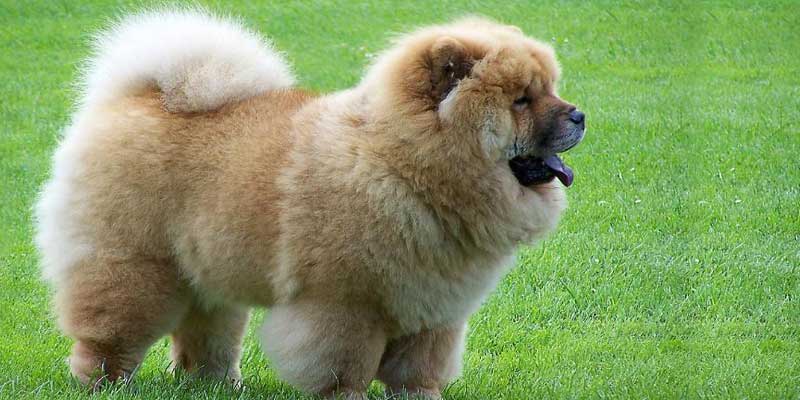
The Chow Chow’s stiff-legged gait, plush double coat, and scowling “puffy lion” face give it the stuffed-animal look, but it’s actually one of the oldest known dog breeds — Chow-type dogs appear in Chinese artifacts dating to at least 206 B.C., according to the AKC. Historically the breed worked as a hunter, guard dog, and puller of carts — not just a lap decoration.
Females stand around 18 inches, males 19 inches, both in the 45–70 pound range, and the breed lives 10–12 years on average, consistent with the PetMD breed profile. Chows are aloof and independent — closer in temperament to a cat than a golden retriever — and can be tough to train because they were bred to think for themselves while guarding property, not to take constant direction.
Good to know: That signature blue-black tongue isn’t unique to Chow Chows — the Chinese Shar-Pei is the only other breed born with it, and both breeds’ show standards require it, with a pink or red tongue counting as a disqualifying fault. Puppies are actually born with pink tongues; the pigment fills in as their eyes open and must be fully developed by around six months old, per the AKC. The exact biological cause is still scientifically undocumented.
Most “teddy bear dog” nicknames today actually belong to small designer or toy breeds bred to look permanently puppy-ish, rather than a natural breed like the Chow:
- Cavapoo — a Cavalier King Charles Spaniel/Poodle mix with a soft, wavy coat.
- Shih-Poo — a Shih Tzu/Poodle mix, usually clipped into a round “teddy bear” face trim.
- Pomeranian — purebred, but a specific short “teddy bear” grooming cut gives it the same rounded, plush look.
The Belgian Malinois: The Dog That Looks Like a German Shepherd
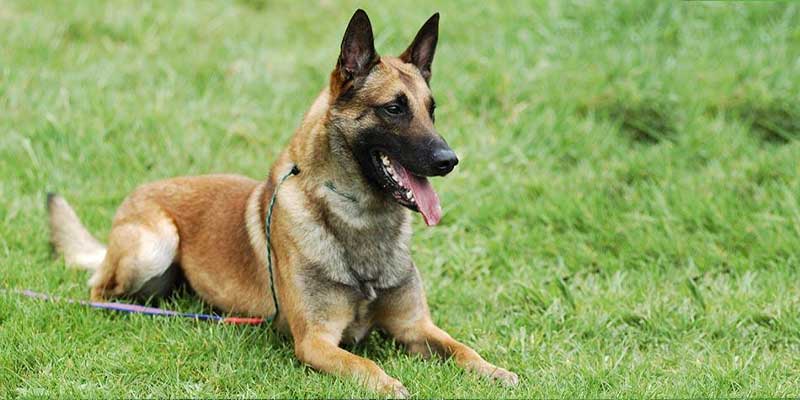
Belgian Malinois and German Shepherd Dogs are separate breeds that happen to share a similar job description — herding and protection work — which is exactly why they’re so often confused. According to a side-by-side AKC breed comparison, the real tell is body shape: a German Shepherd’s outline is a longer, smoothly sloped curve, while a Malinois is noticeably more “boxy,” with a square profile where the topline and legs roughly match in length. Malinois ears also read more sharply triangular.
Both breeds stand roughly 22–26 inches at the shoulder, but Malinois run lighter — 40–60 pounds for females and 60–80 for males, per PetMD — versus a German Shepherd’s heavier 70–90 pound male frame. Malinois also carry a shorter, weatherproof single-length coat that needs far less brushing than a Shepherd’s medium double coat. Both are whip-smart working breeds, but the AKC describes the Malinois specifically as having “an intense desire to work” directed at its handler, which is part of why the breed is a top pick for military and police K-9 units.
Fact: The most famous working Malinois in recent history is Cairo, the U.S. Navy SEAL dog who took part in the 2011 raid that killed Osama bin Laden. Cairo wore body armor and night-vision gear like the rest of his team and worked alongside SEAL Team Six as a full operational member, not a mascot, according to the AKC.
A few other breeds get mistaken for German Shepherds for a simpler reason — they were deliberately developed from Shepherd lines to preserve or exaggerate the look:
- King Shepherd — a larger, heavier-boned variant developed from German Shepherd and Shiloh Shepherd stock.
- Dutch Shepherd — a distinct, older Dutch herding breed with a similar wolf-gray or brindle coat pattern.
- Shiloh Shepherd — bred specifically for a calmer temperament and larger size than the standard German Shepherd.
The Shiba Inu: The Dog That Looks Like a Fox
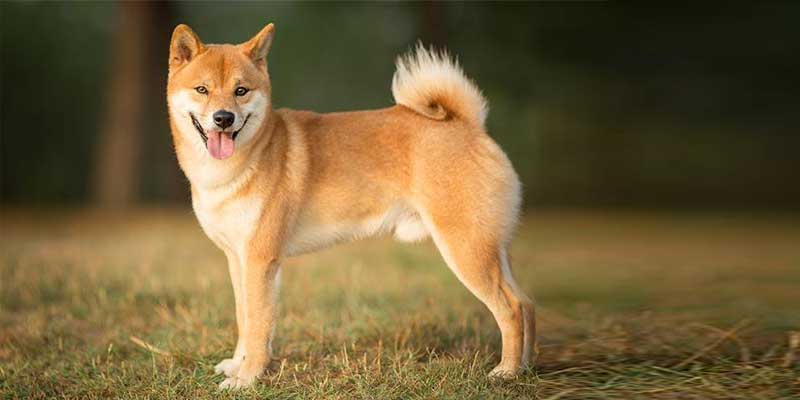
The Shiba Inu’s pointed muzzle, upright triangular ears, and red coat are exactly what make people ask if it’s part fox — it isn’t, but the resemblance is genuine: Shibas were developed in mountainous Japan to flush small game and even bears out of dense brush, a job that rewarded a compact, agile, fox-like build, per the AKC.
Females run 13.5–15.5 inches and about 17 pounds, males 14.5–16.5 inches and about 23 pounds, per the AKC breed standard, and they typically live a long 13–16 years, according to PetMD. Shibas are bold, independent, and famously fastidious — they groom themselves cat-style and are notoriously difficult to recall off-leash once their prey drive kicks in, a trait bred into them for hunting, not a training failure on the owner’s part.
Fact: The Shiba Inu behind the internet’s “Doge” meme, a rescue named Kabosu, died in May 2024 at age 18. Her owner’s 2010 blog photo of Kabosu sitting with paws crossed and a sideways glance became the template for the meme, which later became the face of the Dogecoin cryptocurrency, per NPR.
Other genuinely fox-like breeds:
- Finnish Spitz — a golden-red Finnish hunting breed, even more fox-colored than the Shiba.
- Icelandic Sheepdog — a fluffy, curled-tail herding breed with a similarly pointed fox-like face.
- Akita Inu — the Japanese Akita line, sharing the Shiba’s erect ears and alert expression on a much larger frame.
The Siberian Husky: The Dog That Looks Like a Wolf
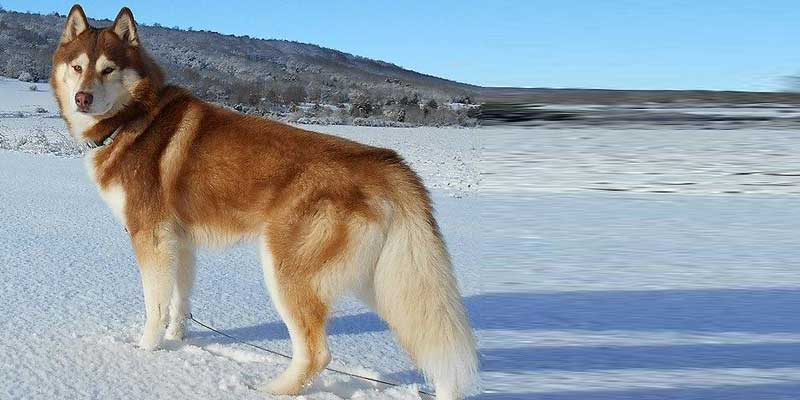
The Siberian Husky’s dense double coat, erect ears, and masked facial markings are the classic “wolf dog” look, but the breed’s real origin has nothing to do with recent wolf ancestry. The Chukchi people of northeastern Siberia developed these dogs roughly 30,000 years ago as sled dogs, using them to haul supplies over brutal Arctic terrain and to help their semi-nomadic communities survive some of the coldest inhabited land on Earth, according to the AKC’s breed history. The wolf-like traits are ancient, shared, primitive-breed features — not evidence of a husky being “part wolf.”
Females stand around 21 inches and 35–50 pounds, males 23 inches and 45–60 pounds, per the AKC breed standard. They live 12–14 years, according to PetMD, and are naturally clean, vocal dogs known for “talking” back to their owners in howls and chirps rather than straightforward barking.
Worth knowing before you buy for the look: Huskies have a strong prey drive and “a deep-rooted instinct to run,” which makes them natural escape artists and diggers — a securely fenced yard (or a leash, always) isn’t optional, according to the AKC. They also need substantial daily exercise and mental stimulation and don’t do well left alone for long stretches. The wolf look draws people in, but the breed’s actual needs are what should decide whether it’s the right fit.
Other wolf-lookalike breeds:
- Alaskan Malamute — a larger, heavier-built Arctic sled breed, often confused with huskies but built for pulling power over speed.
- Czechoslovakian Wolfdog — a genuine wolf/German Shepherd hybrid breed, developed from actual Carpathian wolf crosses starting in the 1950s.
- Kugsha — a rare, primitive-type Arctic breed bred specifically for a heavy wolf-like appearance.
Dog Look-Alike FAQ
Are any of these breeds actually part wolf, bear, or fox?
No. The Siberian Husky, Tibetan Mastiff, and Shiba Inu are all fully domestic dog breeds with no recent wild ancestry — the resemblance comes from shared ancient traits and convergent breeding for similar jobs (guarding, hunting, sledding), not crossbreeding with the animal they resemble. The Czechoslovakian Wolfdog is a genuine exception, developed from real wolf/German Shepherd crosses in the 1950s.
Why do so many guardian breeds end up looking like bears?
Livestock and monastery guardian breeds like the Tibetan Mastiff and Great Pyrenees needed enough size and coat to physically face down real predators, which naturally pushed their build toward a big, thick-coated, bear-like silhouette rather than a sleeker hunting shape.
Is a Belgian Malinois just a small German Shepherd?
No — they’re separate breeds. A Malinois is generally lighter and more square-bodied than a German Shepherd, with a shorter single-length coat instead of a medium double coat, according to the AKC.
Do Chow Chow puppies have blue tongues from birth?
No. Chow Chow puppies are born with pink tongues, and the blue-black pigment fills in as their eyes open, usually completing by around six months old, per the AKC.
Should I get a wolf-lookalike breed just for the appearance?
Not without understanding the real breed behind the look. Siberian Huskies and Alaskan Malamutes, for example, need heavy daily exercise, secure fencing, and tolerance for a vocal, independent dog — the wolf-like appearance has nothing to do with whether that workload fits your household.
References:
- AKC — Komondor History
- AKC — Komondor Breed Standard
- PetMD — Komondor
- AKC — Tibetan Mastiff History
- PetMD — Tibetan Mastiff
- Smithsonian Magazine — Tibetan Mastiff Sale
- AKC — Akita History (Hachikō)
- AKC — Why Do Chow Chows Have Blue Tongues?
- PetMD — Chow Chow
- AKC — German Shepherd Dog vs. Belgian Malinois
- PetMD — Belgian Malinois
- AKC — No Ordinary Dog: Cairo the Navy SEAL Dog
- AKC — Shiba Inu Breed History
- AKC — Shiba Inu Breed Standard
- PetMD — Shiba Inu
- NPR — Kabosu, the Shiba Inu Behind the “Doge” Meme
- AKC — Siberian Husky History
- AKC — Siberian Husky Breed Standard
- PetMD — Siberian Husky
- AKC — Is the Siberian Husky Right for You?