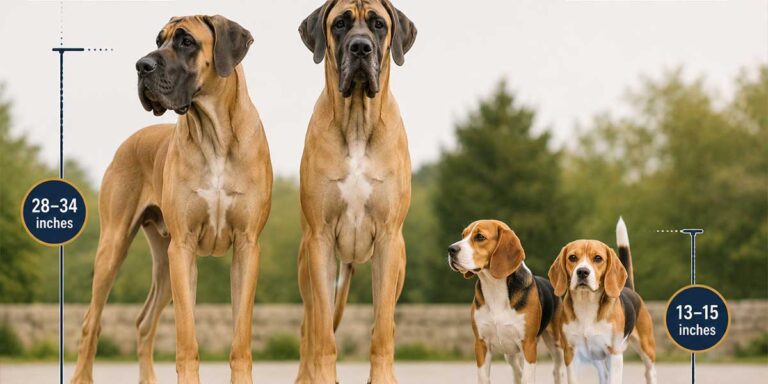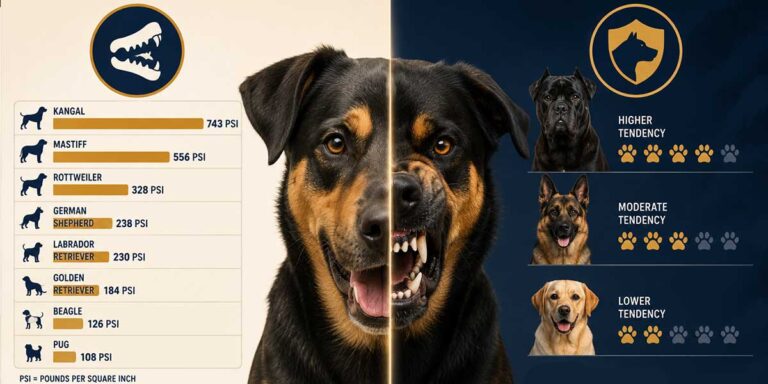
A dog’s breed says a lot about how many years you’ll actually get with it. Some breeds are considered seniors by six or seven years old. Others are still lively teenagers at fifteen, sixteen, or beyond. That’s not a small gap — it can be the better part of a decade, and it’s worth knowing before you pick a breed, not after.
Size is the single biggest predictor, and it isn’t close. But it isn’t the whole story either, and a couple of well-known small breeds actually break the pattern in the wrong direction. Below is the breed that holds the real Guinness World Record for canine longevity, the breed most often cited for the shortest average lifespan, the general size pattern connecting the two, and what actually moves the number once breed is accounted for.
What’s Inside!
The Size-Lifespan Pattern: Why Small Dogs Usually Outlive Giant Breeds
Veterinary researchers have tracked this pattern for decades, but a large-scale analysis by veterinary gerontologist Dr. Silvan Urfer, covering close to 169,000 dogs, put real numbers on it. According to the AKC’s coverage of that research, small dogs had a median lifespan of about 14.95 years, medium dogs averaged 13.86 years, and large dogs averaged 13.38 years — and the gap widens further once you move into true giant breeds, several of which are covered below.
Fact: In that same analysis, body size turned out to be the single strongest predictor of a dog’s lifespan — a bigger factor than whether the dog was purebred or a mixed breed. (Source: AKC)
The leading explanation is that large dogs simply age faster. Veterinary contributors at the AKC describe it as living life “in fast motion” — big breeds reach adult size much faster than small breeds, and that accelerated growth is linked to higher rates of cancer and orthopedic disease later in life.
The pattern isn’t airtight, though. A 2024 Royal Veterinary College study of UK companion dogs found that flat-faced (brachycephalic) breeds break it in the opposite direction. French Bulldogs, despite being a small breed, had the shortest life expectancy of any breed in the study at just 4.5 years on average — shorter than several giant breeds covered later in this article.
Before you choose a flat-faced breed: The Royal Veterinary College linked the French Bulldog’s short average lifespan to breathing problems, spinal disease, and difficult births — all tied to the breed’s shortened skull and flattened face, not to its small body size. English Bulldogs (7.4 years) and Pugs (7.7 years) showed the same pattern in the same study. (Source: RVC)
Dog Breeds With the Longest Lifespans
Australian Cattle Dog: Home of the Actual Longevity Record
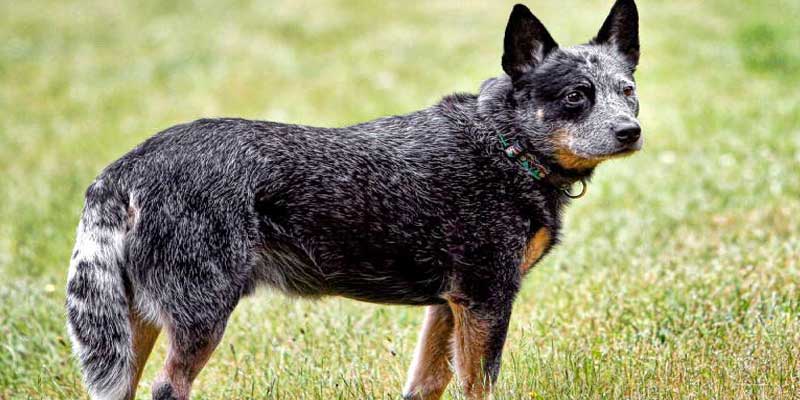
The Australian Cattle Dog (also called a Blue Heeler or Queensland Heeler) is a medium-sized herding breed built for stamina, not size — compact, muscular, and originally bred to drive cattle across long distances in the Australian outback. The AKC lists a typical lifespan of 12 to 16 years, already well above the large-breed average cited earlier.
The breed also holds the actual world record. Bluey, an Australian Cattle Dog born in 1910, lived to 29 years and 5 months before he died in 1939 — the longest confirmed lifespan of any dog ever recorded. Guinness World Records briefly recognized a Portuguese dog named Bobi as the record holder at over 30 years starting in 2023, but reversed that decision in 2024 after concluding the microchip evidence behind Bobi’s claimed birth year couldn’t be verified, restoring Bluey’s title.
Good to know: Bluey’s 29-plus years is a record, not a typical lifespan — it’s roughly double the breed’s normal 12–16 year range. A record dog is a genuine outlier, not what an owner should plan around when a typical range is what actually matters for a specific dog.
Other Breeds Known for Long Lifespans
Beyond the Australian Cattle Dog, several small and toy breeds regularly top “longest-lived” lists:
- Chihuahua — 14 to 18 years (VCA)
- Dachshund — 12 to 16 years (VCA)
- Yorkshire Terrier — 11 to 15 years (VCA)
- Jack Russell Terrier — averaged 12.7 years from birth, the longest of any breed in the 2024 RVC study (RVC)
What these breeds share isn’t just small size — it’s the absence of the orthopedic and cardiac strain that comes with rapid, heavy growth, plus, in most of them, no extreme structural trait, like a flattened face, working against the size advantage the way it does for the French Bulldog above.
Dog Breeds With the Shortest Lifespans
Irish Wolfhound: A Gentle Giant on a Short Clock
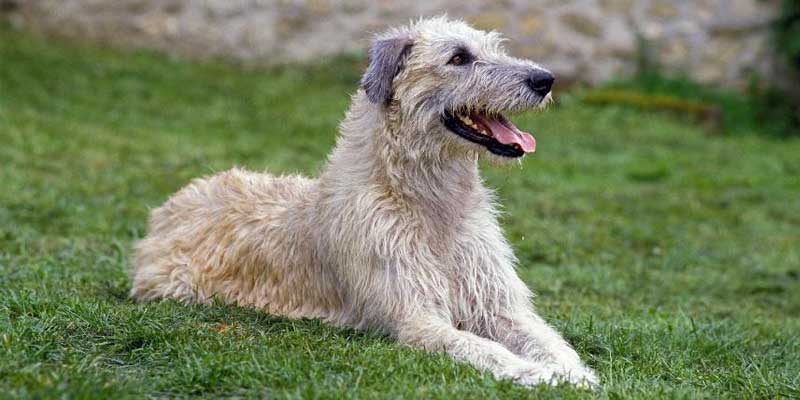
The Irish Wolfhound is the tallest AKC-recognized breed, historically bred to hunt wolves and, much earlier, to take down deer and boar. VCA Hospitals lists a lifespan of 6 to 10 years — less than half of what a Chihuahua or Dachshund can expect.
The breed’s size is directly tied to its health risks. Irish Wolfhounds are prone to bloat (gastric dilatation-volvulus), dilated cardiomyopathy, bone cancer (osteosarcoma), and hip and elbow dysplasia — the same cluster of conditions that shortens lifespan across most giant breeds.
See a vet immediately if: your dog shows a visibly swollen or drum-tight abdomen, retches repeatedly without producing vomit, drools excessively, or suddenly can’t get comfortable or stand. These are classic signs of bloat (GDV), a life-threatening emergency in deep-chested giant breeds like the Irish Wolfhound, Great Dane, and Saint Bernard — dogs over 100 pounds face roughly a 20% lifetime risk, and treatment within minutes to hours is critical. (Source: VCA)
Other Giant Breeds With Short Lifespans
The Irish Wolfhound isn’t alone in the giant-breed category:
- Great Dane — 8 to 10 years (AKC)
- Bernese Mountain Dog — 6 to 9 years (VCA)
- Mastiff — 9 to 11 years (VCA)
As mentioned above, French Bulldogs are the one major exception that shows up on “shortest lifespan” lists despite weighing well under 30 pounds — proof that size predicts lifespan reliably only when a breed isn’t also carrying an extreme structural trait working against it.
Beyond Breed: The Real Factors That Add or Cut Years
Once breed sets the baseline, day-to-day care moves the number more than most owners expect. In the same nearly-169,000-dog analysis cited earlier, dogs that got annual professional dental cleanings had almost 20% lower risk of death in a given year than dogs that didn’t.
Also backed by the data: Keeping a dog at a healthy weight mattered too — overweight dogs lived shorter lives across every size category, with the effect showing up most strongly in small breeds, the same dogs that would otherwise be expected to live the longest. (Source: AKC)
Genetics inside a breed matters as well, not just genetics between breeds. The same research found dogs from larger breeding populations lived three to six months longer on average than dogs from a shrinking gene pool — one more reason to understand how a breed’s gene pool and breeding practices actually work before choosing where a puppy comes from.
If you already have a dog and want a practical sense of where they stand in that lifespan, translating their age into real biological terms is a better starting point than the old “multiply by seven” rule — it accounts for the same size differences driving everything above.
Common Questions About Dog Lifespan
What dog breed lives the longest on average?
Small and toy breeds top most lifespan lists. The Chihuahua (14–18 years) and Dachshund (12–16 years) are among the longest-lived by VCA’s figures, and a 2024 UK study found the Jack Russell Terrier averaged 12.7 years, the longest of any breed studied. The Australian Cattle Dog also belongs on this list — its typical range is 12–16 years, and it holds the actual world record for the longest-lived dog ever, at 29 years and 5 months.
What dog breed has the shortest lifespan?
Giant breeds like the Irish Wolfhound (6–10 years), Bernese Mountain Dog (6–9 years), and Great Dane (8–10 years) sit at the bottom of most lifespan charts. The one notable exception is the French Bulldog, a small breed that a 2024 Royal Veterinary College study found averages just 4.5 years — shorter than any giant breed in that dataset — due to health problems tied to its flattened face rather than its size.
Is it true that small dogs always live longer than big dogs?
Usually, but not always. Size is the strongest single predictor of lifespan, and on average small dogs do outlive large ones. But flat-faced small breeds like the French Bulldog, English Bulldog, and Pug break the pattern because of breathing, spinal, and birthing problems tied to their skull shape, not their size.
What’s the actual record for the oldest dog ever?
Bluey, an Australian Cattle Dog born in 1910, holds the Guinness World Record at 29 years and 5 months. A Portuguese dog named Bobi briefly held the title at over 30 years starting in 2023, but Guinness reversed that decision in 2024 after the microchip evidence for his claimed birth date couldn’t be verified.
Can I actually add years to my dog’s life through care?
Yes, within limits. Research tracking nearly 169,000 dogs found that dogs who got annual dental cleanings had almost 20% lower risk of death in a given year, and maintaining a healthy weight extended lifespan across every size category — both are things an owner controls regardless of breed.
References:
- https://www.akc.org/expert-advice/health/why-do-small-dogs-live-longer/
- https://www.abc.net.au/news/2024-03-03/bluey-rochester-dog-reclaims-guinness-world-record-as-oldest-dog/103513372
- https://www.akc.org/dog-breeds/australian-cattle-dog/
- https://www.rvc.ac.uk/vetcompass/news/new-rvc-research-helps-owners-better-understand-the-remaining-life-expectancy-of-dogs
- https://vcahospitals.com/know-your-pet/chihuahua
- https://vcahospitals.com/know-your-pet/dachshund
- https://vcahospitals.com/know-your-pet/yorkshire-terrier
- https://vcahospitals.com/know-your-pet/irish-wolfhound
- https://vcahospitals.com/know-your-pet/bloat-gastric-dilatation-and-volvulus-in-dogs
- https://www.akc.org/expert-advice/health/great-dane-life-span/
- https://vcahospitals.com/know-your-pet/bernese-mountain-dog
- https://vcahospitals.com/know-your-pet/mastiff