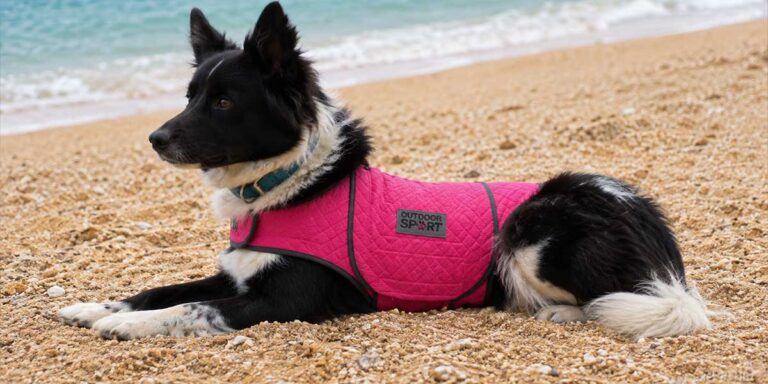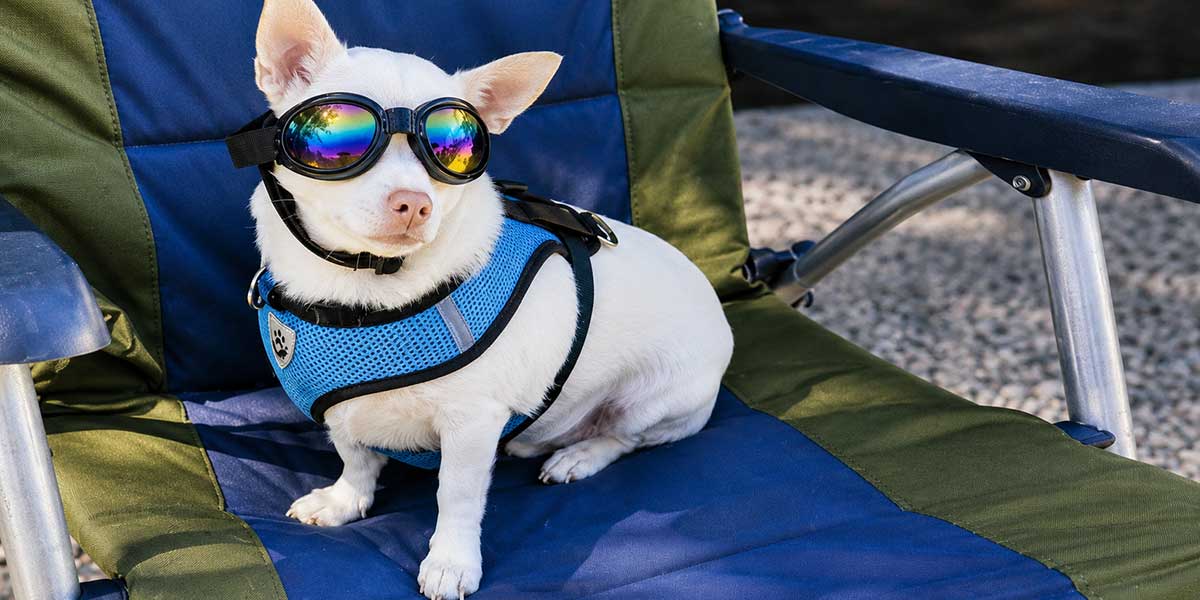
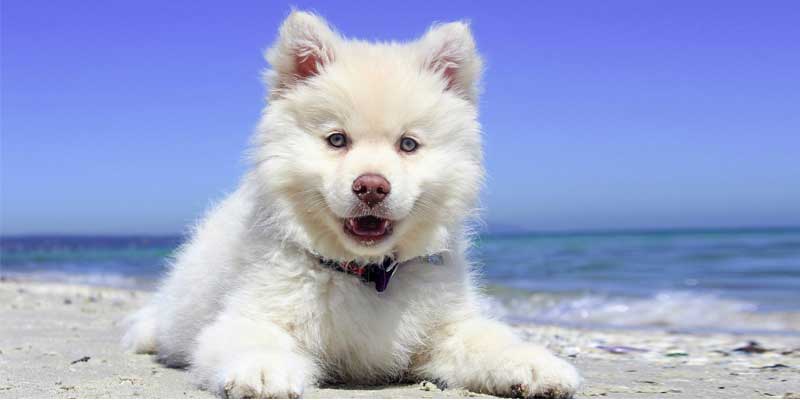
White and light-coated dogs are more vulnerable to sunburn for a specific reason: less melanin means less natural pigment protecting the skin underneath, not just a lighter-looking coat. The areas most at risk are the ones with the thinnest fur or skin exposure — nose, ear tips, belly, and groin — regardless of how thick the coat is elsewhere.
The main risk from repeated sun exposure in dogs is squamous and basal cell carcinoma and hemangiosarcoma — skin tumors account for roughly 20-30% of all canine tumors. Melanoma, the most dangerous type in humans, hasn’t been well-established as sun-caused in dogs specifically the way it has in people.
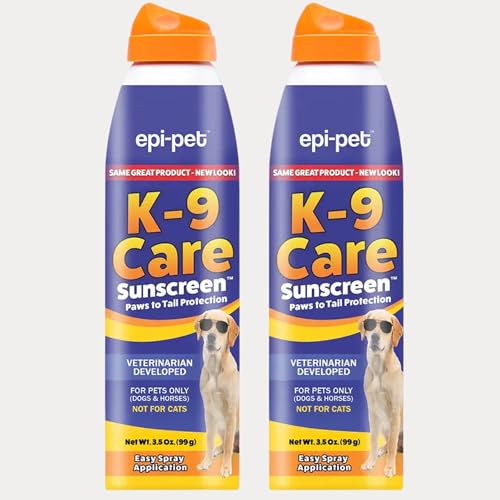
Only one dog sunscreen on the market currently meets FDA standards. Most products in this category aren’t officially regulated at all.
Editor’s Pick
Last update on 2026-10-13 / Affiliate links / Images from Amazon Product Advertising API
Currently the only dog sunscreen that meets FDA standards, not simply a “vet developed” label without regulatory backing behind it.
What’s Inside!
What to Look For
No zinc oxide. A safety non-negotiable. Zinc oxide is toxic to dogs if ingested, and since dogs lick themselves constantly, this is a real risk rather than a minor caveat. Check the ingredient list directly.
Never use human sunscreen. Beyond zinc oxide, human formulas often contain salicylates, strong fragrances, or essential oils that can cause irritation or toxicity if licked. Use a product formulated specifically for dogs.
Application timing. Apply 15-30 minutes before sun exposure to let it absorb properly, and reapply every 2-3 hours, more often if your dog is swimming.
Where to apply. Focus on the nose bridge, ear tips, belly, groin, inner thighs, and any shaved or thin-fur areas — the spots with the least natural protection, not just wherever is easiest to reach.
If your dog develops red or flaking skin that’s warm to the touch, that’s likely sunburn. Move them out of the sun immediately, and aloe vera or a cool compress can ease discomfort. See a vet if the burn looks severe or doesn’t improve.
Sunscreen Comparison Table


Last update on 2026-10-13 / Affiliate links / Images from Amazon Product Advertising API
Sunscreen Reviews
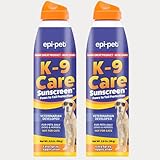
1. Epi-Pet (Best Overall)
Best Overall
Last update on 2026-10-13 / Affiliate links / Images from Amazon Product Advertising API
- Regulatory statusOnly FDA-compliant dog sunscreen currently on the market
- SPF30+ equivalent
- Best ForNot sure where to start
It’s currently the only dog sunscreen that meets FDA standards for testing, verification, and efficacy, according to Forbes’s review of the category — a real distinction from the many products that advertise being “vet developed” without any formal regulatory backing. The active ingredients are ethylhexyl methoxycinnamate, octyl salicylate, homosalate, and benzophenone-3, UV-filtering compounds similar to those used in older human sunscreen formulas, at concentrations the FDA has cleared for use on dogs.
The company’s own FAQ notes that melanoma — the most dangerous skin cancer in humans — hasn’t been established as sun-caused in dogs the way it has in people and horses. What the sunscreen is documented to guard against instead is squamous cell carcinoma, basal cell carcinoma, and hemangiosarcoma, the skin cancers that are actually linked to UV exposure in dogs.
It isn’t safe for cats: two of the four active ingredients can convert to salicylic acid, which is toxic to cats, so a household with both species will need a separate cat-safe product.
Pros
- Independently confirmed FDA compliance
- Sprays at any angle, including upside down
- Water and sweat resistant
Cons
- Not safe for cats in the same household
2. Warren London (Best With Aloe)
Best With Aloe
Last update on 2026-10-13 / Affiliate links / Images from Amazon Product Advertising API
- Key ingredientAloe vera
- Made inUSA
- Best ForDogs with dry or sensitive skin
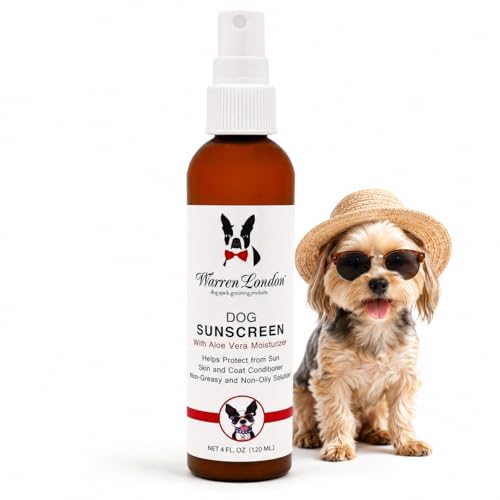
Dogster’s roundup of dog sunscreens names this one Best Overall, and the ingredient list explains why it doubles as a skin-care product: aloe vera juice alongside the UV-filtering ingredient benzophenone-4.
The aloe vera adds a moisturizing benefit on top of sun protection, which is useful if your dog’s skin tends toward dryness or irritation beyond just sun exposure. It’s non-oily and dries quickly.
It carries a citrus scent, which outside reviews describe as pleasant — but some dogs are sensitive to any added fragrance, so it’s not the pick for a dog that already avoids scented grooming products.
Pros
- Named Best Overall in Dogster’s roundup
- Moisturizing benefit beyond sun protection
- Made in the USA
Cons
- Citrus scent may bother fragrance-sensitive dogs
3. My Dog Nose It (Best Balm for Noses)
Best Balm for Noses
Last update on 2026-10-13 / Affiliate links / Images from Amazon Product Advertising API
- FormatBalm, not spray
- Key ingredientsCarnauba wax, coconut oil
- Best ForNose-specific protection, dogs who dislike sprays
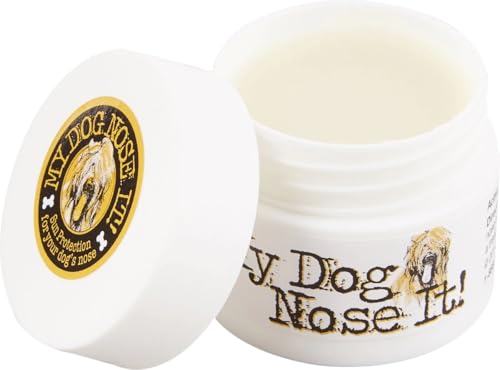
Built around the nose, ears, and belly rather than full-body coverage — a deliberate focus given that the nose is consistently the most commonly sunburned area on light-skinned dogs.
The UV-filtering ingredients underneath the carnauba wax and coconut oil are octinoxate and oxybenzone, the same class of active compounds used in several spray formulas in this category. There’s no SPF number on the label — the company says that’s deliberate, so buyers don’t read the balm as equivalent to human sunscreen — but it states the formula offers sun protection comparable to SPF 15. The balm also moisturizes dry, cracked noses, useful year-round rather than just during peak sun exposure.
The balm consistency takes more effort to spread evenly than a spray, a real drawback if you’re trying to cover a larger area — outside reviews flag it as unsuitable for full-body use for that reason, which lines up with its narrow, nose-focused design.
Pros
- Dual-purpose: sun protection plus moisturizing
- Nose-specific formulation
- Good for dogs who dislike being sprayed
Cons
- Balm consistency is less convenient than a spray for full-body use
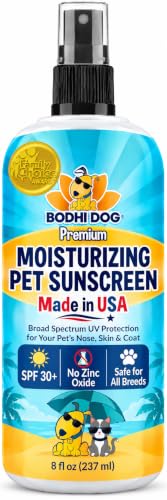
4. Bodhi Dog (Best Natural/Zinc-Free Spray)
Best Natural/Zinc-Free Spray
Last update on 2026-10-13 / Affiliate links / Images from Amazon Product Advertising API
- FormulaZinc-free, alcohol-free
- Key ingredientsShea and jojoba butter
- Best ForGeneral full-body coverage
The spray lists its ingredients directly rather than leaning on vague “natural” language: shea and jojoba butter for moisturizing, plus a UV inhibitor blend for sun protection.
It’s non-greasy and lightweight, and — unlike Epi-Pet — it’s labeled safe for cats, horses, and dogs, making it useful in a household with more than one kind of pet.
It’s a general-purpose formula rather than one built around a specific problem area, which makes it a reasonable everyday pick if none of the other four’s specialties apply to your dog.
Pros
- Ingredient list stated directly on the label
- Safe across multiple pet species
- Non-greasy, lightweight formula
Cons
- No specific specialty differentiation
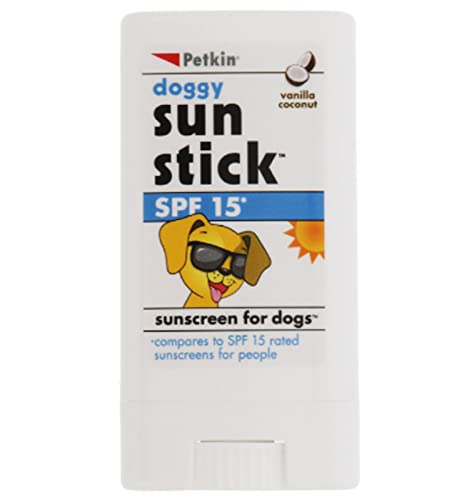
5. Petkin Sunstick (Best Stick Format)
Best Stick Format
Last update on 2026-10-13 / Affiliate links / Images from Amazon Product Advertising API
- FormatTwist-up stick
- SPFComparable to SPF 15
- Best ForTravel, quick touch-ups, dogs who dislike sprays
It’s a twist-up stick rather than a spray or balm jar, and Forbes’s review of the category listed the same qualities among its pros: neat application, portability, and a non-greasy finish. The active ingredient is titanium dioxide, a mineral UV blocker rather than the chemical filters most of the other picks here use.
Compact and mess-free for a bag, car, or travel kit, and easy to reapply on the go without spraying near a dog’s face — useful for a dog that’s uncomfortable with the sound or mist of spray.
At SPF 15 equivalent, it’s a lighter level of protection than the SPF 30 picks above — reasonable for quick touch-ups, less so as the sole protection for extended sun exposure.
Pros
- Convenient travel format
- No spray sound or mist, good for sensitive dogs
- Mineral UV blocker rather than a chemical filter
Cons
- Lower SPF equivalent than spray alternatives
Which Sunscreen Should You Buy?
| Situation | Pick |
|---|---|
| Not sure where to start | Epi-Pet |
| Dry or sensitive skin | Warren London |
| Nose-specific protection | My Dog Nose It |
| Multi-pet household, general coverage | Bodhi Dog |
| Travel, quick touch-ups | Petkin Sunstick |
Sunscreen for White Dogs FAQ
Why are white dogs more prone to sunburn?
Less melanin means less natural pigment protecting the skin underneath the fur, not just a lighter-looking coat. This makes thin-fur or exposed-skin areas like the nose, ear tips, and belly especially vulnerable regardless of how thick the coat is elsewhere.
Does dog sunscreen prevent skin cancer?
It can reduce the risk of the skin cancers most established in dogs — squamous and basal cell carcinoma and hemangiosarcoma. Melanoma, the most dangerous type in humans, hasn’t been well-established as sun-caused in dogs the same way, so be cautious of marketing claims that broadly promise melanoma prevention.
Can I use my own sunscreen on my dog?
No. Human sunscreen often contains zinc oxide, salicylates, or fragrances that can cause toxicity or irritation if licked. Use a product formulated specifically for dogs.
How do I know if my dog has a sunburn?
Look for red or flaking skin that’s warm to the touch, typically on the nose, ear tips, or belly. Move your dog out of the sun immediately; aloe vera or a cool compress can ease discomfort. See a vet if the burn looks severe or doesn’t improve within a day or two.
Final Thoughts
Zinc-free is non-negotiable regardless of which pick you choose, and currently only one product on the market carries FDA compliance. Apply sunscreen 15-30 minutes before sun exposure, focus on the thin-fur and exposed-skin areas, and reapply every 2-3 hours or after swimming.